


Colourist Oil Landscape Painting
These colourist oil landscape painting works capture brilliant light and bold pigment across the twentieth century.
Colourist Oil Landscape Painting
A colourist oil landscape painting brings together vibrant palettes and expressive brushwork to interpret scenery from the late nineteenth century through the mid twentieth century. Buyers seeking this style encounter vibrant representations of the South of France, Corsica, and coastal fishing ports executed with thick pigment.
The pieces on this page span several decades, reaching from late nineteenth century French canvases up to works created later than nineteen sixty. Forms vary between traditional stretched canvas supports and robust wooden boards carrying heavy oil paint.
Post-Impressionism, Modern British, and Scottish Expressionism shape the artistic approach behind these works. Painters utilise strong hues to build depth in street scenes, Mediterranean views, and pastoral landscapes.
Materials and construction
Artists apply oil paint directly to canvas or board using confident strokes that leave texture visible across the surface. Metallic leaf occasionally accents these compositions, adding reflective light to the pigment.
Support materials range from primed canvas stretched over wooden frames to dense boards. Protective glass frequently shields the finished oil painting within its frame.
A solitary chicken coop steals the spotlight in one Ukrainian Jewish artist's sunlit countryside view.
Assessing quality and depth
Quality rests in the handling of pigment and the assurance of the brushwork across the canvas or board. Strong compositions rely on deliberate colour relationships rather than mere brightness.
Works by named painters carry distinct handling that separates them from anonymous studio pieces. The integration of light and structure defines the stronger examples in this group.
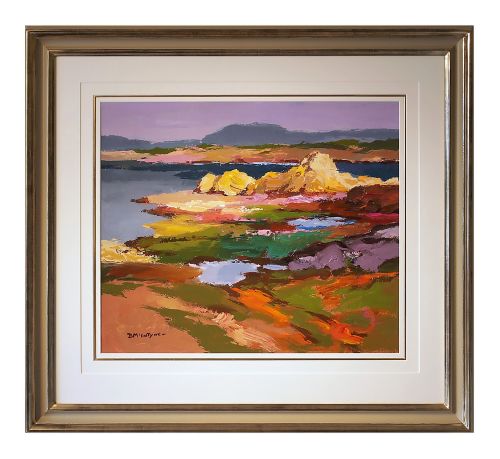
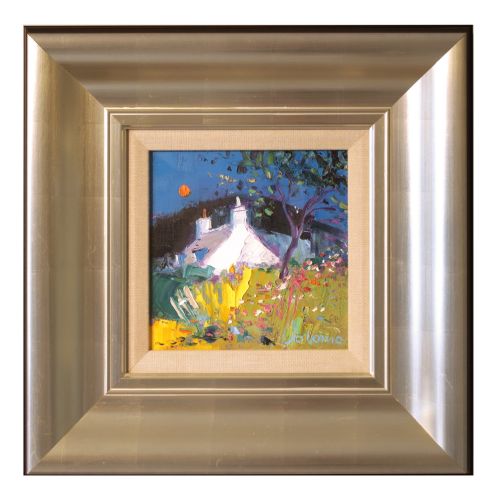
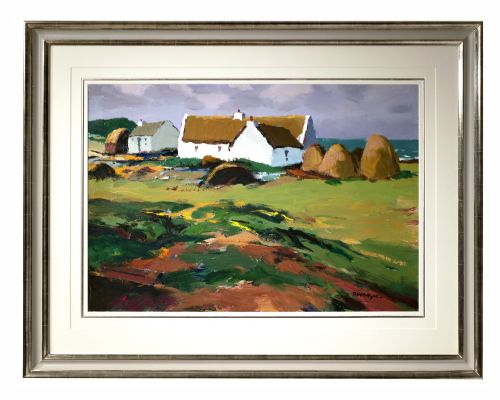
Donald McIntyre·John Lowrie Morrison·Henri Ottman
The Colourist Oil Landscape Painting Glossary
- Colourist
- An artist whose work prioritises hue and saturation over strict realism. This approach defines the vibrant palettes seen across these landscapes.
- Post-Impressionism
- A stylistic movement extending beyond Impressionism that emphasises symbolic colour and heavier form. Many mid-century works draw directly from this tradition.
- Board
- A rigid flat support made of wood or pressed material used in place of stretched canvas. It provides a firm foundation for heavy applications of oil paint.
- Canvas
- Woven fabric stretched across a wooden frame to serve as a painting surface. It remains the standard support for oil works from the periods represented here.
Colourist Oil Landscape Painting: Frequently Asked Questions
What defines a colourist landscape?
A colourist landscape uses intensified hues and expressive brushwork to evoke the atmosphere of a scene rather than reproducing exact natural colours. Painters working in this style prioritise emotional resonance and light through bold pigments.
These pieces often emerge from twentieth century movements like Modern British and Scottish Expressionism. The focus remains on how colour interacts across the canvas.
How should I care for an oil painting?
Keep oil paintings away from direct sunlight and extreme humidity fluctuations to protect both the canvas and the pigment. Gentle dusting with a soft, dry brush maintains the surface.
Glazing with glass offers additional protection against environmental dust and physical contact. Stable indoor temperatures preserve the integrity of the wooden supports and frames.
When were these paintings made?
The works span from the late nineteenth century through to the mid twentieth century and beyond. Dates range from eighteen ninety up to pieces created later than nineteen sixty.
Mid-century examples dominate the selection, reflecting post-war artistic developments in Britain and France. Earlier pieces bridge the gap from nineteenth century traditions.
What supports do artists use?
Artists paint on both stretched canvas and rigid wooden boards depending on the desired texture and portability. Canvas offers flexible tension while board provides a solid resistance.
Both supports receive preparatory grounds before the oil paint is applied. The choice of support often relates to the period and location of the painter.