




Coloured Glass Wine Glasses
These coloured glass wine glasses bring rich hues and tactile weight to the table, offering a striking departure from plain crystal.
Coloured Glass Wine Glasses
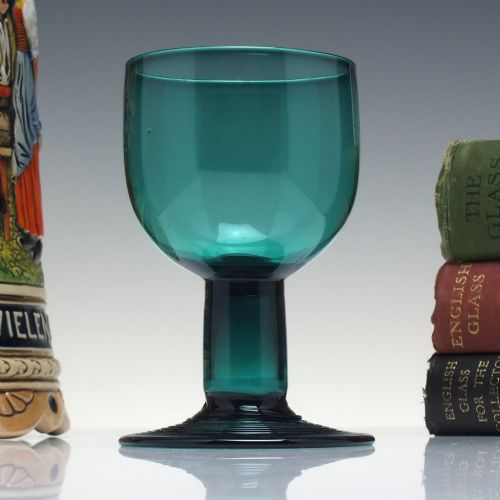
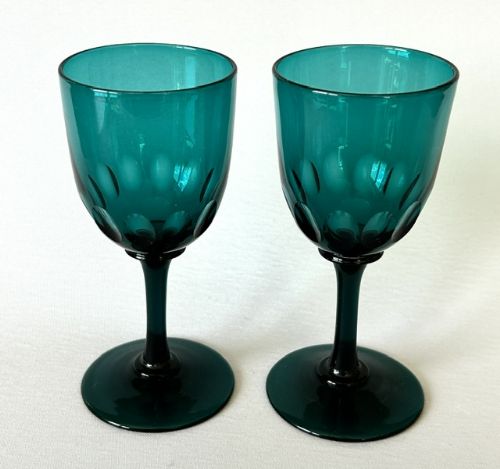
Coloured glass wine glasses span multiple centuries of design, with particular strength in Georgian and Victorian production. Buyers seeking coloured glass wine glasses encounter various forms ranging from small dram glasses to tall hock goblets and full sets of stemware.
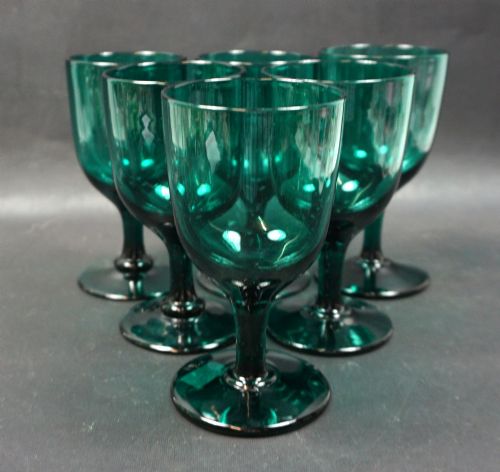
The selection includes English, Bohemian, and Venetian pieces alongside broader nineteenth-century European glassware. Single vessels appear alongside matched sets of six, eight, or fifteen matching glasses.
Making the glassware
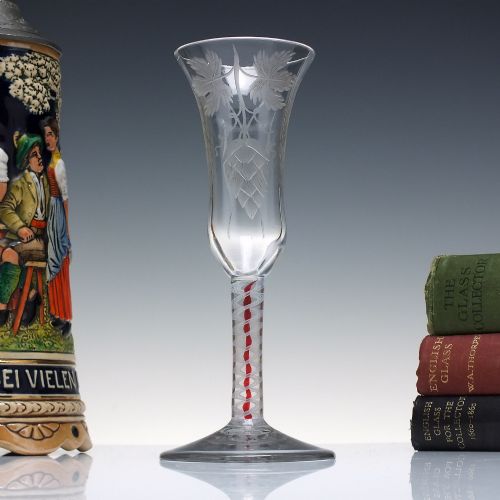
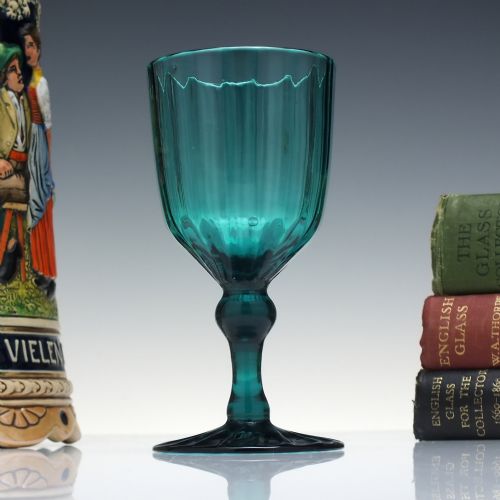
The material composition relies on lead glass and hand-blown glass, often shaped through rib moulding or finished with wheel engraving. Makers utilised colour twist techniques and cased glass layers to achieve deep shades of cranberry, emerald green, amethyst, and turquoise.
Individual pieces show distinct characteristics of hand-tooling, with applied stems, bobbin forms, and polished pontil marks to the bases.
The selection includes lead glass, hand-blown glass, and cut crystal spanning Georgian, Victorian, and Edwardian periods.
Judging quality
Quality rests on the depth and saturation of the colour within the metal, along with the crispness of any wheel engraving or cut facets. Uniformity across matched sets distinguishes higher workshops from basic production.
The balance of the stem, the weight of the bowl, and the absence of heavy inclusions in the glass body mark superior examples.
The Coloured Glass Wine Glasses Glossary
- Cranberry glass
- A rich red-pink transparent glass coloured with gold chloride, highly popular during the Victorian period.
- Colour twist
- A stem formation enclosing threads of coloured glass within the transparent body, typical of eighteenth-century work.
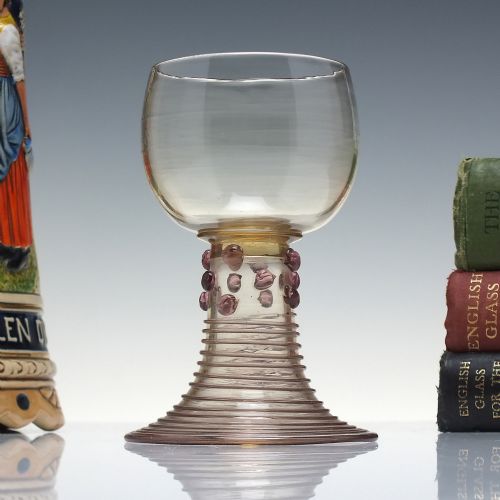
- Roemer
- A traditional Germanic form of drinking vessel featuring a large bowl set over a ribbed or prunt-adorned stem.
- Hock glass
- A tall vessel traditionally used for white wine, often featuring an extended coloured bowl over a clear stem.
- Pontil mark
- The rough scar left on the underside of a vessel where the holding iron was snapped away after blowing.
Coloured Glass Wine Glasses: Frequently Asked Questions
Are these glasses safe for daily use?
Most pieces handle standard dining use well, provided they are treated with care during washing and storage. Hand-blown vessels have sturdy walls but remain vulnerable to sharp impacts.
Keep delicate eighteenth-century examples for special occasions while using sturdier Victorian sets more frequently.
How can I tell Georgian glass from Victorian pieces?
Georgian examples often display lighter metal, simpler forms, and characteristic tool marks from earlier manufacturing methods. Look for deeper pontil scars and distinct colour twists.
Victorian production frequently yields heavier matched sets in vibrant cranberry or emerald shades with more uniform mould work.
What causes the different shades of green?
Variations depend on the metallic oxides added to the molten batch, ranging from copper and iron to chromium. Bristol green typically shows a deep, clear forest tone.
Other pieces incorporate turquoise or aqua hues through specific mineral balances within the glasshouse recipe.