


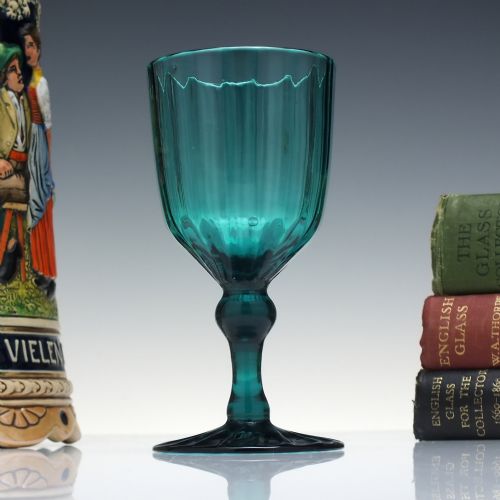


Coloured Glass Stemware
Coloured glass stemware brings brilliant hues to the table, and these drinking vessels offer striking tones from ruby cranberry to deep emerald.
Coloured Glass Stemware
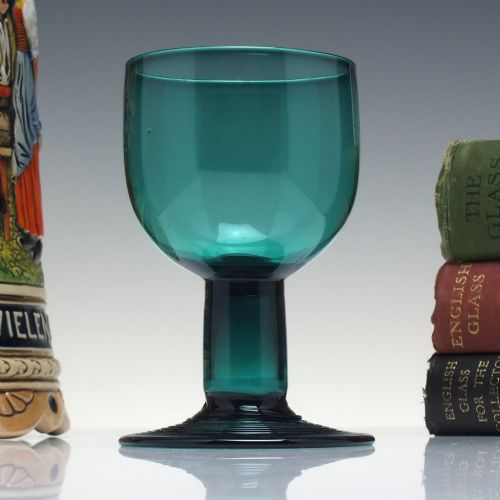
Coloured glass stemware comprises drinking vessels shaped for wine, ale, and spirits, finished in distinct hues rather than clear metal. When you browse coloured glass stemware, you meet objects spanning from Georgian drinking glasses to Edwardian goblets.
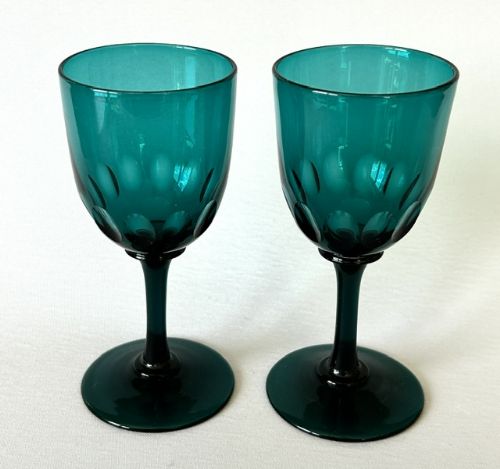
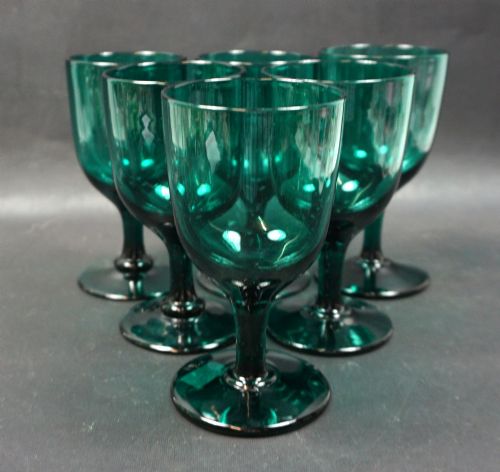
The selections on this page range from single eighteenth-century specimens to complete sets of six or fifteen Victorian pieces. Green, cranberry, blue, and amethyst dominate the forms, reflecting periods from seventeen-fifty up to nineteen-ten.
Individual dram glasses sit alongside matched sets of dessert wine glasses and tall goblets. English and continental makers produced these drinking glasses across distinct eras, employing lead glass and hand-blown techniques.
Materials and production
Craftsmen shaped these drinking vessels using hand-blown glass and lead glass techniques. Metal oxide additives imparted the vivid green, cranberry, turquoise, and amethyst tones directly into the molten material.
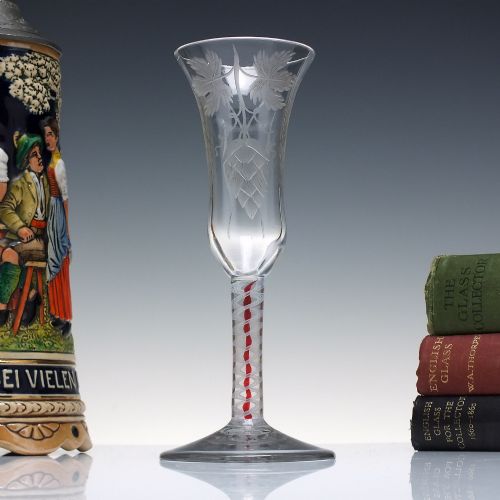
Makers utilised rib moulding and wheel engraving to pattern the bowls and stems of Georgian and Victorian examples. Individual pieces such as colour twist ale glasses required precise manipulation of contrasting glass threads within the stem.
The listings span from seventeen-fifty to nineteen-ten, recording Georgian, Victorian, and Edwardian periods in clear and coloured glass.
Gradations of quality
Quality in these drinking glasses rests upon the depth and consistency of the body colour alongside the crispness of any engraved or moulded decoration. Earlier Georgian examples display greater weight in the metal and superior hand-finished detailing.
Matched sets command attention through uniform hue across every piece and balanced proportions in the stem and foot. Superior examples retain smooth rims and precise optical effects within the hand-blown bowl.
The Coloured Glass Stemware Glossary
- Lead glass
- A heavier, more refractive glass formulation containing lead oxide. It permits sharper cutting and deeper ringing tones than ordinary soda glass.
- Cranberry glass
- A rich red-pink glass produced by adding gold chloride to the molten batch. It appears frequently in Victorian drinking vessels and matched sets.
- Colour twist
- A stem form containing opaque or coloured glass threads twisted inside a clear column. This technique dates predominantly to eighteenth-century production.
- Rib moulded
- A vessel blown into a ribbed dip-mould to create vertical fluting on the body. This optical effect enhances the play of light through coloured metal.
- Dram glass
- A small historical drinking vessel designed for consuming a single measure of spirits. They often feature thick feet and sturdy bowls.
Coloured Glass Stemware: Frequently Asked Questions
How do I date coloured wine glasses?
Dating relies on the form of the bowl, the shape of the stem, and the characteristics of the metal itself. Eighteenth-century pieces often exhibit pontil scars and heavier lead metal, while Victorian sets display more uniform machine or hand-blown regularity.
Changes in palette also assist attribution, as vibrant cranberry hues and turquoise shades became particularly popular during the nineteenth century. Examining the base and the wear patterns provides further clues to age.
Can I use antique stemware daily?
These drinking glasses are robust enough for occasional use if handled with proper care. Hand washing in warm water preserves the historic metal and prevents thermal shock.
Avoid dishwashers and harsh detergents to protect the coloured glass surface and any delicate engraved details. Storing them securely prevents rim chips on older bowls.
Why do glass sets vary in shade?
Hand-blown coloured glass batch sizes varied historically, making exact colour matching difficult across large production runs. Slight tonal shifts between individual glasses in a set confirm their period hand-made origin.
Different mineral oxide concentrations in the molten pot created these subtle variations before strict industrial standardisation took hold.
What is Venetian Revival glass?
Venetian Revival refers to nineteenth-century wares produced in Italy and beyond that emulated classic Renaissance Murano styles. These pieces often utilise striking blue or multi-coloured glass techniques.
They combine historical Italian silhouettes with the manufacturing capabilities of the late Victorian era. Such items bring distinct continental flair to nineteenth-century table settings.