




Coloured Aquatint Print
These coloured aquatint print works bring genuine 19th-century character and rich historical scenes directly to your walls.
Coloured Aquatint Print
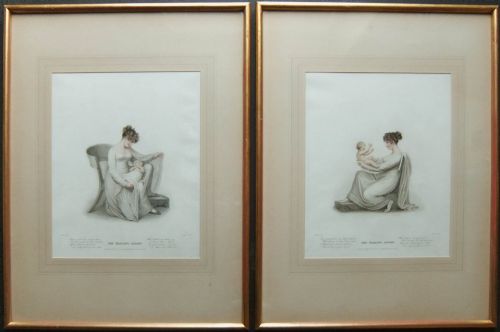
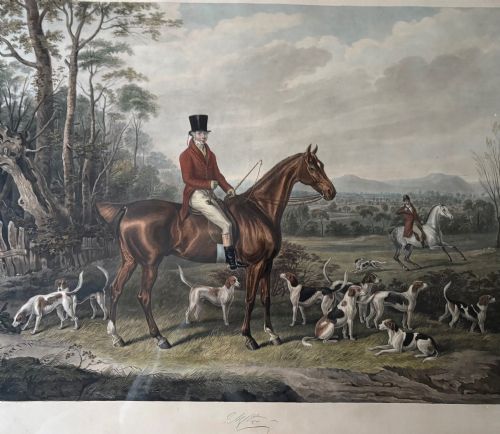
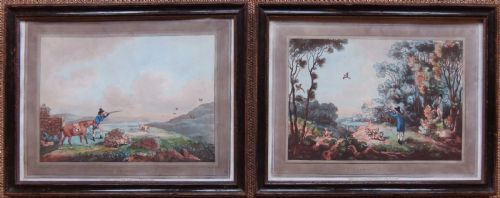
A coloured aquatint print offers a distinct visual texture rooted in the Georgian and Victorian eras, capturing sporting scenes and traditional pastimes. You will most frequently encounter framed examples originating from the nineteenth century alongside later twentieth-century interpretations.
The selections span various regional origins and distinct artistic schools, notably featuring British sporting subjects and French school influences. These pieces range from intimate individual engravings to matched pairs and larger decorative sets.
Framing often complements the age of the paper, utilising period wood and gilt frames that enhance the character of the artwork. The subject matter typically centres on rural pursuits, portraits and historical narratives.
Materials and construction
The underlying foundation relies upon quality paper sheets prepared to receive delicate ink impressions and watercolour applications. Artisans utilised copper plates to etch tonal areas that mimic the appearance of wash drawings.
Hand-colouring was applied meticulously over the printed ink lines using watercolours to bring vibrancy and depth to the imagery. Gold leaf and gilt wood frequently appear within the framing to complete the presentation.
The listings span from Georgian beginnings through Victorian sporting traditions to mid-century modern British colour etching.
Assessing craftsmanship
The precision of the original engraving work and the subtlety of the subsequent hand-colouring establish the primary distinction in quality. Finer examples display crisp tonal gradations and precise ink application without muddiness.
The preservation of the paper sheet and the originality of the associated frame greatly influence the overall integrity of the piece. Superior specimens retain their original sheet dimensions and vibrant pigment tones.
Joseph Constantime Stadler·Charles Hunt·Francis Calcroft Turner·Thomas Sutherland·Henry Thomas Alken·J. Harris
The Coloured Aquatint Print Glossary
- Aquatint
- A printmaking technique that produces tonal effects by using acid to etch resin-covered copper plates. This process creates grainy areas that resemble watercolours.
- Hand-coloured
- The practice of applying watercolours by hand to a monochrome print after the initial ink impression is made. This adds specific hues to the finished artwork.
- Engraving
- A method where an artist cuts lines directly into a metal plate using a sharp tool. The resulting grooves hold the ink for the printing press.
- Gilt wood
- Wood that has been coated with a thin layer of gold leaf or metallic paint. It is commonly found on traditional frames from the Georgian and Victorian periods.
- Watercolour
- A paint medium consisting of colorants suspended in a water-based solution. It was frequently used to tint early prints by hand.
Coloured Aquatint Print: Frequently Asked Questions
How do I care for a coloured aquatint print?
Keep these works away from direct sunlight to prevent the hand-applied watercolours from fading over time. Maintaining stable indoor humidity levels also protects the delicate historic paper.
Ensure that framing materials are acid-free to prevent yellowing and degradation of the paper edge. Professional framing with UV-protective glass offers the best long-term preservation.
Are these prints original to the nineteenth century?
The selection includes genuine period works dating from the Georgian and Victorian eras alongside later pieces. Each listing provides specific period details and contextual information regarding its creation.
Examining the paper characteristics and plate marks helps confirm the historical authenticity of the printing technique. Comparing the style to known period examples further clarifies the date.
How were these prints originally displayed?
These works were traditionally framed in timber mouldings and hung in domestic parlours or libraries. Sporting scenes were particularly popular for country houses and gentlemen's clubs.
Many were produced in series or sets to decorate larger wall spaces in symmetrical arrangements. Matched pairs and sets remain desirable for recreating this traditional aesthetic.
What is the difference between an etching and an aquatint?
An etching relies primarily on line work created by acid biting into exposed metal lines on a plate. This produces sharp and defined linear details.
An aquatint creates tonal areas and flat zones of shade rather than simple lines. Combining both techniques allowed printmakers to replicate the soft appearance of original paintings.