
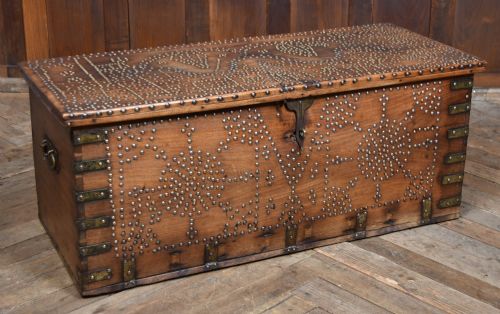
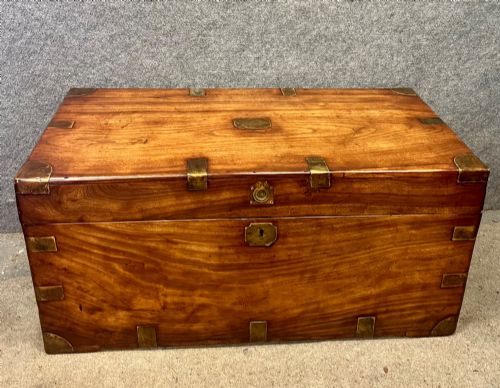
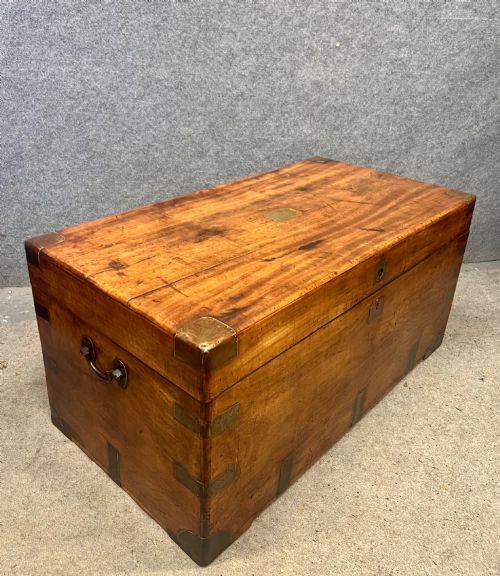


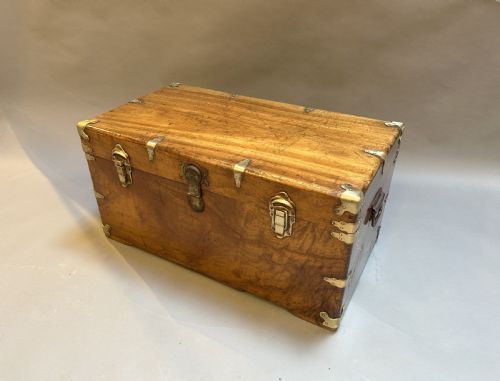
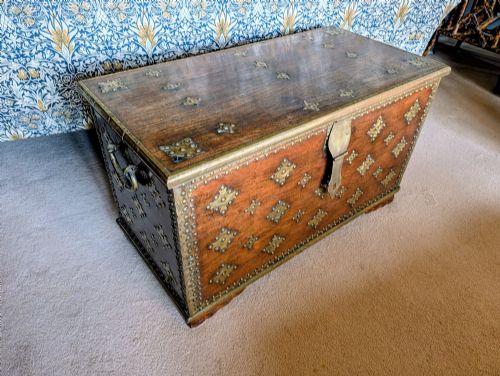
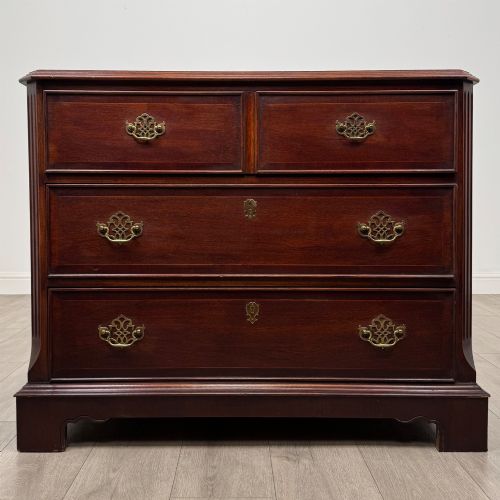
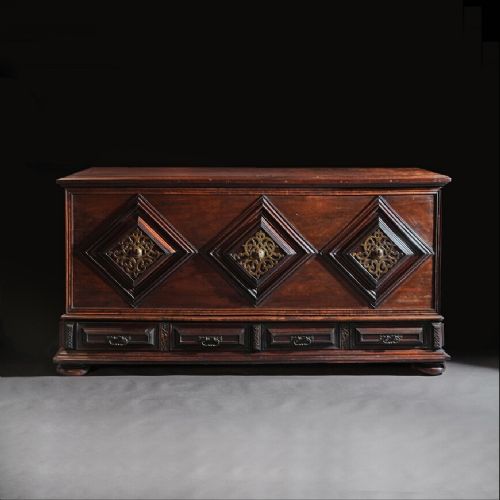
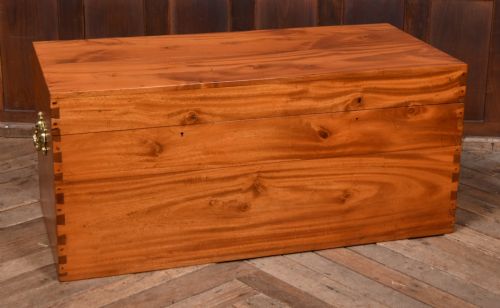
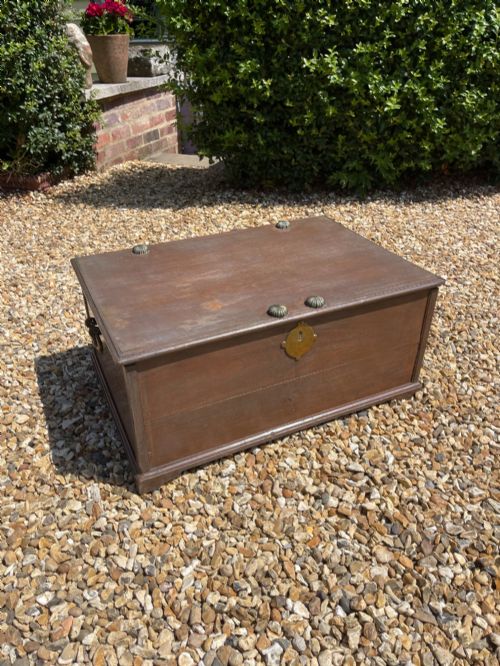
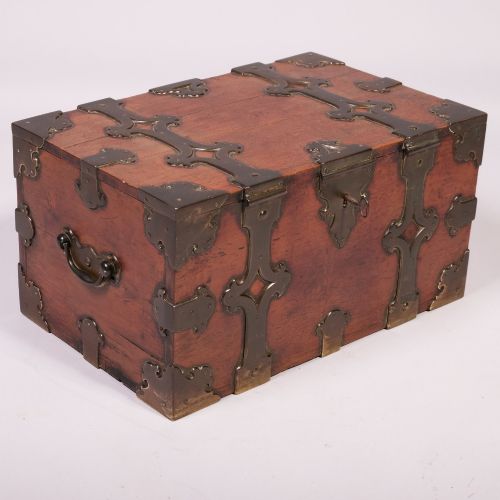
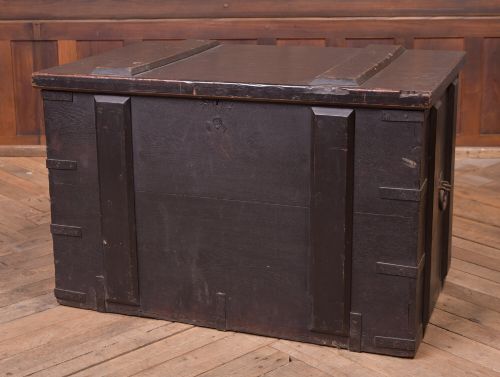
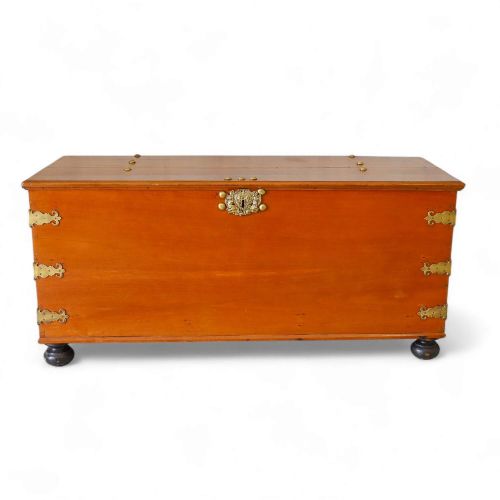
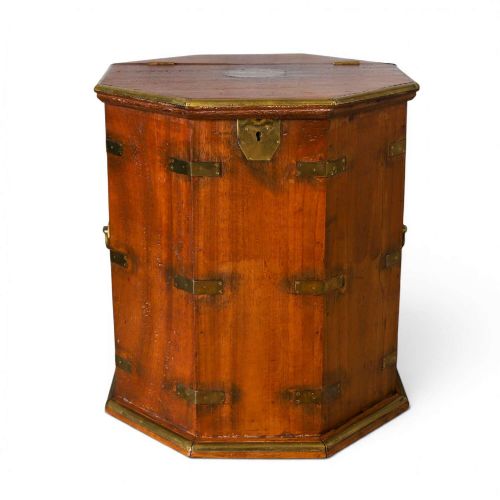
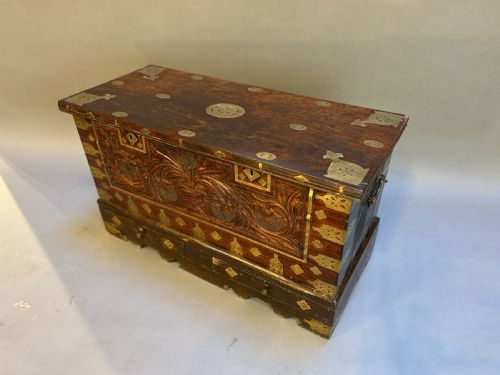
Colonial Wooden Storage Chest
A colonial wooden storage chest brings sturdy utility and global history into a room, offering robust capacity for blankets and belongings.
Colonial Wooden Storage Chest
A colonial wooden storage chest serves as a practical repository for household linens, travel gear, and valuables while displaying distinctive regional craftsmanship from centuries past. Buyers seeking a colonial wooden storage chest typically encounter robust blanket boxes, hinged trunks, and lidded coffers originating from trade routes and settlements in the nineteenth and eighteenth centuries.
The selection ranges from heavy campaign trunks designed for travel to stationary blanket boxes meant for domestic interiors. Most examples span the nineteenth century, utilising dense timbers suited to distant climates and incorporating metal reinforcements for durability.
Materials and Construction Methods
Cabinet makers utilised dense hardwoods such as teak, camphor wood, padouk, and walnut to build these chests, ensuring resistance to humidity and wear. Camphor wood provided the added benefit of repelling insects from stored textiles.
Metal components played a structural role alongside timber, with brass corners, straps, and heavy-duty hinges securing the joints. Iron studs and mounts frequently reinforced the exterior framework of trunks intended for transport.
Listings feature 18th-century, 19th-century, and Edwardian pieces constructed from teak, camphor wood, padouk, walnut, and ebony.
Factors of Quality and Construction
Superior pieces display the original brass hardware and robust dovetail joints that remain tight despite shifting climates and age. The selection of timber grain and the integrity of the secondary woods inside dictate the standing of a particular trunk.
Finer chests retain authentic carrying handles, operational locks with functional keys, and undisturbed surface patinas developed through decades of service. Altered hardware or replaced panels separate utilitarian repairs from high-grade surviving examples.
The Colonial Wooden Storage Chest Glossary
- Campaign chest
- A portable set of drawers or a trunk designed in sections for easy transport by military officers during the eighteenth and nineteenth centuries.
- Zanzibar chest
- A heavy wooden storage trunk characterised by brass studding, strapwork, and elaborate hardware, often associated with trade routes along the East African coast.
- Camphor wood
- An aromatic timber traditionally chosen for trunks and blanket boxes due to its insect-repellent properties and distinctive scent.
- Padouk
- A dense tropical hardwood displaying rich red or brown tones, frequently utilised in colonial cabinet making for its durability.
- Coffer
- A large wooden chest traditionally used for holding valuables, money, or precious documents.
Colonial Wooden Storage Chest: Frequently Asked Questions
What is a colonial wooden storage chest used for?
These chests served primarily for packing and protecting personal belongings, uniforms, and valuables during long sea voyages and overland journeys.
In modern homes, they function as practical coffee tables, end-of-bed blanket boxes, and deep storage receptacles for household textiles.
How do I identify an authentic period chest?
Authentic period pieces show evidence of hand-cut joinery, period-appropriate timber selection such as teak or camphor wood, and traditional brass or iron hardware fixed with hand-made screws or rivets.
Inspect the interior construction and timber shrinkage patterns to confirm age rather than relying solely on surface finishes.
Are camphor wood chests safe for modern storage?
Camphor wood naturally emits a strong aromatic scent that deters moths and silverfish, making these trunks ideal for woollens, blankets, and linens.
The natural oils within the timber require no chemical treatments to maintain their protective qualities over decades of domestic use.
How do I care for a historic wooden chest?
Maintain stable indoor humidity levels and keep the timber away from direct heat sources to prevent the wood from splitting or warping over time.
Apply a traditional beeswax polish occasionally to nourish the dry hardwood surface and preserve the natural patina without sealing the pores.