



Colonial Wooden Campaign Box
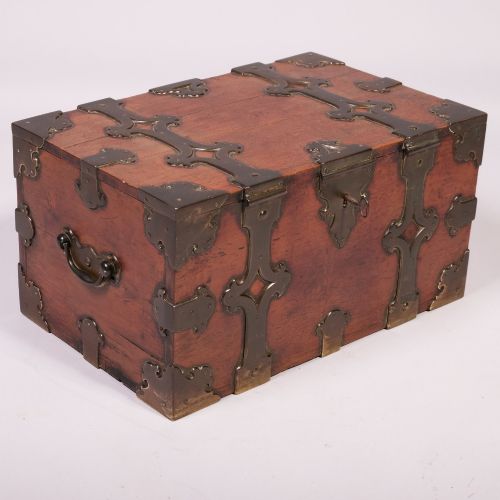
A colonial wooden campaign box is a portable piece of travelling furniture designed for military officers and merchants.
Colonial Wooden Campaign Box
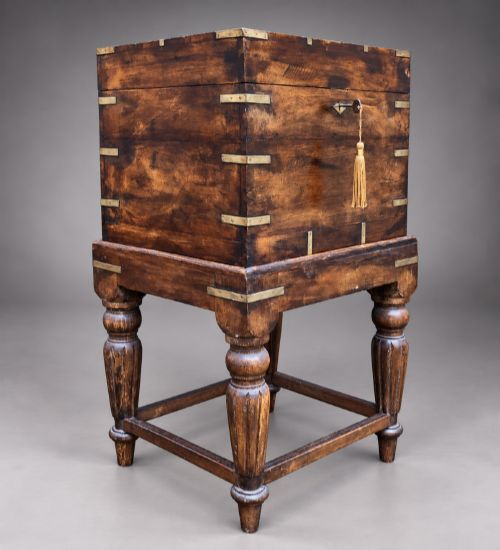
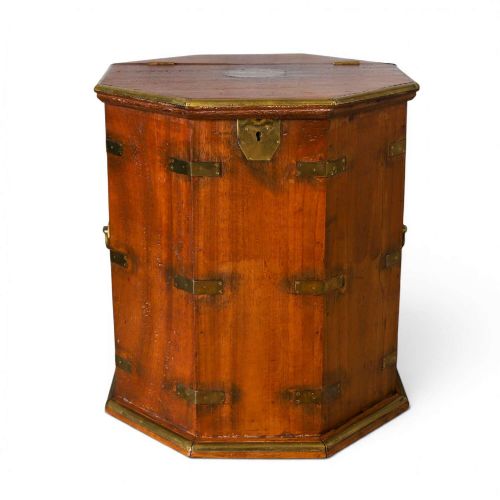
A colonial wooden campaign box encompasses practical military furniture and travelling chests produced across the eighteenth, nineteenth, and early twentieth centuries. These pieces span larger trunks and chests alongside smaller writing boxes and cellarettes designed for transport.
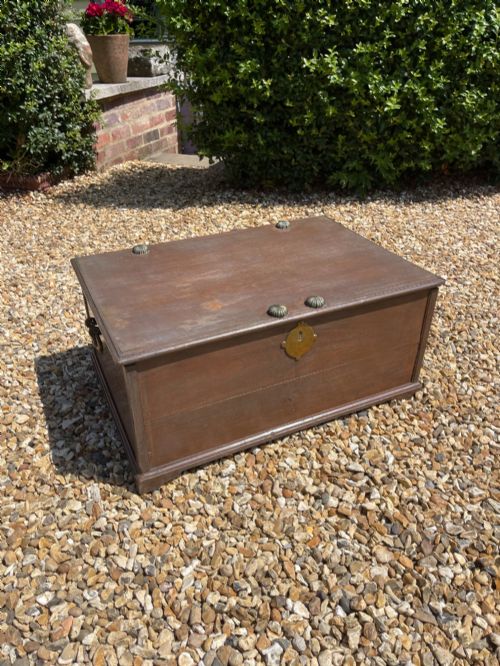
Camphor wood and teak dominate the selection, frequently paired with brass corners and binding to withstand arduous journeys. Anglo-Indian examples feature alongside Victorian and Dutch colonial pieces.
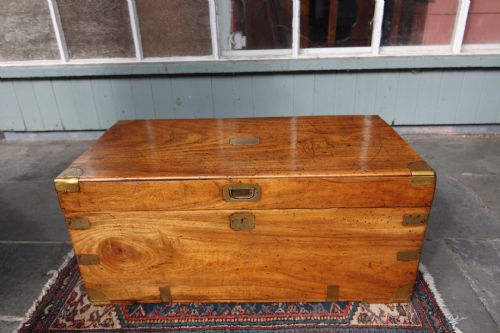
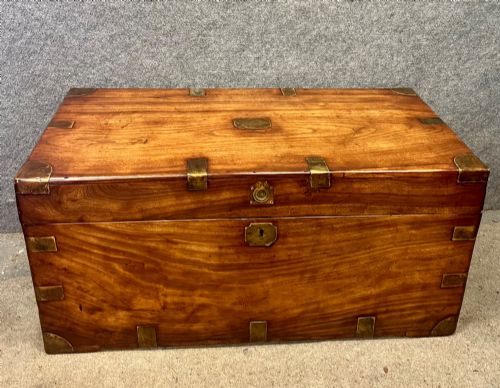
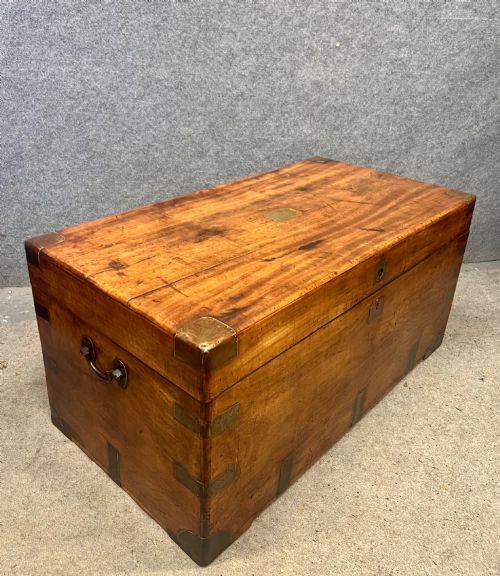
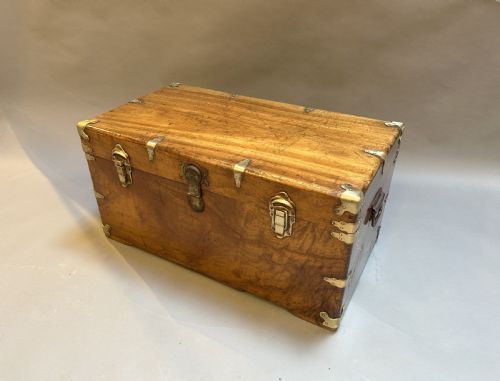
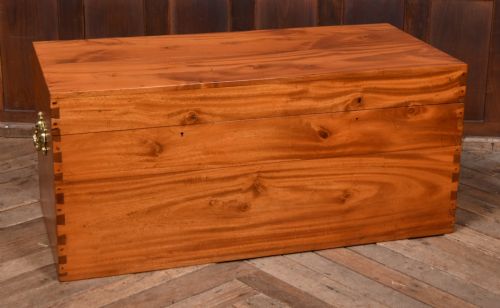
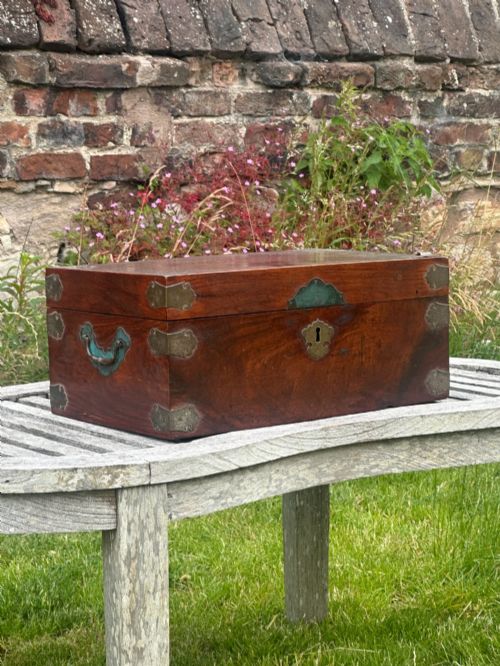
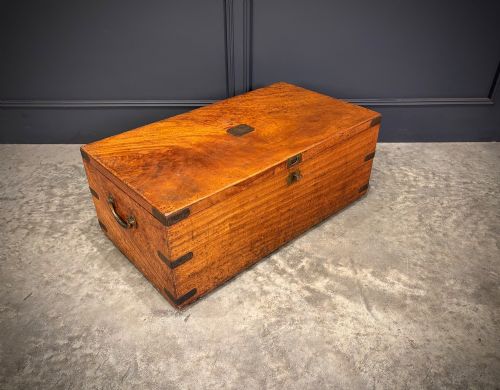
The version most commonly met on this page is the nineteenth-century camphor wood trunk, often fitted with original brass hardware and recessed carrying handles. Smaller writing slopes and correspondence boxes also appear with regularity.
How they were made
Cabinetmakers utilised durable tropical timbers including camphor wood, teak, padouk, and ebony to resist humidity and insect damage during colonial service. These woods were selected for structural stability under extreme climatic shifts.
Brass mountings, strapwork, and bound corners reinforced the joints while protecting the edges from heavy handling in transit. Recessed brass handles allowed the boxes to pack tightly into ships and wagons without protruding hardware.
Dovetail joinery and internal partitioning secured contents during long voyages. Many examples featured fitted interiors with secret compartments or lift-up trays.
Materials recorded across the inventory include camphor wood, teak, padouk, ebony, rosewood, satinwood, elm, and iron alongside brass.
What varies in quality
The integrity of the original brass hardware and mountings distinguishes exceptional pieces from standard items. Retaining original flush-fitting handles and corner braces significantly elevates a box's character.
Timber selection and decorative carving create another tier of distinction. Dense camphor wood, finely figured teak, or intricate Ceylonese ebony detailing point to workshop output intended for senior officers or wealthy merchants rather than bulk military supply.
Internal preservation dictates lasting appeal. Boxes retaining complete fitted writing slopes, original compartments, and uncompromised linings command closer attention from collectors.
The Colonial Wooden Campaign Box Glossary
- Campaign chest
- A piece of furniture built in sections to facilitate transport on military expeditions. These chests typically separate into multiple stacked modules with carrying handles.
- Cellarette
- A lockable container used for storing wine and spirits during travel or formal dining. These are frequently lined and fitted with internal partitions.
- Writing slope
- A portable slant-topped box that opens to reveal a slanted writing surface, inkwell compartments, and storage for stationery. They served officers and travellers on the move.
- Brass bound
- A construction method where brass strips, corners, and straps are fastened to the exterior edges of wooden trunks to protect against impact. This reinforcement is characteristic of campaign furniture.
- Camphor wood
- An aromatic hardwood native to Asia, prized in colonial furniture for its insect-repellent properties and resistance to damp conditions. It forms the primary material for the majority of these trunks.
Colonial Wooden Campaign Box: Frequently Asked Questions
What is a colonial wooden campaign box?
A colonial wooden campaign box is a portable storage piece built for military officers and administrators operating overseas during the eighteenth and nineteenth centuries.
These items range from large travel trunks to compact writing boxes, all engineered for frequent transport across land and sea.
Why are these boxes made of camphor wood?
Camphor wood provided natural protection against insects, mildew, and humidity encountered in tropical colonial postings.
Cabinetmakers utilised this stable timber because it kept stored documents and uniforms safe during long sea voyages.
How do you date a campaign box?
Dating relies upon examining the brass hardware, joinery techniques, and timber varieties present in the piece. Earlier eighteenth-century examples often feature heavier mountings and specific Ceylonese or Dutch colonial stylistic details.
Nineteenth-century pieces standardise recessed brass handles and frequently incorporate camphor or teak.
Were these boxes used by the military?
Many of these pieces were commissioned or issued for British Army officers serving in India and other colonies. They formed part of an officer's essential marching equipment.
Other examples served merchants and administrators travelling through the British Empire.
How should I care for a camphor wood chest?
Keep camphor wood chests away from direct heat sources and radical humidity shifts to prevent the timber from splitting. Regular light dusting maintains the polished surface without damaging the wood.
Avoid heavy liquid polishes that can seal the grain.