



Colonial Teak Accent Table
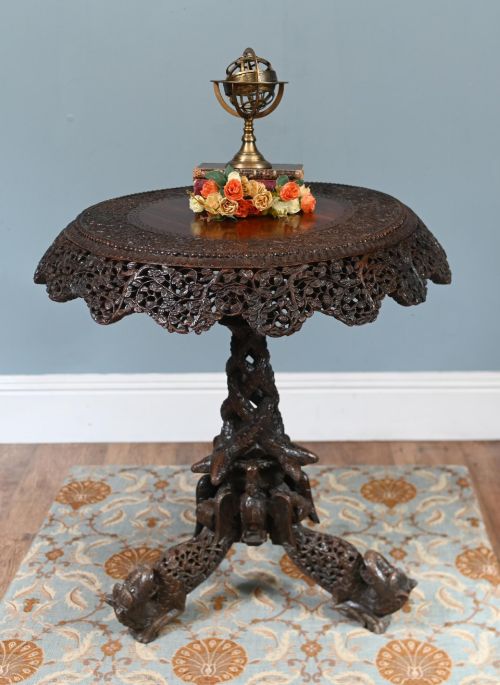
A colonial teak accent table brings dense hardwoods and intricate regional carving straight into a modern interior.
Colonial Teak Accent Table
A colonial teak accent table spans side tables, occasional tables, coffee tables, and plant stands produced across the nineteenth and early twentieth centuries. These pieces carry Anglo-Indian, Anglo-Burmese, and colonial Indian designs made for British personnel stationed abroad and for export to home markets.
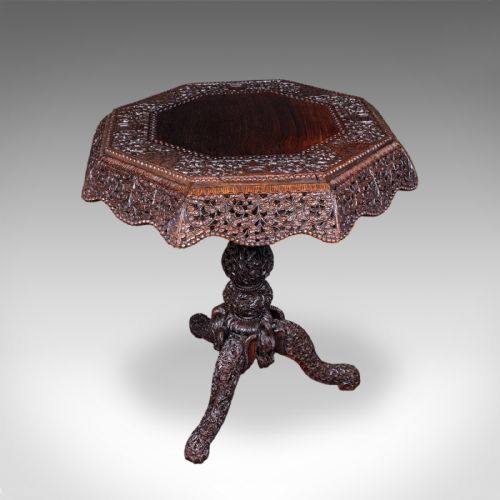
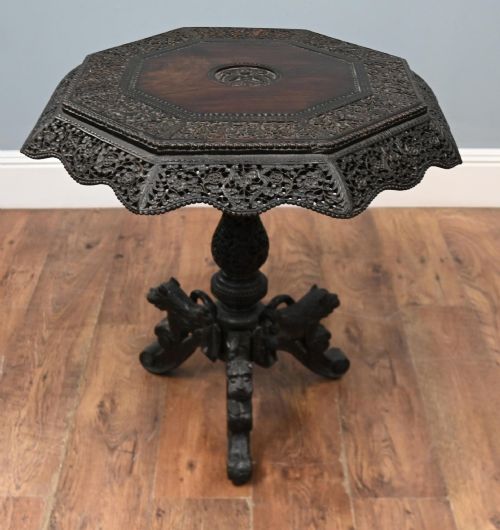
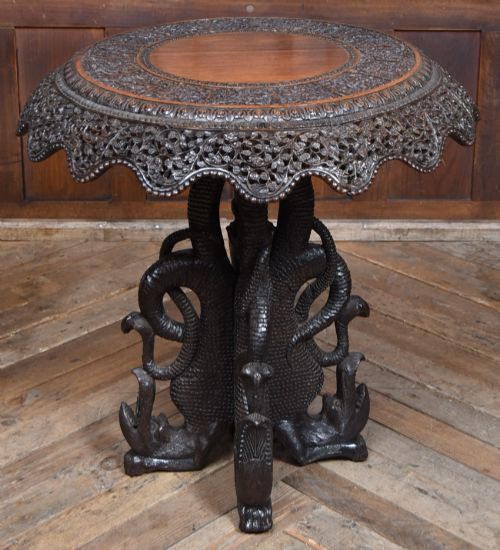
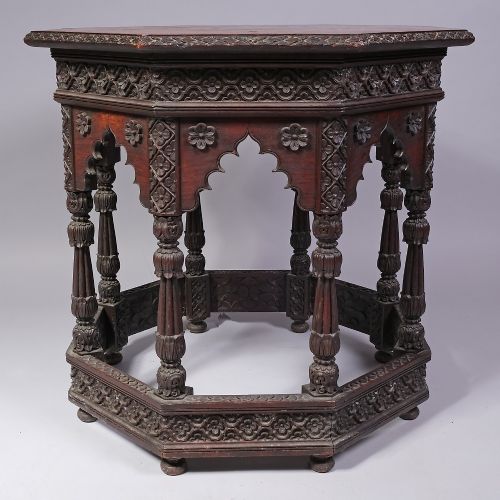
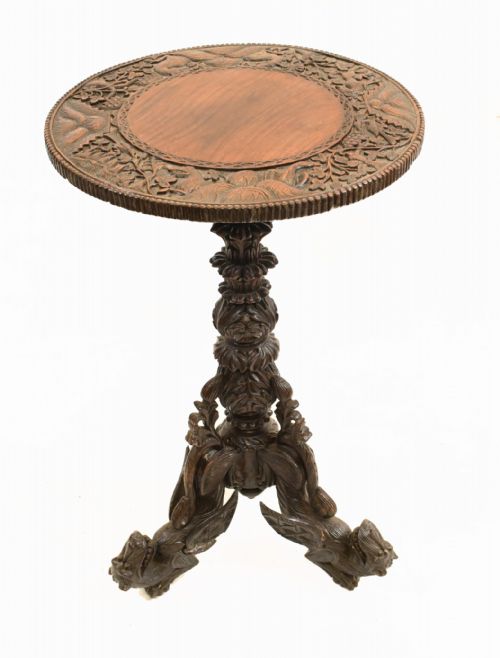
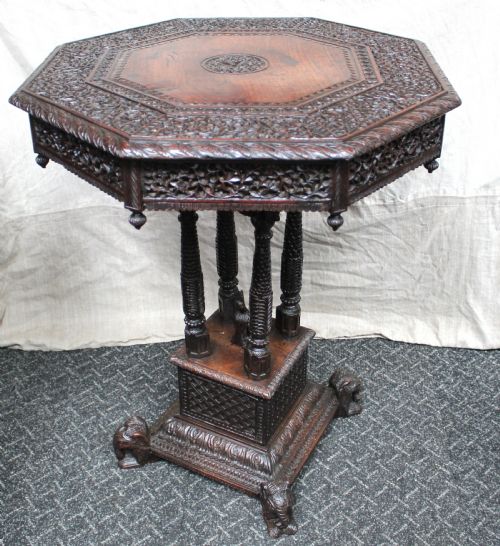
The most common forms on this page include octagonal occasional tables, circular tilt-top stands, and low support surfaces resting on carved animal figures. Pieces range from straightforward folding frames to heavily ornamented two-tier examples.
Origins stretch across India and Burma, encompassing regional centres such as Hoshiarpur and the Bombay Presidency. Dates cluster heavily in the nineteenth century and extend into the early decades of the twentieth.
How they were made
Construction relies primarily on dense tropical hardwoods, chiefly solid teak and rosewood, chosen for their stability and weight. Artisans shaped these timbers by hand, incorporating folding mechanisms and pedestal bases designed for transport.
Surface ornamentation utilises deep chip-carving alongside contrasting inlay materials. Workshops integrated bone, bone inlay, and polished brass wire into geometric and floral patterns across table tops.
Finishes typically consist of traditional wax or oil preparations that highlight the natural grain and dark tones of the underlying timber without heavy modern varnishes.
Colonial Teak Accent Table Retail Price Guide 2026
Typical asking prices for colonial teak accent table among the pieces listed under this phrase on Sellingantiques today, from the lower quarter to the upper quarter. They describe what is for sale here now, not the wider market.
Several tables rely entirely on carved wooden elephants to hold up the tea.
What varies in quality
Quality depends on the depth and precision of the hand-carving across the top and legs, where crisp undercut foliage distinguishes superior workshop production from simpler output. The complexity of figurative elements, such as elephant or camel supports, dictates the standard of the carving.
The choice of secondary materials marks another tier of distinction. Examples enhanced with intricate bone inlay or fine brass wire require greater labour than plain carved wooden surfaces.
Structural integrity of folding frames and the snugness of joined components reflect the original joiner's skill. Solid timber construction throughout outperforms pieces utilising secondary softwoods for internal framing.
The Colonial Teak Accent Table Glossary
- Anglo-Indian
- Descriptive term for furniture made in India during the British period, combining local craftsmanship with European forms. These items often feature dense botanical carving.
- Hoshiarpur
- A North Indian town renowned for intricate woodcarving and micro-mosaic inlay work. Tables from this tradition typically feature dense bone and brass embellishment.
- Tip top
- A table construction featuring a hinged top that pivots vertically for storage. This mechanism allows the surface to fold flat against the base.
- Two tier
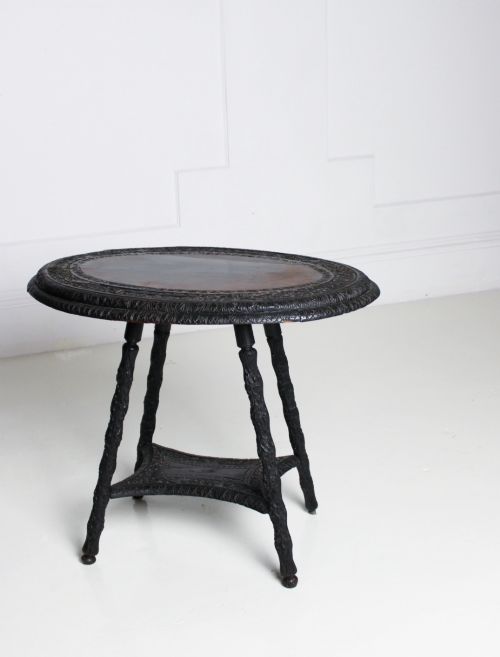
- A furniture configuration incorporating a primary upper surface and a smaller secondary shelf below. This lower platform provides additional display space.
- Octagonal
- A geometric shape with eight sides, frequently utilised for table tops in Indian occasional furniture. This format showcases symmetrical border carvings.
Colonial Teak Accent Table: Frequently Asked Questions
Where were these tables used?
British administrators and merchants placed these tables in drawing rooms, verandas, and studies throughout colonial outposts. Their compact proportions made them versatile for holding lamps, calling cards, or tea.
Back in Britain, owners positioned them in parlours to display imported ornaments and decorative ceramics. Their portable nature allowed servants to move them easily between rooms.
How are Indian and Burmese pieces told apart?
Burmese pieces generally display deep, high-relief carving depicting dense jungle foliage, mythological figures, and animals. The timber is frequently heavier and finished to a dark tone.
Indian regional work often incorporates contrasting inlay materials such as bone and brass alongside floral motifs. Forms such as the octagonal occasional table point strongly towards specific workshops in the subcontinent.
Are these tables sturdy enough for daily use?
Solid teak and rosewood provide a strong structural core capable of handling everyday items like books and cups. However, delicate folding bases and protruding carved elements require gentle handling during movement.
Heavily carved animal legs and pedestal supports distribute weight evenly when placed on level floors. Owners should lift rather than drag these tables to protect the leg joints.