
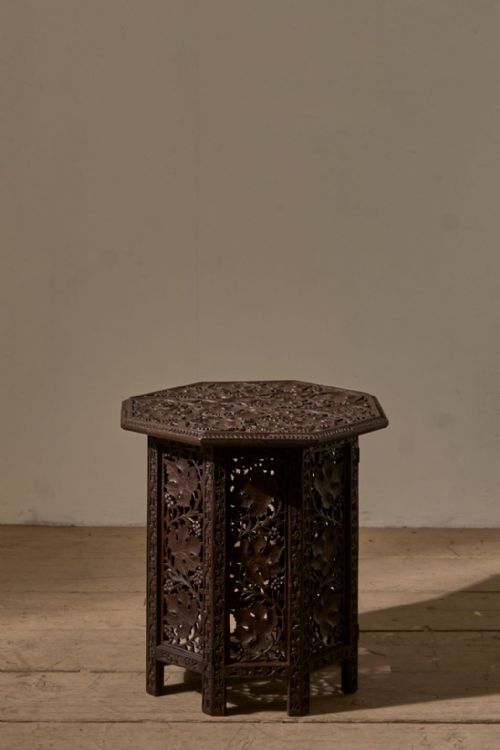
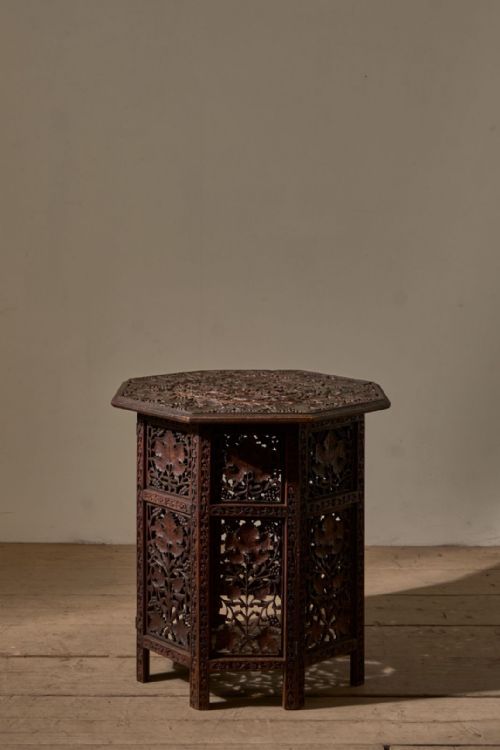


Colonial Tea Table
These colonial tea table selections bring rich British imperial history and intricate regional craftsmanship directly into your home.
Colonial Tea Table
A colonial tea table represents the intersecting design traditions of British officers, merchants, and indigenous craftsmen working across the Indian subcontinent, Burma, and Ceylon during the nineteenth and early twentieth centuries. These pieces function primarily as occasional, coffee, or side tables, adapting traditional local forms for British domestic use.
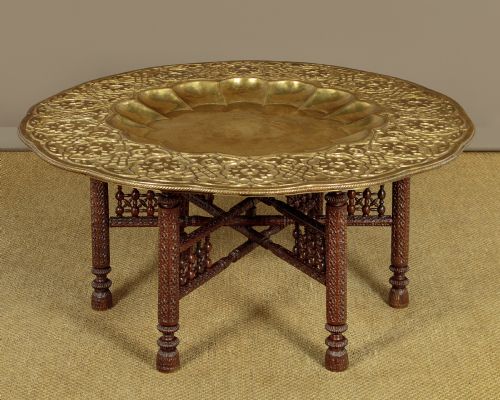
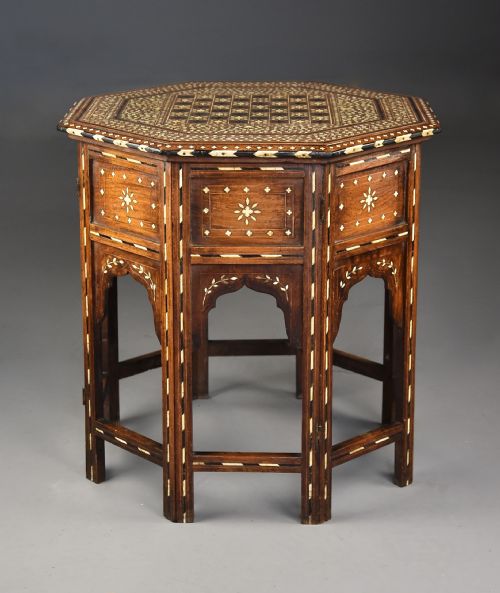
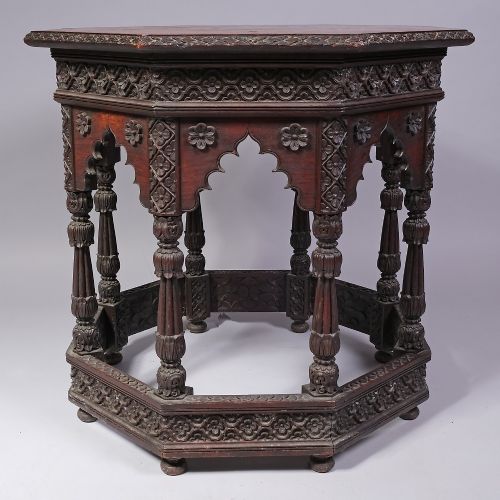
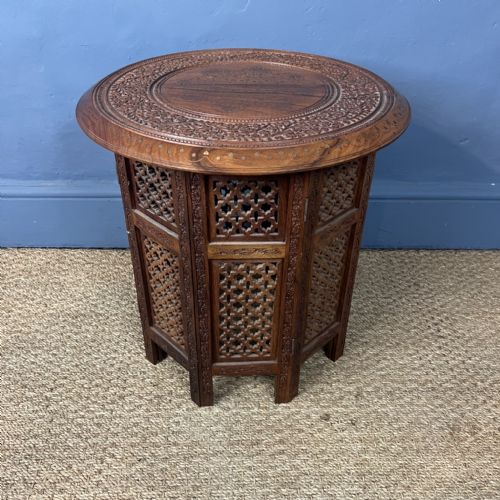
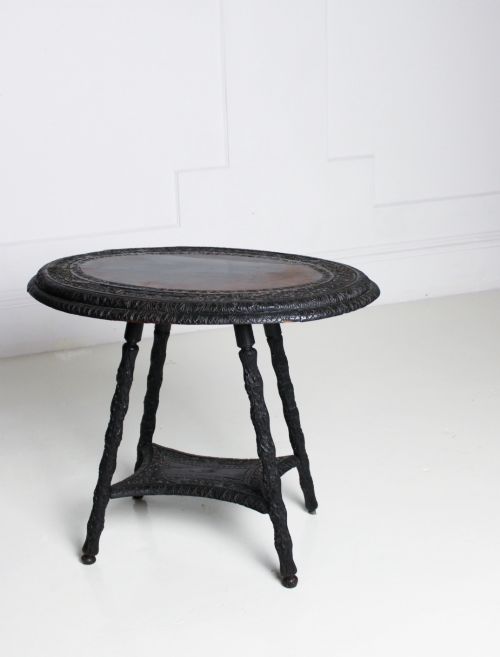
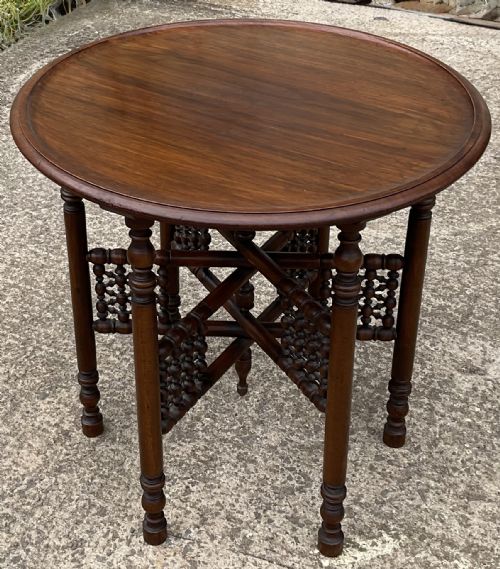
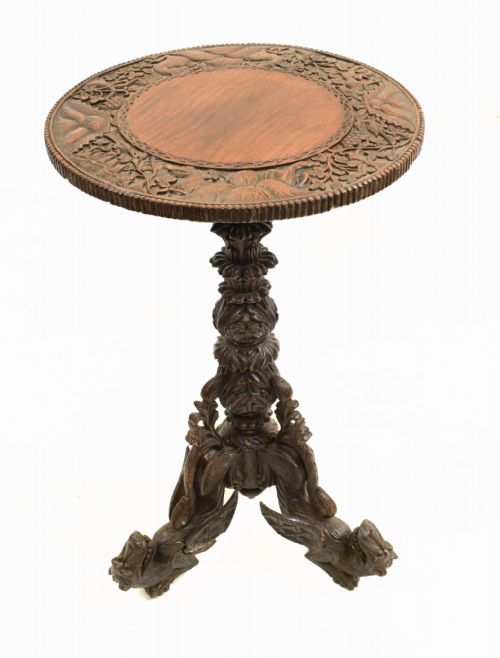
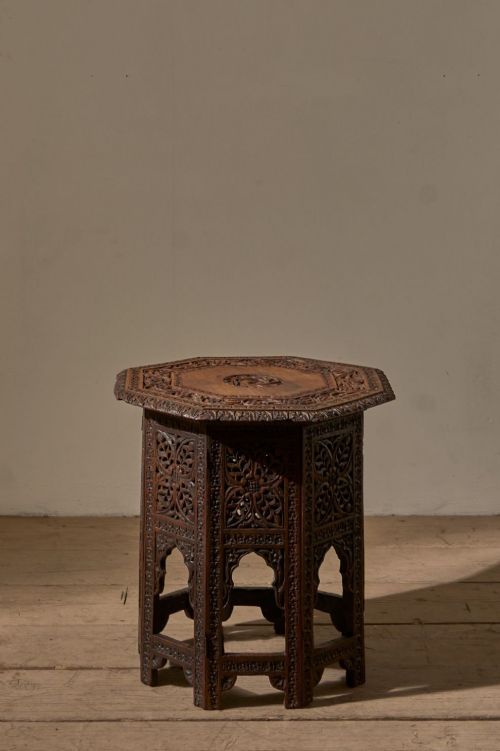
The most common examples encountered on this page belong to the Anglo-Indian and Burmese traditions, spanning from the Victorian era into the 1930s. Tables take diverse shapes, including octagonal occasional pieces, circular tilt-tops, and folding campaign designs meant for transport.
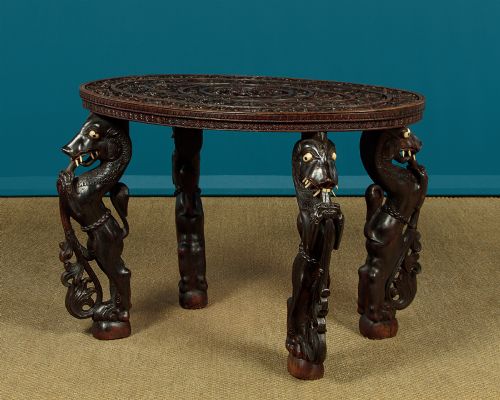
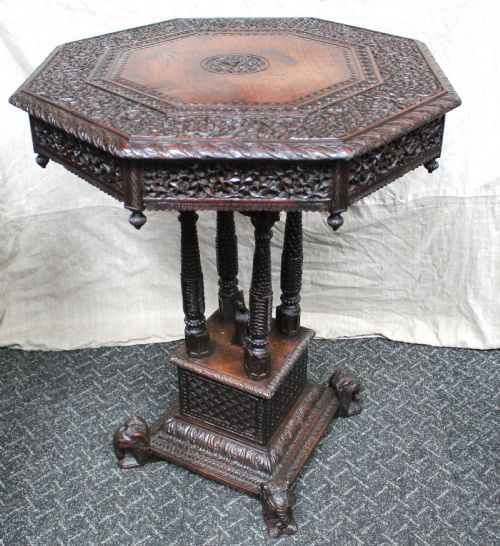
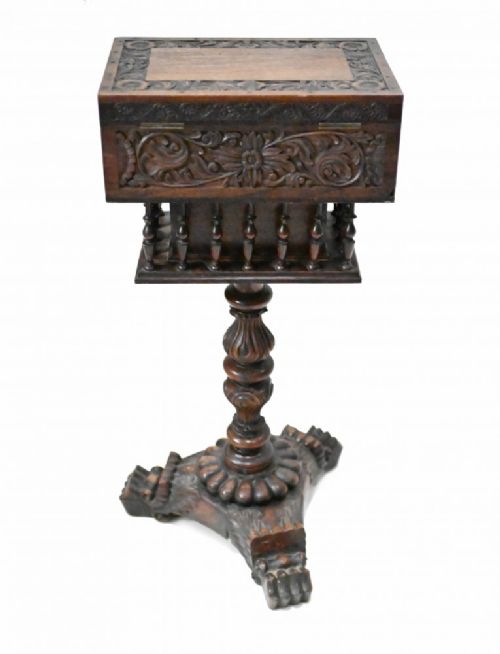
Makers utilised dense tropical timbers native to their regions, shaping them into low coffee tables, tea tables, and heavy centre tables. Buyers find everything from simple folding teak camp frames to heavily carved hardwood surfaces featuring intricate foliage and animal motifs.
Materials and Construction
Craftsmen relied on dense tropical hardwoods such as teak, padouk, rosewood, and ebony to withstand humid climates and intricate carving work. These timbers provide a heavy, durable foundation that supports deep relief work without splintering.
Decoration often involved elaborate hand-carving displaying leaf motifs, dragons, and figures, alongside contrasting inlay work utilising brass, bone, bone inlay, and mother of pearl. Folding mechanisms and campaign joints demonstrate practical engineering designed for travel and easy assembly.
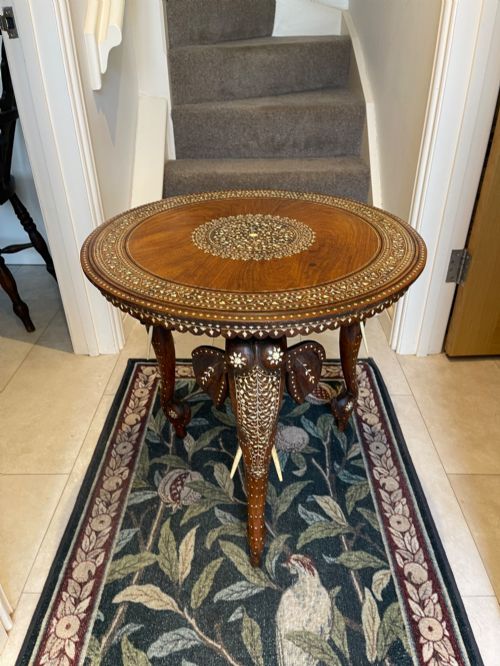
Carved wooden elephants peer out from beneath several Victorian tea table tops.
Evaluating Quality and Craftsmanship
Quality rests upon the depth, sharpness, and symmetry of the hand-carving across the wooden surfaces. Superior examples display crisp relief work without splintering, whilst lesser pieces show shallower, hurried incisions.
The integration of decorative inlays dictates the tier of a piece, with securely fitted brass, bone, or mother of pearl demonstrating careful hand-fitting. The choice of solid primary timber, such as heavy padouk or teak, separates standard utility items from finer exhibition pieces.
The Colonial Tea Table Glossary
- Anglo-Indian
- Pertaining to furniture made in India during the British colonial period, combining European forms with local carving traditions. These items often feature dense botanical or animal motifs.
- Campaign
- Furniture constructed to fold down or dismantle easily for military officers and administrators on the move. These pieces utilise brass corners and flush handles for protection during transport.
- Hoshiarpur
- A region in Punjab known for intricate woodwork featuring precise geometric inlay. Craftsmen set delicate pieces of brass, bone, or shisham wood into dark timber grounds.
- Padouk
- A heavy, durable reddish-brown tropical hardwood favoured by colonial cabinetmakers. It takes a fine polish and supports deep carving.
- Teapoy
- A small occasional table or tea caddy stand originating in South Asia. The term derives from the Hindi word for tripod.
Colonial Tea Table: Frequently Asked Questions
What is a colonial tea table?
A colonial tea table is an occasional table produced during the nineteenth or early twentieth centuries in regions under British administration, notably India and Burma. These tables combine traditional local woodwork with British domestic forms.
They frequently feature dense tropical hardwoods and intricate hand-carved motifs or metal inlays designed for tea service and display.
How do I identify Hoshiarpur tables?
Hoshiarpur tables are recognised by their intricate all-over geometric and floral patterns formed from inlaid brass and bone. The underlying wood is typically a dark hardwood covered entirely in decorative work.
Most examples are octagonal or folding, showcasing the specialised inlay techniques of the Punjab region.
Were these tables used by the military?
Some colonial tea tables were built as campaign furniture for British officers and administrators on the move. These pieces feature folding frames, removable trays, and robust brass fittings designed for travel.
Other examples were made for permanent station residences, focusing on heavy carved decoration rather than portability.
What woods were used in colonial furniture?
Cabinetmakers utilised dense tropical timbers native to South and Southeast Asia, primarily teak, padouk, rosewood, and ebony. These woods provided the necessary weight and durability for intricate relief carving.
They resist warping in humid climates and develop a deep patina with age and use.