


Colonial Silver Box
These colonial silver box examples bring tangible trade history into your room, offering solid metalwork from nineteenth and early twentieth century workshops.
Colonial Silver Box
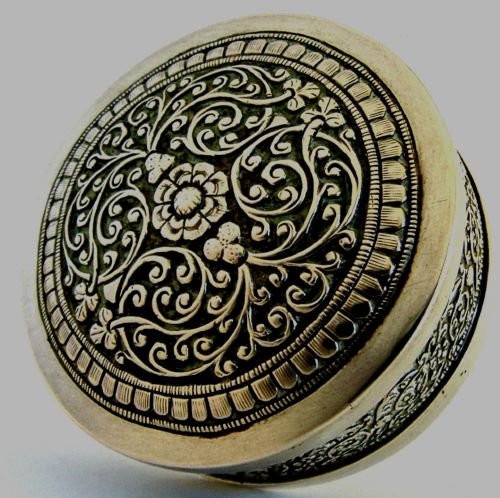
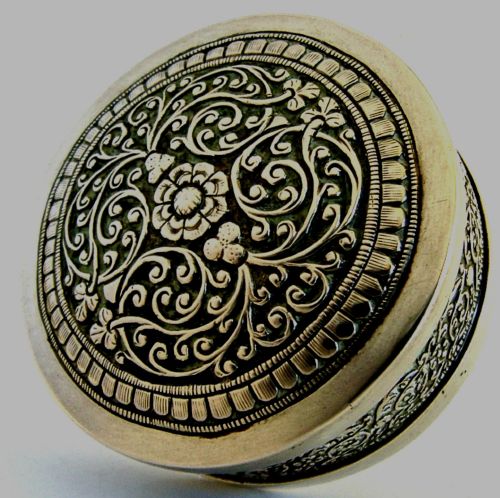
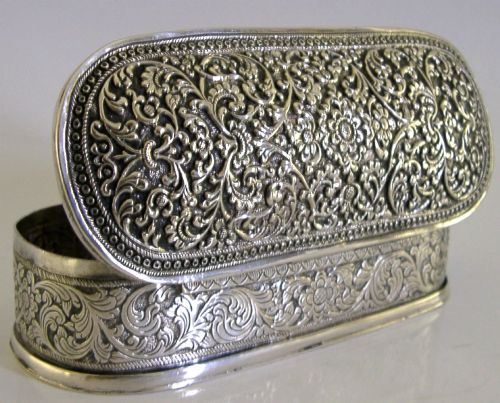
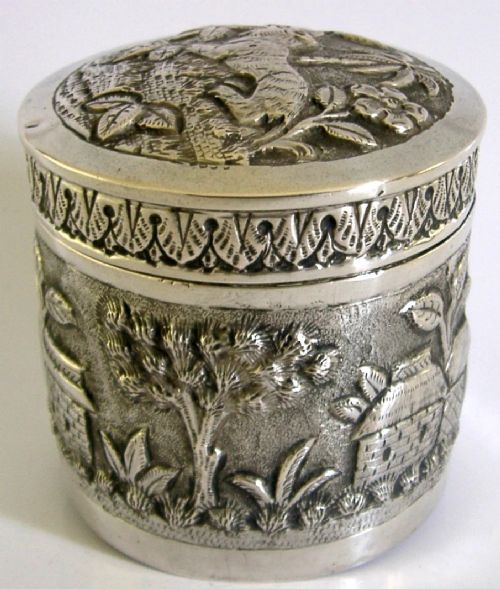
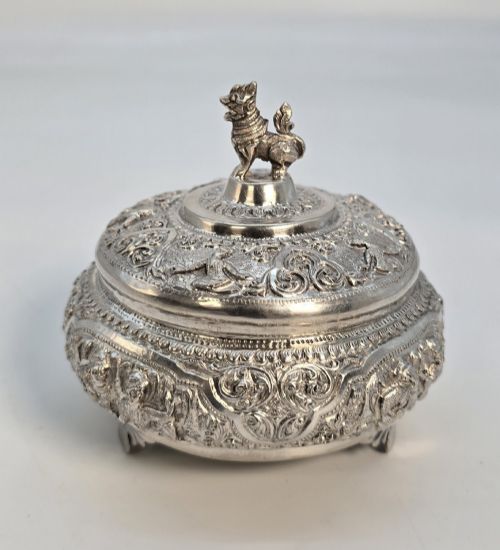
When you search for a colonial silver box, you uncover functional containers created during nineteenth and early twentieth century periods across regions influenced by European trade. The examples appearing here span trinket boxes, tea caddies, lidded jars and betel nut containers originating from Indian, Ceylonese, Indo-Chinese and Javanese makers.
The objects on this page include round boxes, heart-shaped trinket vessels and substantial caskets. They reflect Anglo-Indian, Dutch Colonial and Asian Export styles, linking domestic storage use with distinct regional ornamentation.
Materials and construction methods
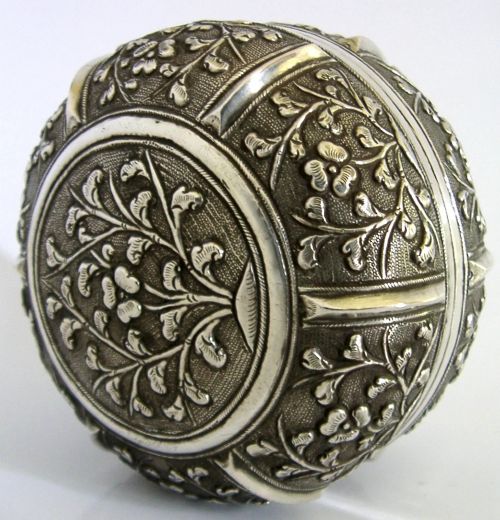
Makers shaped these items primarily from solid silver, frequently employing repoussé decoration to hammer intricate folk and floral motifs from the reverse side. Several pieces combine this silver work with contrasting materials such as tortoiseshell or apply silver gilt surfaces.
Casket and box construction relies on sturdy framing where hinged lids and fitted covers secure contents like tea leaves, spices or personal ornaments. The physical weight of the metal indicates substantial gauge silver rather than thin plating.
Form variations on this site range from round trinket boxes to tall tea caddies and lidded jars.
Distinctions in quality
The finest examples demonstrate exceptional crispness in repoussé and embossed ornamentation, where every foliate scroll and animal motif remains sharp and deeply defined. Weaker pieces show shallow stamping or worn surface detail that obscures the narrative of the design.
Integrity of construction separates superior boxes from ordinary ones, particularly in how securely hinges align and lids close flush against the body. Surviving interior gilding and intact secondary materials like tortoiseshell also elevate the standing of a piece.
Kutch workshops·Yogya silversmiths
The Colonial Silver Box Glossary
- Repoussé
- A metalworking technique where the artisan hammers the design from the reverse side to form raised relief on the front. This method defines the sculptural decoration seen on many Indian and Javanese containers.
- Silver Gilt
- Silver that has been coated with a thin layer of gold on its surface. This treatment provides a warm interior glow inside caskets and betel nut boxes.
- Betel Nut Container
- A specialised vessel designed to hold ingredients for traditional masticatory preparations. These pieces often feature secure lids to preserve the contents.
- Tea Caddy
- A lidded box originally built to store dry tea leaves safely away from moisture. In colonial trade contexts, these containers frequently received dense regional ornamentation.
- Tortoiseshell
- The mottled brown and amber keratin shell of certain marine turtle species utilised as a panel material for luxury caskets. It provides a dark, polished contrast against bright silver mounts.
Colonial Silver Box: Frequently Asked Questions
What were colonial silver boxes used for?
These containers served practical daily functions within households, storing valuable commodities like tea, spices, betel nut mixtures or personal trinkets. Their physical robustness allowed them to protect perishable goods in tropical climates.
Over time, many of these utilitarian vessels transitioned into decorative objects displayed on tables and desks. Their intricate exterior ornamentation made them symbols of trade and status during the Raj period.
How do I date a colonial silver box?
Dating relies on stylistic clues, historical context and manufacturing techniques visible in the metalwork rather than standard hallmarks, which often appear absent or irregular on export pieces. Nineteenth and early twentieth century examples display distinct regional design shifts.
Comparing the depth of repoussé work and the specific motifs against documented archival pieces helps narrow down the production era. Anglo-Indian and Dutch Colonial items often carry stylistic markers tied to specific decades of trade expansion.
How do I clean antique silver boxes?
Maintenance requires gentle dusting with a soft, dry cloth to prevent the buildup of dirt within the recessed areas of repoussé decoration. Avoid aggressive chemical dips that strip away the dark patination accumulated in the crevices over generations.
If the piece incorporates tortoiseshell or silver gilt, keep moisture away from the joins to protect the underlying adhesives and delicate surfaces. Professional conservation advice is recommended for pieces showing structural fragility.
How do I tell regional styles apart?
Regional identification depends on the specific motifs and material combinations native to each producing area. Indian and Ceylonese items frequently feature dense foliate scrollwork and animal figures, while Javanese pieces from Yogya display distinct repeating geometric patterns.
Dutch Colonial and Indo-Chinese export works often integrate European furniture forms with local silversmithing traditions. Examining the structural core and the framing of any tortoiseshell panels clarifies the geographic origin.