
Colonial Indian Brass
Colonial Indian brass pieces combine robust tropical hardwoods with gleaming metal mounts built to withstand the rigours of long-distance travel.
Colonial Indian Brass
When searching for colonial indian brass, buyers encounter a diverse selection of furnishings created during the British presence on the subcontinent. The inventory here spans utilitarian campaign equipment and decorative household items rather than singular decorative forms.
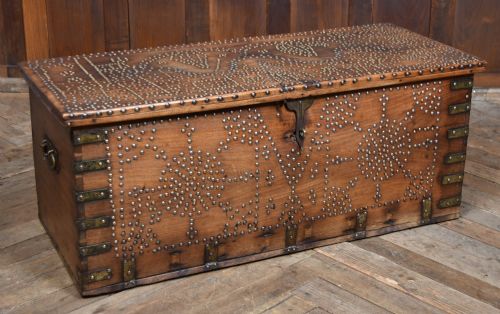
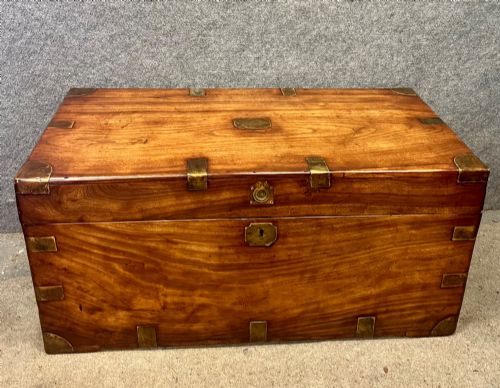
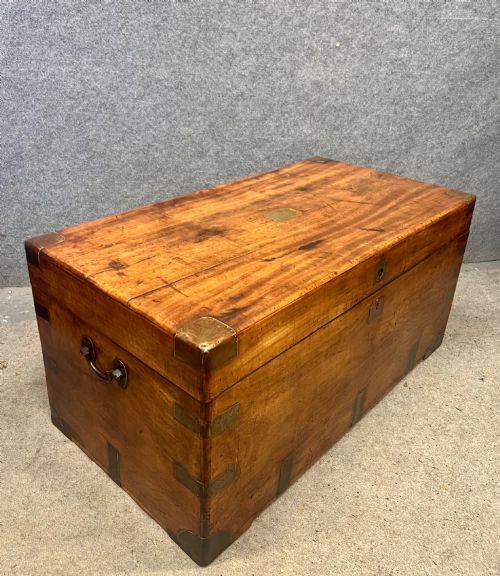
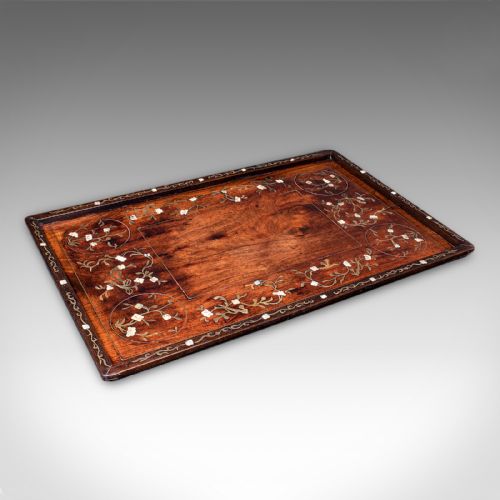
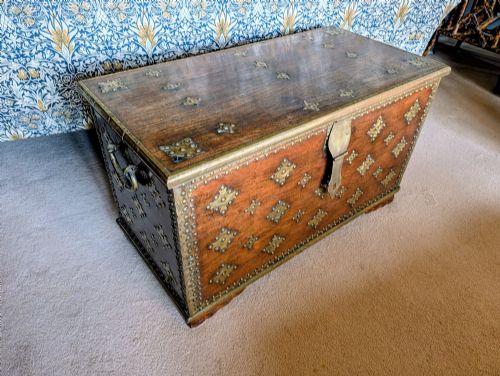
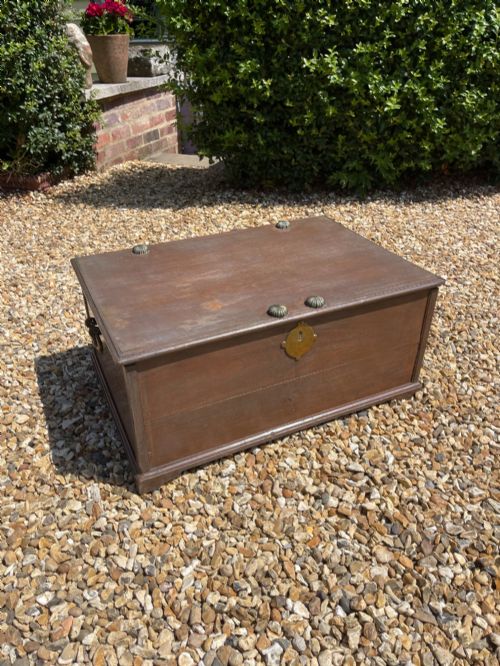
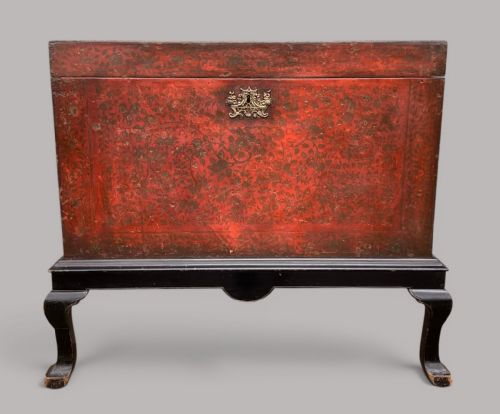
Teak, padouk and camphor wood trunks fitted with corner brackets and strapwork dominate the selection. These storage chests, alongside smaller deed boxes and serving trays, illustrate the practical requirements of officers and merchants.
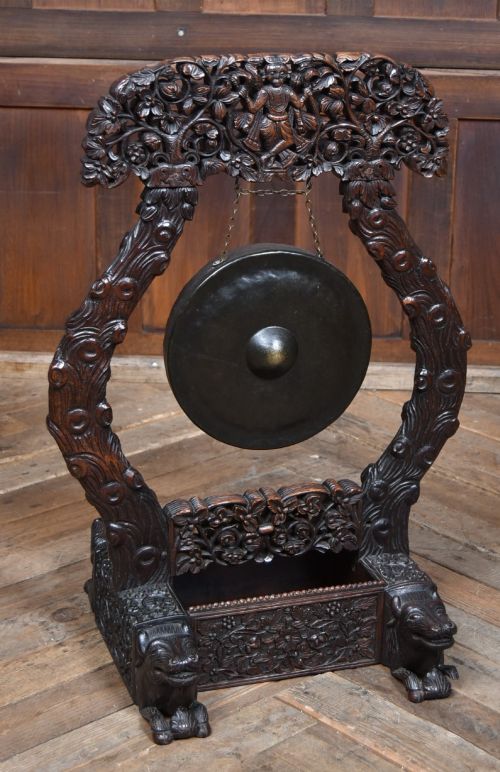
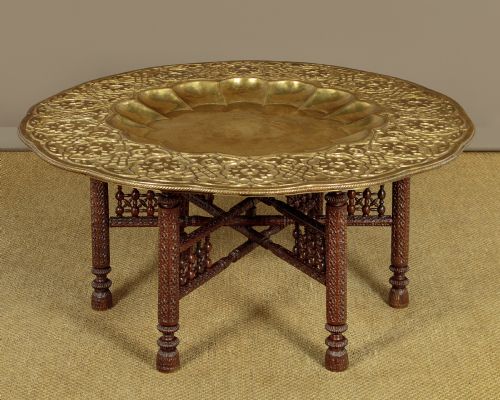
Occasional tables, campaign desks and planters complete the grouping, often combining brass inlay with carved woodwork. Pieces originating from the nineteenth century form the majority of the current choices.
Materials and construction methods
Craftsmen relied on dense tropical timbers such as teak, padouk, ebony and camphor wood to construct carcases capable of resisting humidity and splitting. These strong timbers provided a stable foundation for the extensive metal work.
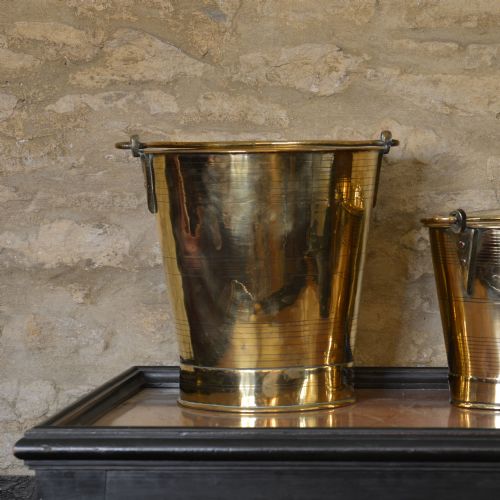
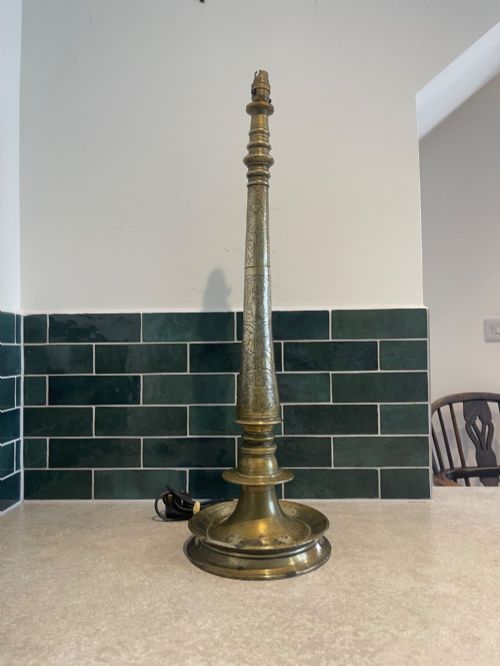
Sheet brass and copper served as protective binding for corners, edges and lids, secured with countless small pins. Repousse work, engraving and intricate brass wire inlay added surface decoration to chargers, tables and boxes.
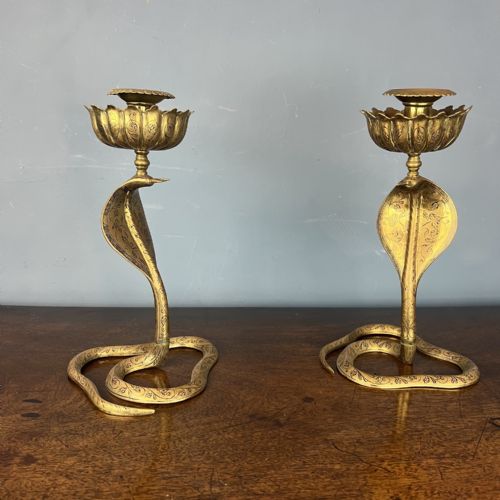
Snake candlesticks bring a distinct twist to nineteenth-century lighting, proving that colonial officers brought some unusual pets into the conversation.
Assessing quality in metal and wood
Quality rests upon the precision of the brass binding and the complexity of the inlay work. Finer examples display tightly fitted metal mounts that sit flush against the timber without gaps or uneven hammering.
The choice of primary wood also dictates standard, with highly figured padouk or camphor wood achieving a superior finish compared to plain utility timbers. Original flush-fitting hardware and intact interior fittings elevate the standing of any chest or desk.
P Orr, Madras
The Colonial Indian Brass Glossary
- Campaign
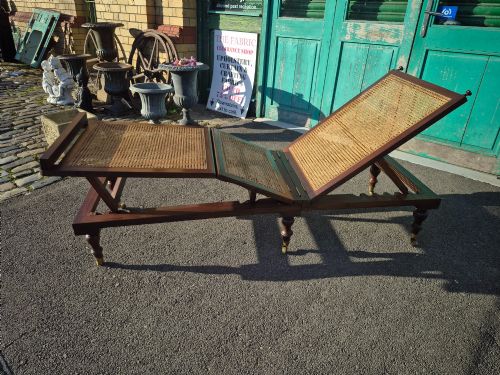
- Furniture designed to dismantle or fold easily for military transport. These items feature recessed brass handles and reinforced corners.
- Cellarette
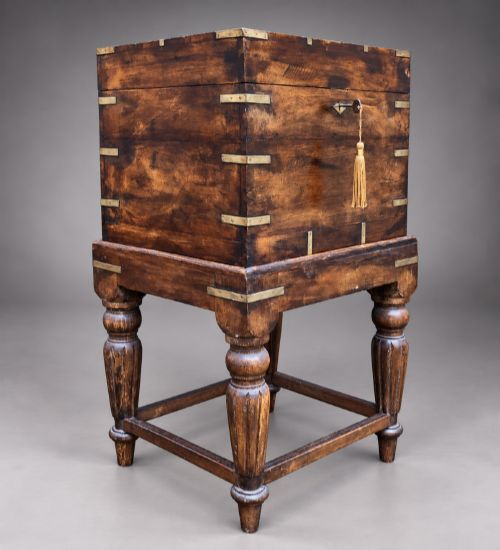
- A lockable container used for holding bottles of wine or spirits. They often appear as heavily brass-bound wooden chests raised on stands.
- Bidri ware
- Metalwork originating from India characterised by a dark alloy of zinc and copper inlaid with fine sheets of brass or silver.
- Kamandal
- A traditional spherical water vessel carried by Hindu ascetics or holy figures. Examples made from brass occasionally appear in nineteenth-century collections.
Colonial Indian Brass: Frequently Asked Questions
What is a campaign chest?
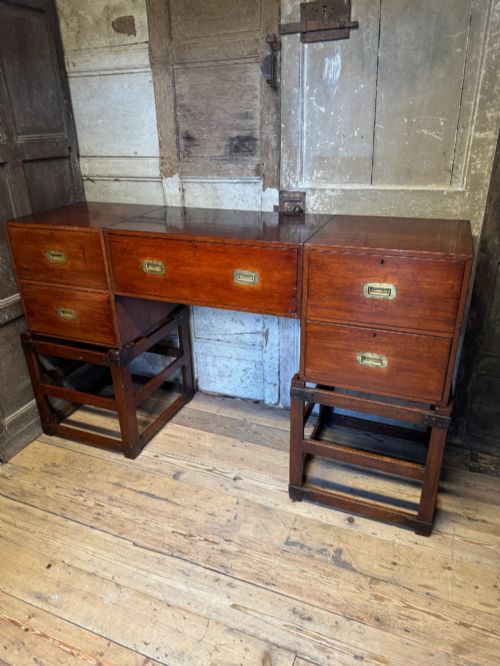
A campaign chest is a portable set of drawers made in two or more separate sections for ease of military transit.
They feature recessed brass pulls to prevent snagging and corner brackets to absorb the knocks of frequent travel.
How do I clean brass inlay?
Clean brass inlay carefully using a soft cloth and a gentle metal polish designed for antiques. Take care to avoid getting moisture or abrasive cleaners onto the surrounding timber.
Regular dusting with a dry cloth usually suffices for day-to-day upkeep.
Where were these pieces used?
These items saw service in military quarters, colonial bungalows and administrative offices across the Indian subcontinent during the nineteenth and early twentieth centuries.
Owners transported them during relocations across regions and back to Britain upon retirement.
How do I identify camphor wood?
Camphor wood is identified by its distinctive, aromatic scent that persists for decades, alongside a pale, golden-brown grain with natural oils.
Chests made from this timber were favoured for protecting garments from insects during storage.