


Colonial Elephant Side Table
These colonial elephant side table pieces are heavily carved occasional and centre tables supported by elephant figures, bringing distinct regional character to a room.
Colonial Elephant Side Table
A colonial elephant side table represents a distinct category of nineteenth and early twentieth-century furniture created within the British Empire, primarily drawing on Anglo-Indian and Anglo-Burmese traditions. You encounter these items in forms ranging from small occasional tables and plant stands to larger coffee and centre tables.
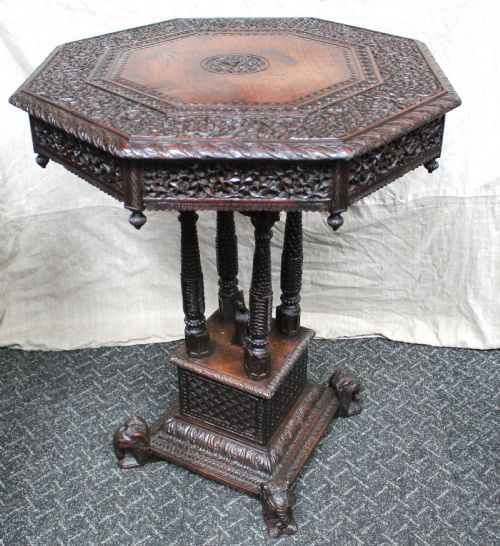
The overall shape varies from circular and octagonal tops to rectangular formats, often utilising traditional folding or tripod bases. Surviving pieces display the rich stylistic interchange between British domestic demand and local carving expertise.
How they were made
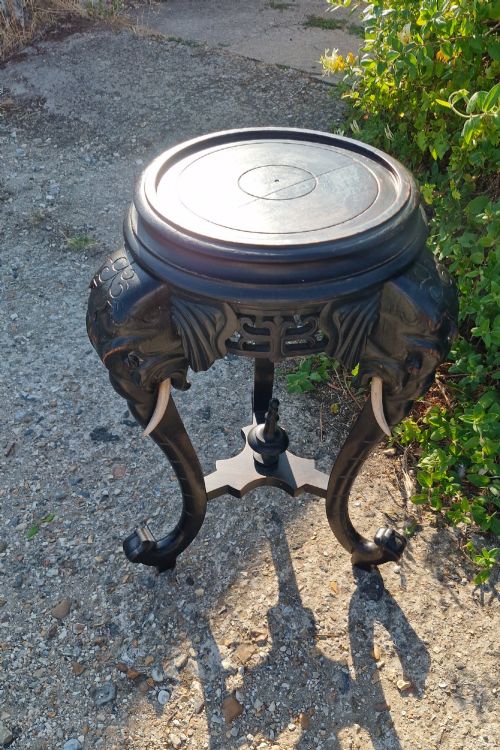
Local hardwoods form the primary structural foundation of these tables, with teak, rosewood, and ebonised hardwood chosen for their density and suitability for intricate carving. Artisans executed deep relief work by hand, shaping the elephant legs, heads, and tops with specialised chisels.
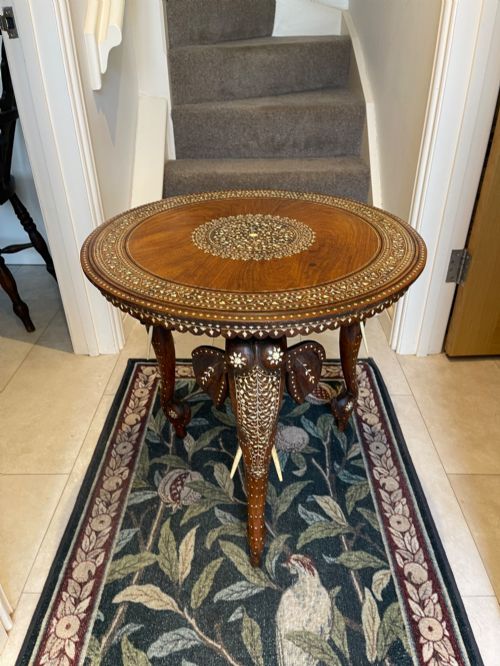
Surface ornamentation often incorporates bone and bone inlay to contrast against the dark timber, alongside painted wooden elements for tusks and decorative details. Joinery techniques balance traditional regional framing methods with formats durable enough for colonial export.
A late Victorian example includes painted wooden tusks standing ready to greet visitors.
What varies in quality
The distinction between standard production and superior craftsmanship lies in the depth and precision of the hand carving on the elephant figures and the table apron. Finer examples display lifelike anatomical detail in the animals and crisp, unblemished surface ornamentation across the timber.
Material selection further divides the range, with solid rosewood and finely figured teak sitting above simpler painted woods. The integration of contrasting bone inlay and the structural stability of the overall frame determine the enduring standing of an individual table.
The Colonial Elephant Side Table Glossary
- Anglo-Indian
- A descriptive term for furniture made in India during the British colonial period, combining British furniture forms with traditional Indian carving. This style frequently utilises indigenous timbers such as teak and rosewood.
- Hoshiarpur
- A town in Punjab renowned for its intricate woodworking and inlay traditions. Pieces from this region are typically identified by dense geometric patterns incorporating bone.
- Bombay Presidency
- A major administrative division of British India associated with specific regional furniture production. Tables attributed here often feature octagonal tops and deeply carved elephant supports.
- Bone Inlay
- A decorative technique where small pieces of animal bone are embedded into recesses within the timber. It provides sharp tonal contrast against dark hardwoods like ebony and rosewood.
- Occasional Table
- A small, versatile table designed for sporadic use within a room. In this context, these items function as lamp stands, display surfaces, or low coffee tables.
Colonial Elephant Side Table: Frequently Asked Questions
How do I style an elephant table?
These tables work well as statement accent pieces beside armchairs or sofas, holding lamps or small decorative objects without crowding the floor space.
Because the carvings are intricate, place them against plain walls to let the silhouette of the elephant legs stand out clearly.
Are these tables sturdy enough for daily use?
Solid hardwood construction makes most examples durable for holding everyday items like books or cups, provided the joints remain stable.
Tripod versions and tables with delicate leg assemblies require careful placement to avoid tipping on uneven flooring.
How do I identify an older piece?
Examine the timber underneath and inside the joints for signs of hand tooling, age patina, and regional construction methods typical of the nineteenth century.
Earlier examples usually feature solid teak or rosewood rather than lighter secondary woods or modern adhesives.
How should I clean the carved wood?
Dust the deep recesses regularly with a soft brush to prevent dirt accumulation in the intricate carving and bone inlay.
Apply a microcrystalline wax sparingly to nourish the hardwood surface without building up a heavy, dull residue.