
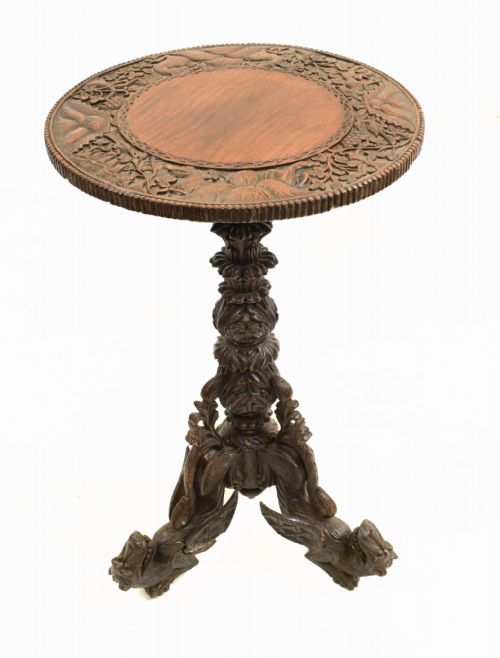


Colonial Carved Teak Table
A colonial carved teak table brings dense foliage and animal motifs straight into a room through heavy tropical timber.
Colonial Carved Teak Table
A colonial carved teak table encompasses a range of domestic forms produced during the nineteenth and early twentieth centuries under British influence in regions such as India and Burma. Buyers searching for a colonial carved teak table encounter forms spanning occasional tables, coffee tables, side tables, and larger centre pieces.
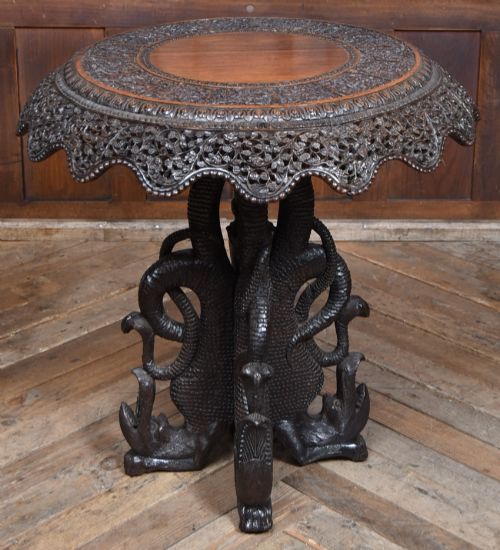
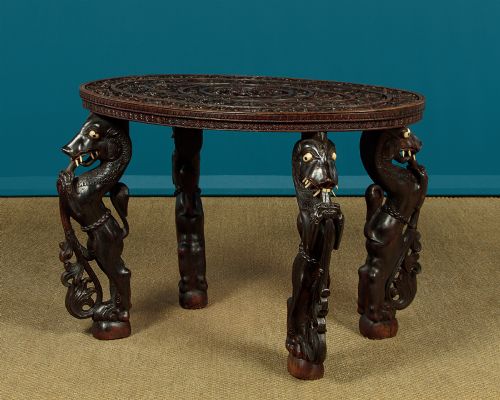
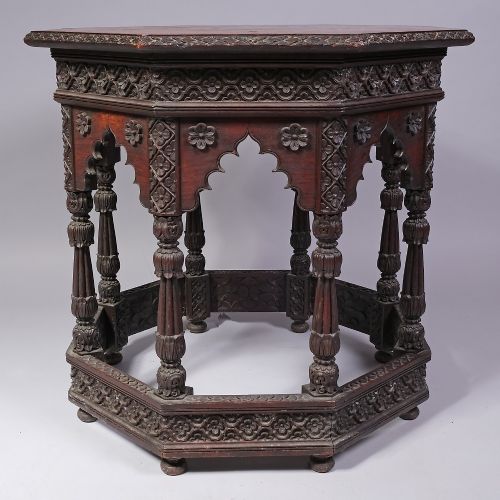
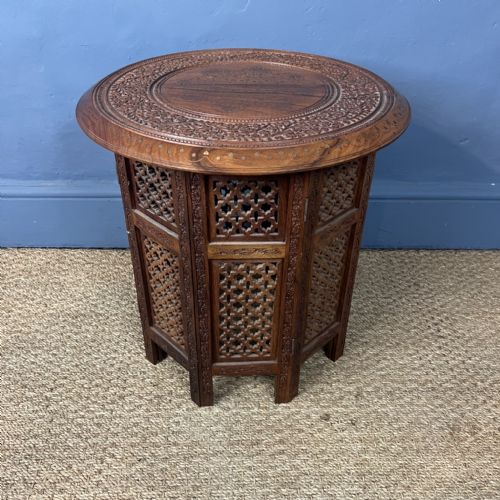
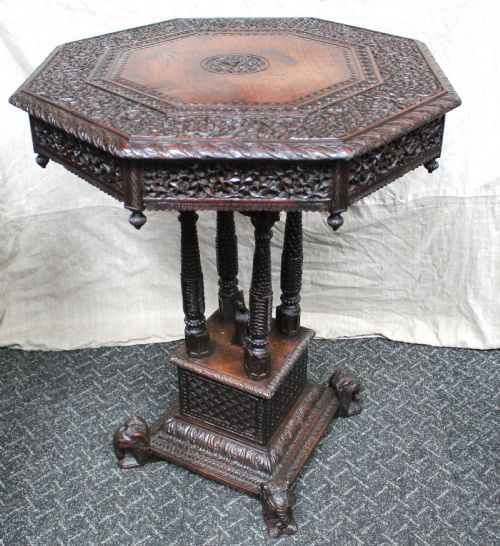
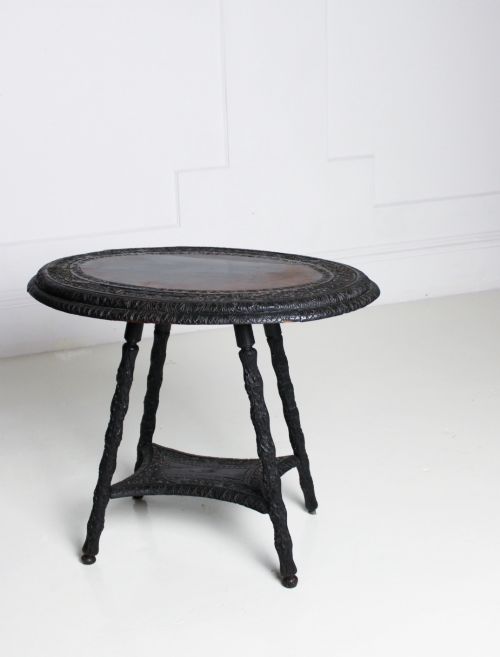
The most common examples on this page are circular, octagonal, or oval occasional tables dating from the Victorian era up to the nineteen-thirties. These pieces frequently incorporate regional motifs like elephants, peacocks, or intricate foliate carving characteristic of Anglo-Indian and Anglo-Burmese production.
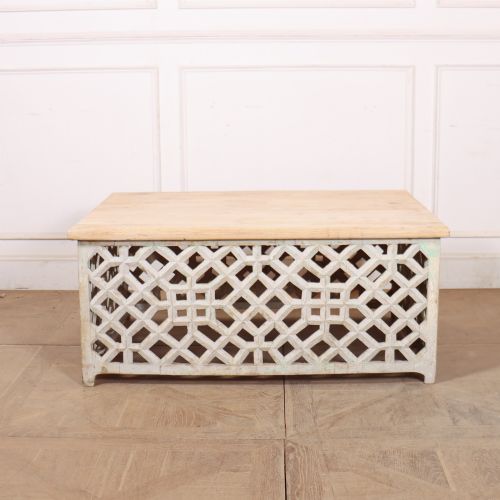
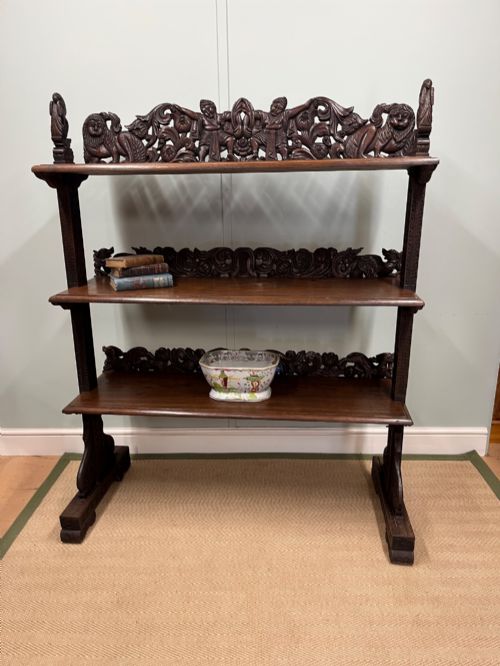
Beyond standard tea and coffee tables, the selection includes tilt-top designs, multi-tiered buffets, and occasional console tables. Makers utilised dense tropical hardwoods to construct sturdy furniture intended for both colonial residences and shipment back to Britain.
How they were made
Construction relies heavily upon solid teak, alongside supplementary hardwoods such as padouk and rosewood. Artisans carved deep, intricate relief patterns directly into the dense timber, often covering every available surface with dense foliage and figural carvings.
Many examples incorporate contrasting materials, using bone, ivory, or brass wire inlay to highlight geometric patterns and botanical borders. Folding mechanisms, tripod bases, and tilt-top mechanisms were engineered to allow portability for campaign use or compact storage.
Several tables rely entirely on carved wooden elephants to hold up the afternoon tea.
What varies in quality
Quality rests upon the depth, precision, and sharpness of the hand-carved detail across the teak surface. Superior examples display crisp definition in animal figures and foliage, whereas lesser pieces feature shallow, hurried incisions that blur the design.
The choice of secondary materials and the integrity of the joinery also separate ordinary items from finer specimens. Tables utilising precise brass or bone inlay demand greater technical skill than plain carved surfaces, whilst the stability of the central pedestal or folding mechanism dictates daily utility.
The Colonial Carved Teak Table Glossary
- Anglo-Indian
- Pertaining to decorative arts produced in India during the period of British rule, combining British furniture forms with local carving techniques. These items often showcase distinct regional preferences in wood selection and ornamentation.
- Campaign
- Furniture designed to fold, dismantle, or pack flat for military officers and colonial administrators on the move. Such pieces utilise robust hardwoods and practical hardware to withstand frequent transport.
- Tilt-top
- A table top hinged to the pedestal so it can pivot vertically when not in use. This mechanism saved space in domestic interiors.
- Hoshiarpur
- A North Indian town renowned for intricate woodwork, particularly tables featuring dense brass or bone inlay on a teak ground. Production from this centre is celebrated for geometric precision.
- Padouk
- A heavy, durable tropical hardwood with a reddish hue used in regional nineteenth-century furniture. It provides a stable base for deep relief carving.
Colonial Carved Teak Table: Frequently Asked Questions
How do I date a colonial carved teak table?
Dating relies on construction methods, timber weight, and stylistic indicators such as brass inlay or figural motifs. Pieces from the earlier nineteenth century often feature heavier hand-turned pedestals and simpler joints compared to later Victorian and Edwardian examples.
Changes in British interior tastes also influenced production dates, shifting from utilitarian campaign pieces to highly decorative occasional tables by the end of the century.
Were these tables made for export?
A large proportion of these pieces were manufactured specifically for the export market to satisfy British demand for exotic colonial goods. Families returning from service abroad brought them home as household furnishings.
Local European residents in India and Burma also commissioned and purchased these tables for their colonial residences.
How do I care for carved teak furniture?
Maintain the timber by dusting regularly with a dry cloth and avoiding excessive moisture or direct sunlight. Teak is naturally oily and durable, but harsh cleaning products will strip the finish.
Occasional application of appropriate wax helps preserve the sheen of the wood and protects the recesses of the deep carvings.