

Octagonal Carved Wood Table
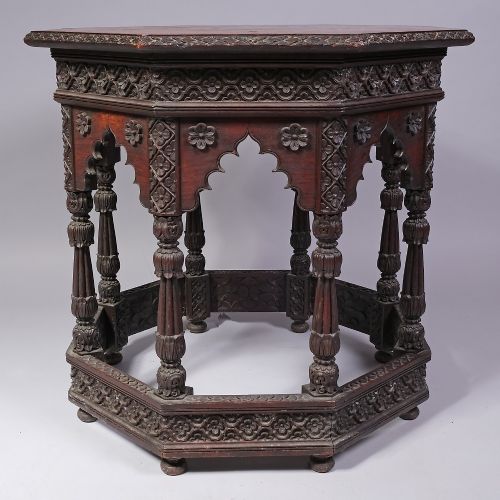
An octagonal carved wood table brings distinct geometry and intricate surface carving into a room, spanning nineteenth-century Anglo-Indian workshops to traditional English vernacular forms.
Octagonal Carved Wood Table
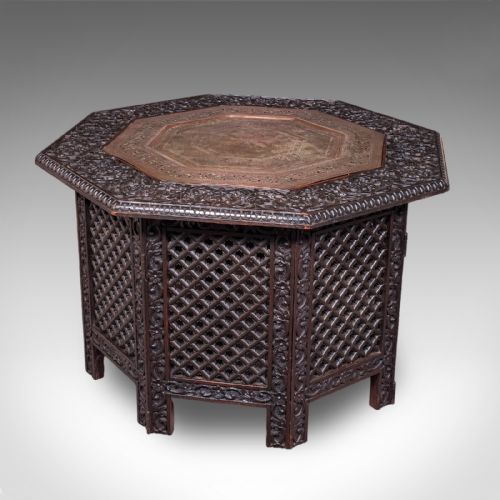
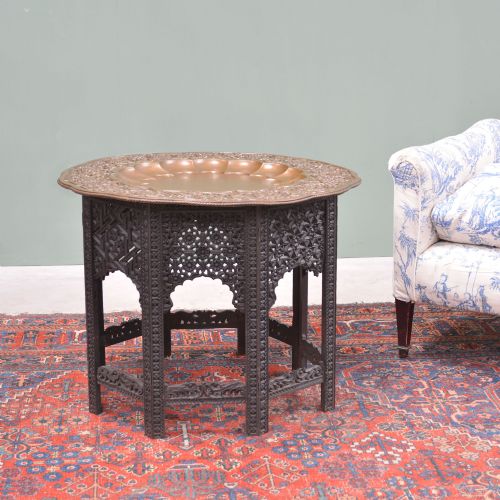
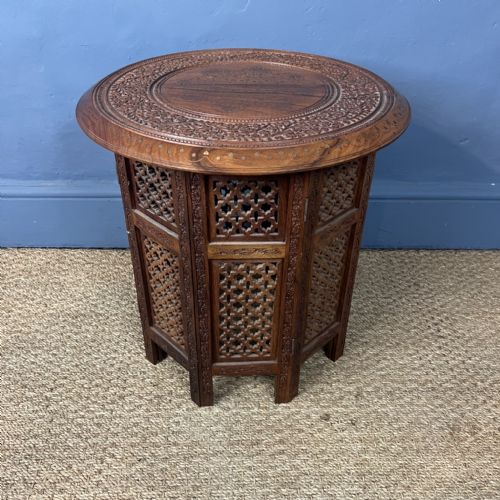
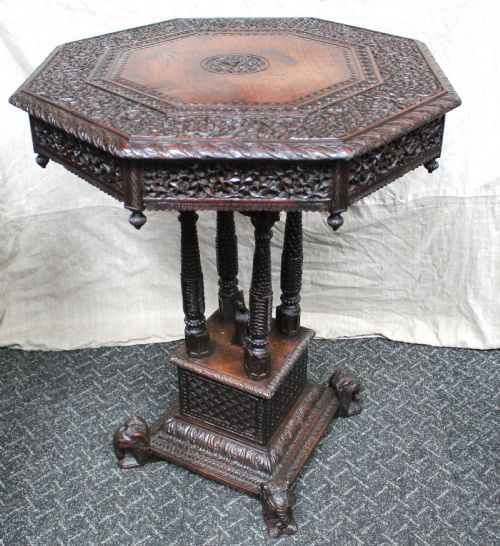
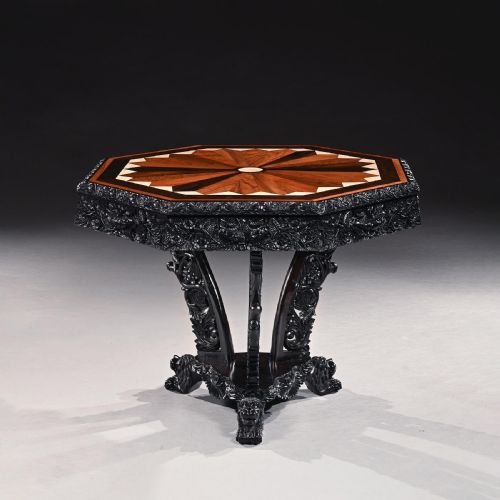
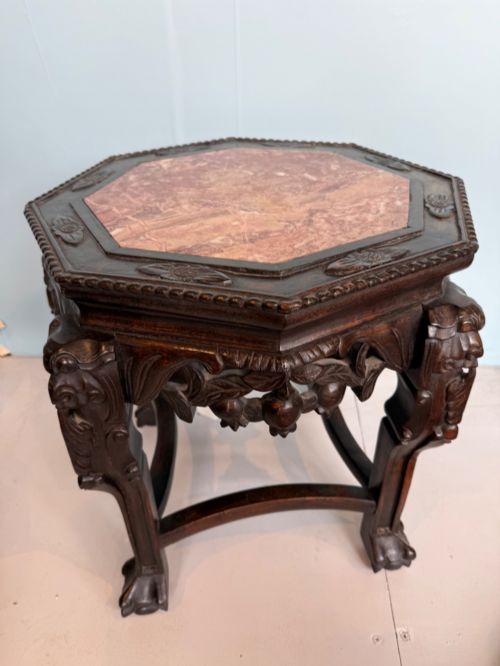
When you search for an octagonal carved wood table, you encounter a diverse group of occasional, side, and centre tables originating from British domestic cabinetmakers and overseas colonial workshops. The most frequent examples on this page are nineteenth-century Anglo-Indian pieces featuring eight-sided folding bases and densely carved tops.
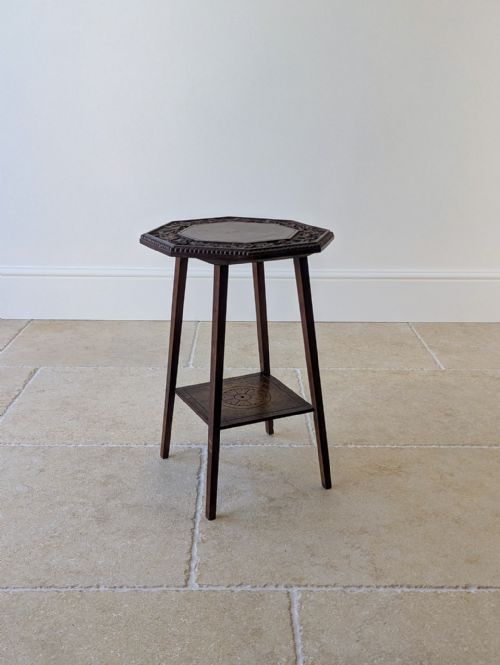
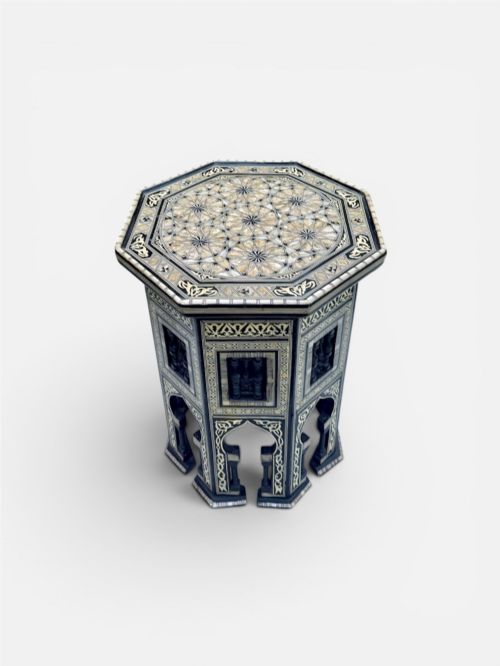
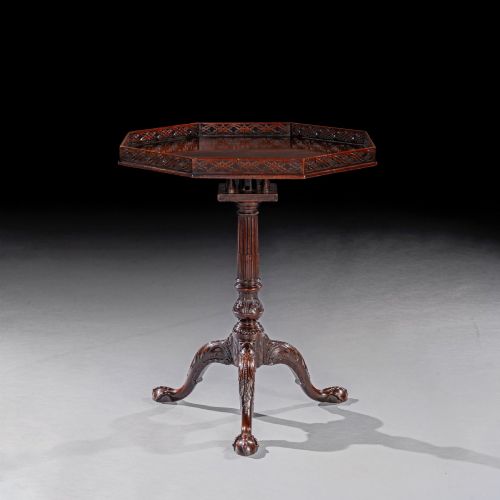
Beyond British Victorian and Georgian mahogany or oak tripod examples, the selection includes pieces linked to specific regional styles such as Moorish Revival, Syrian, and Ceylonese production. These items function practically as lamp tables or plant stands while introducing strong geometric proportions to an interior.
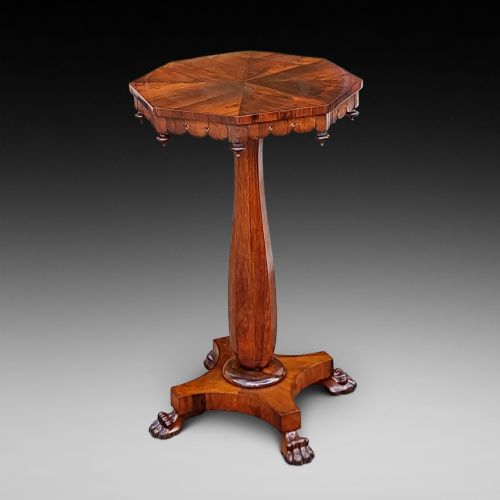
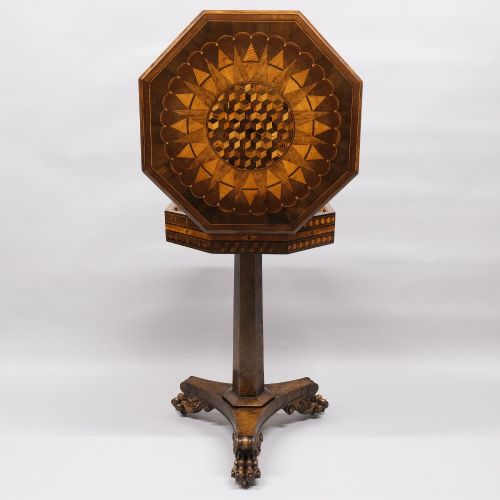
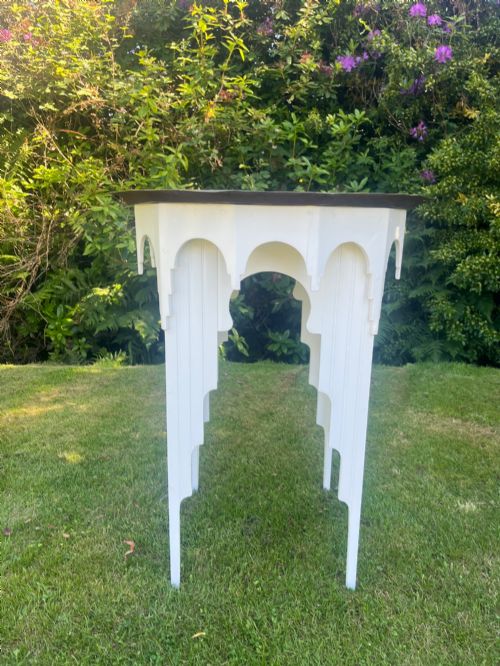
The historical spread reaches from eighteenth-century Georgian tripod designs through Victorian walnut and rosewood iterations up to Edwardian and later twentieth-century interpretations. Each period handles the eight-sided format differently, ranging from plain moulded mahogany edges to heavily pierced relief carving.
Materials and construction methods
Cabinetmakers utilised dense hardwoods including teak, mahogany, padauk, ebony, and walnut to withstand deep chisel work without splintering. In many Anglo-Indian and Middle Eastern examples, the timber surface acts as a ground for intricate surface embellishment rather than relying on plain polished grains.
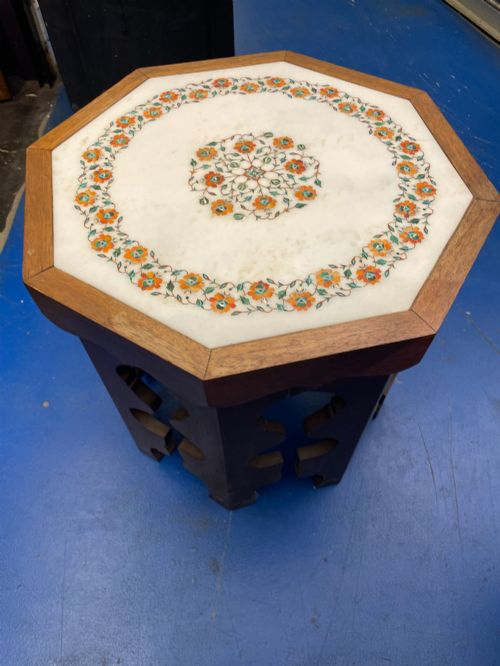
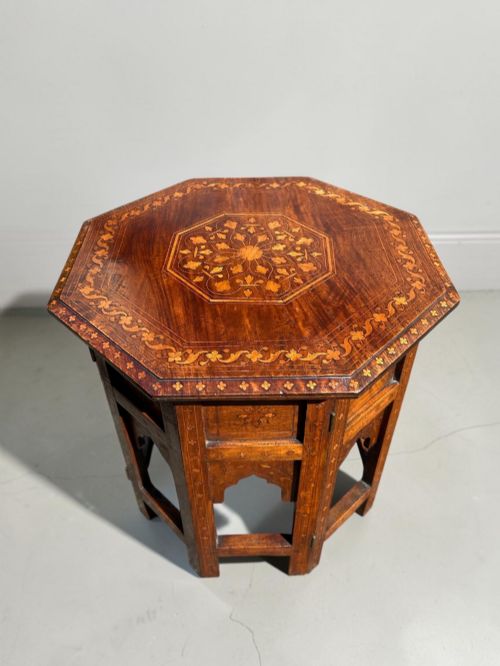
Inlay techniques involving contrasting materials such as mother-of-pearl, nacre shell, brass wire, and specimen woods appear frequently within the carved recesses, secured by natural adhesives. Folding bases on tables from regions like Hoshiarpur use precise interlocking joinery that allows the structural frame to collapse flat.
British workshops favoured traditional mortise and tenon joints for static side and centre tables, often incorporating tripod legs or turned pedestals. Surface finishes typically rely on traditional shellac polishes or wax coats applied directly over the dense tropical or native hardwoods.
Several tables retain hidden folding mechanisms ingenious enough to baffle modern guests who try to lift them by the top alone.
Assessing craftsmanship and execution
The distinction between ordinary production and superior work rests on the crispness and depth of the hand carving. Finer pieces display sharp, undercut foliage and geometric patterns without the rounded edges or shallow tool marks typical of hurried manufacture.
The integration of inlaid elements dictates higher grade execution, particularly where brass wire or shell segments sit flush with the surrounding wood rather than relying on heavy filler. Timber selection also governs quality, with dense, stable hardwoods maintaining structural integrity across the eight-sided joints over generations.
Proportion and stability separate standard utility tables from exceptional examples. A well-balanced base and a top that remains level under weight reflect precise regional joinery or skilled British cabinetmaking.
Liberty and Co·Ralph Turnbull
The Octagonal Carved Wood Table Glossary
- Anglo-Indian
- Descriptive term for decorative arts produced in the Indian subcontinent during the British colonial period, often combining British furniture forms with local carving traditions. These items frequently utilise dense native timbers like teak and padauk.
- Hoshiarpur
- A Punjabi city renowned for intricate woodwork, particularly tables featuring dense floral carving and inlaid resin, brass, or mother-of-pearl. Such pieces are typically constructed from seasoned teak.
- Parquetry
- A geometric mosaic of wood pieces used for decorative surfaces on tables and cabinet furniture. It differs from marquetry by forming repeating geometric patterns rather than pictorial scenes.
- Tripod table
- A freestanding table supported by a central pillar resting on three legs. This format gained popularity in Britain during the eighteenth century for flexibility in domestic spaces.
- Tray top
- A tabletop featuring a raised moulded or carved rim designed to prevent small objects from sliding off. This feature appears on both folding occasional tables and fixed side stands.
Octagonal Carved Wood Table: Frequently Asked Questions
How were octagonal carved wood tables used originally?
These tables served primarily as movable occasional stands for lamps, tea service, or decorative ornaments in nineteenth-century drawing rooms. Their compact eight-sided format allowed them to sit easily in corners or beside seating without obstructing walkways.
In colonial contexts, folding versions provided portable surfaces that could be stored away when not in use. Domestic British variants functioned similarly as wine tables, work tables, or fixed centrepieces in parlours.
Are the folding bases original to Anglo-Indian tables?
Many Anglo-Indian tables from regions like Hoshiarpur were constructed with clever interlocking folding bases designed for ease of transport. The top lifts off the collapsible wooden frame, which slots together without metal hinges.
Checking the mating joints reveals whether the base belongs to the top, as hand-carved alignment marks often correspond. When properly fitted, these folding stands remain stable despite lacking fixed permanent glue joints.
How do I distinguish regional carving styles?
Hoshiarpur work is readily identified by dense floral and geometric relief carving covering every surface, often accented with dark resin or brass wire. Syrian and Middle Eastern pieces frequently employ prominent mother-of-pearl or nacre inlay arranged in geometric stellar patterns.
British Victorian and Edwardian interpretations substitute these dense motifs for traditional European foliage, linenfold panels, or simpler moulded edges. Examining the timber species alongside the carving depth clarifies the likely geographic origin.