



Collectable Cameo Glass Vase
A collectable cameo glass vase offers layered depths of colour and botanical carving that define the finest late nineteenth and early twentieth century studio glass.
Collectable Cameo Glass Vase
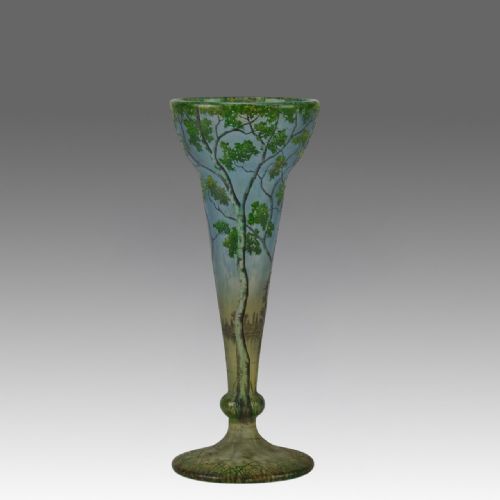
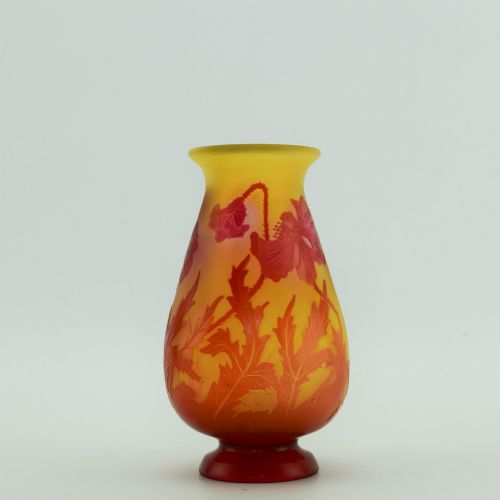
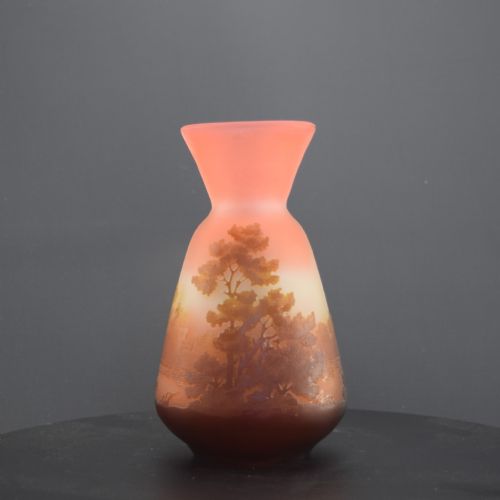
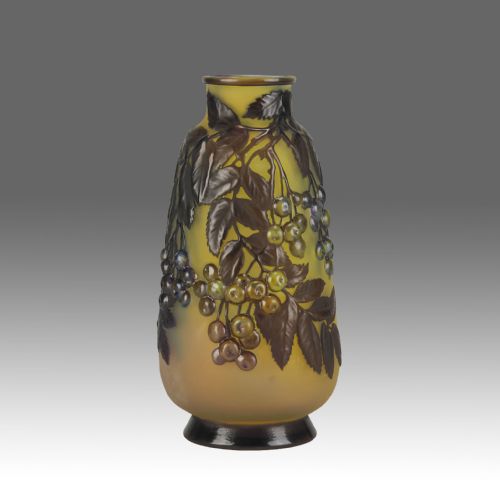
A collectable cameo glass vase is typically encountered in early twentieth century forms dating from the eighteen nineties through to the nineteen twenties. These pieces display distinct naturalistic motifs, including landscape, floral, aquatic and botanical designs executed in distinct relief. Art Nouveau styling dominates the selection, bringing organic curves and asymmetric silhouettes to vases of various shapes.
Makers such as Daum Frères and Gallé produced the primary examples found in this category, ranging from miniature vessels to larger footed and banjo shapes. The surface decoration relies on multi-coloured glass layers carved or etched back to reveal contrasting backgrounds. Buyers encounter works titled with specific botanical or landscape descriptions that reflect the artistic output of these French glasshouses.
How they were made
Makers built these vessels using multiple layers of coloured glass fused together while hot to create the foundation for subsequent carving. Acid-etched glass techniques were then employed alongside hand-carving to cut through the outer strata and expose the contrasting body beneath. Additional detailing such as enamel and gold leaf sometimes augmented the etched relief to enhance surface texture and visual depth.
The process required precise thermal control during both the blowing and the chemical or mechanical removal stages to prevent fracturing the delicate glass layers. Frosted glass backgrounds often provided a matte contrast against the polished or satin finish of the raised cameo design. This combination of casing, etching and surface manipulation created the characteristic multi-toned appearance.
Listings span the decades from eighteen ninety to nineteen twenty, uniting Art Nouveau floral and landscape motifs.
What varies in quality
Quality in a collectable cameo glass vase rests upon the depth of the carving and the complexity of the glass layering. Pieces featuring three or more distinct colour tiers demand greater technical mastery than simpler two-layer versions. The sharpness of the undercut relief determines how cleanly the botanical or landscape motifs detach from the background.
The artistic integration of the naturalistic subject matter with the vessel's specific form separates standard production from exceptional studio output. Subtlety in shading, achieved through controlled acid biting rather than uniform removal, dictates the refinement of the finished surface. Furthermore, the presence of supplementary embellishments like enamel or gold leaf alters the visual richness of the piece.
Daum Frères·Gallé
The Collectable Cameo Glass Vase Glossary
- Cameo Glass
- Glass vessels formed of two or more distinct layers of different colours fused together, with parts of the outer layer carved or etched away to create a raised design. This technique draws inspiration from ancient carved gemstone carving.
- Acid-Etched Glass
- Glass decorated by applying hydrofluoric acid to eat away exposed surfaces while protecting the areas meant to remain in relief. This method allowed makers to achieve precise control over the depth of the background.
- Art Nouveau
- An international style of art and architecture that peaked in popularity around nineteen hundred, characterised by intricate linear designs and flowing motifs inspired by natural forms. Vases from this movement frequently incorporate plant stems and floral shapes.
- Frosted Glass
- Glass with a textured, cloudy surface produced by acid-treatment or sandblasting to diffuse light and reduce transparency. It frequently serves as a contrasting background layer behind polished cameo motifs.
- Enamel
- Opaque vitreous composition fused to the surface of the glass through firing to add supplementary colour and decorative detail. It allows for fine linear highlights on top of the carved cameo relief.
Collectable Cameo Glass Vase: Frequently Asked Questions
What is cameo glass?
Cameo glass is a form of luxury glassware created by fusing layers of different coloured glass together and then carving or acid-etching the outer layer away. This process leaves a raised design that stands in sharp contrast to the background.
The technique requires immense skill to avoid breaching the inner layers while achieving intricate botanical or landscape details.
How do I date these vases?
Dating relies heavily on the stylistic markers of the Art Nouveau period, typical maker signatures incorporated into the glass design, and the specific vessel form. Most pieces date from the late nineteenth century through to the nineteen twenties.
Examining the signature technique, whether cameo-carved or enamelled directly onto the surface, helps establish the production era.
Where were these pieces made?
The prominent makers represented in this field operated in France during the late nineteenth and early twentieth centuries. Workshops in Nancy became major centres for the development of multi-layered cameo and acid-etched techniques.
These French glasshouses exhibited widely and defined the aesthetic of the Art Nouveau glass movement.
How should I display cameo glass?
Displaying these vases requires positioning them where light can pass through or across the multi-coloured glass layers. Natural daylight or controlled cabinet lighting highlights the depth of the acid-etched and carved relief.
Placing them away from direct edges and heavy traffic areas ensures the delicate frosted and enamelled surfaces remain protected.