



Collectable Handguns
These collectable antique handguns span centuries of military and civilian craftsmanship, offering tangible pieces of historical firepower for the discerning collector.
Collectable Handguns
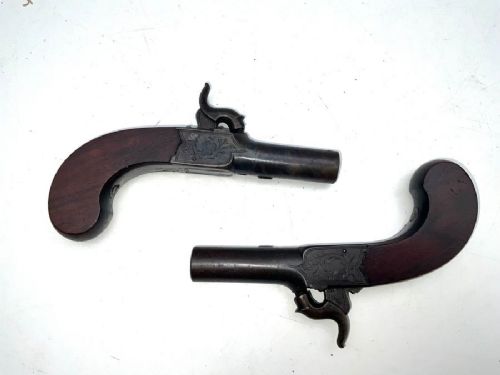
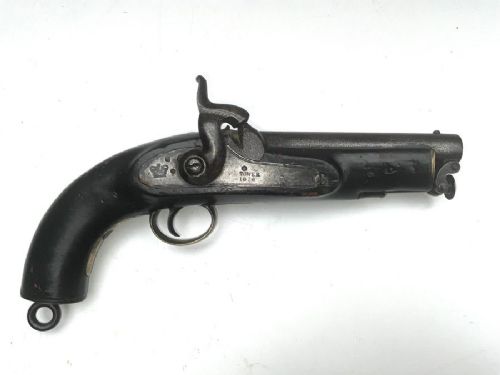
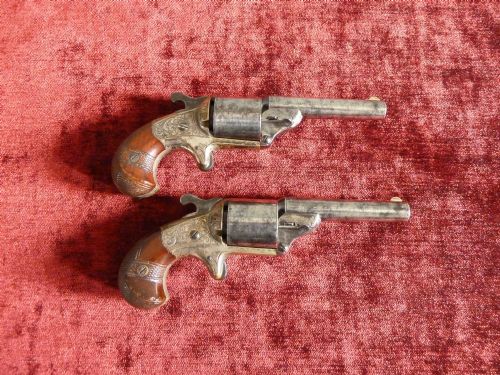
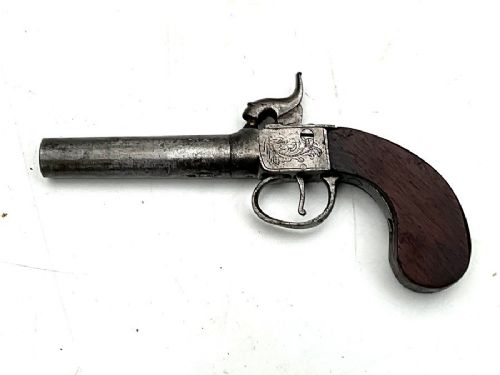
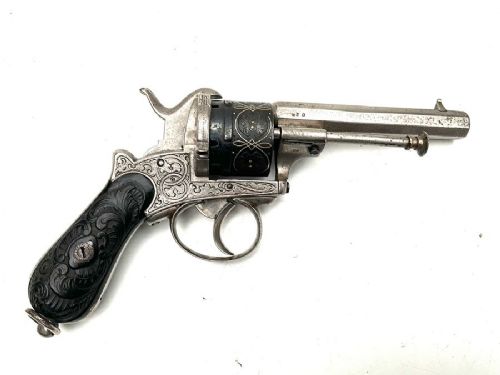
When you search for collectable antique handguns, you encounter functional firearms ranging from pocket-sized personal defence weapons to heavy military service pieces. The selection includes flintlock and percussion ignition systems, alongside early revolvers and pinfire mechanisms.
Most examples originate from the eighteenth and nineteenth centuries, reflecting Georgian, Victorian, and Napoleonic eras. You will frequently find British, American, and European makers represented through pocket pistols, duelling arms, and regulation military sidearms.
How they were made
Makers fashioned barrels and actions primarily from steel and iron, frequently incorporating brass components and cannon-barrel designs. Stocks rely on dense timbers such as walnut, oak, and ebony.
Decoration involved intricate silver wire inlay, cast ornamentation, and engraved lockplates bearing maker signatures and proof marks.
The listings feature steel, walnut, and brass materials across nineteenth-century and eighteenth-century periods.
What varies in quality
The distinction between standard examples and top-tier pieces rests on the presence of original maker signatures, military issue markings, and specialised mechanisms like flick bayonets or sliding rear sights. Comprehensive matching accessories and boxed sets elevate historical importance significantly.
The refinement of decorative elements, including silver mounts and gilded barrel work, separates basic utility firearms from bespoke civilian and presentation pieces.
Henry Nock·James Barber·Timothy Hughes·Auguste Francotte·John Rimes·Meyer And Mortimer·Dutton
The Collectable Handguns Glossary
- Flintlock
- An ignition mechanism that uses a piece of flint striking a steel frizzen to create sparks that ignite the gunpowder charge. This system dominated military and civilian arms throughout the eighteenth century.
- Percussion cap
- A small metal cup containing detonating compound placed on a nipple, which the hammer strikes to fire the weapon. This mid-nineteenth century innovation replaced the flintlock system.
- Boxlock
- A firearm action where the hammer and lock mechanism are contained within an internal frame rather than a sideplate. It provides a clean profile often seen on pocket pistols.
- Turn-off barrel
- A barrel designed to unscrew from the breech for loading from the front without a ramrod. This feature appears frequently on eighteenth-century pocket pistols.
- Pinfire
- An early metallic cartridge design featuring a protruding pin struck by the hammer to detonate the primer. These cartridges emerged during the nineteenth century.
Collectable Handguns: Frequently Asked Questions
What is a pocket pistol used for?
Pocket pistols served as concealable personal defence weapons for travellers and civilians during the eighteenth and nineteenth centuries.
Their compact size allowed easy carriage in overcoats or pockets.
How do I date an antique handgun?
Dating relies on maker signatures, registration stamps, proof marks, and the ignition mechanism type, such as transition from flintlock to percussion.
Specific model years and patent dates stamped on the frame also provide precise timelines.
How should I clean my antique handgun?
Antique handguns require minimal intervention, typically limited to careful dusting and preservation of metal and wood surfaces with appropriate museum wax or oil.
Avoid abrasive cleaners that remove original patinas and historical finish.