

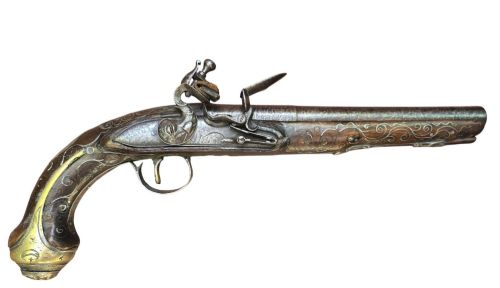


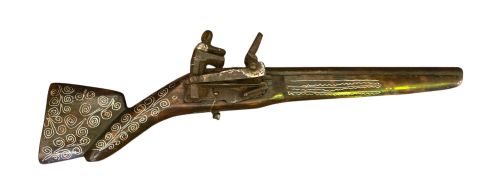
Silver Inlaid Flintlock Pistol
A silver inlaid flintlock pistol is a functional firearm transformed by precious metal embellishment, prized by collectors for its mechanical ingenuity and decorative artistry.
Silver Inlaid Flintlock Pistol
When you search for a silver inlaid flintlock pistol, you encounter historic firearms dating primarily from the eighteenth and nineteenth centuries, spanning English, Scottish, French, and Ottoman origins. The listings on this page include pocket pistols, travel pieces, and larger holster pistols, reflecting the diverse military and civilian uses of early firearms.
You are most likely to meet eighteenth-century examples featuring intricate wire inlay across walnut or hardwood stocks, alongside Ottoman and Balkan variations showcasing broader silver mounts and decorative parcel gilt barrels. These pieces range from Queen Anne style pocket arms with cannon barrels to robust Scottish scroll-butt designs.
The objects combine iron, steel, and flint mechanisms with precious metals, demonstrating how utility and high-status ornament intertwined during the Georgian and Ottoman eras. Each piece represents a specific regional tradition of gunsmithing, from Birmingham workshops to the frontier provinces of the Ottoman Empire.
Materials and technique
Makers constructed the core mechanics using forged steel, iron, and brass, integrating flint and spring mechanisms to produce a reliable spark upon pulling the trigger. Barrels often feature cast decoration, sometimes complemented by gilt inlay alongside the primary silver embellishments.
Stocks were shaped from dense timbers such as walnut and general hardwoods, providing the necessary structural weight and durability for a functional firearm. Artisans channelled grooves into the wood to receive hammered silver wire or broader silver sheets, securing the metal flush with the stock surface.
Silver Inlaid Flintlock Pistol Retail Price Guide 2026
Typical asking prices for silver inlaid flintlock pistol among the pieces listed under this phrase on Sellingantiques today, from the lower quarter to the upper quarter. They describe what is for sale here now, not the wider market.
Listings span the eighteenth and nineteenth centuries, incorporating steel, silver, walnut, and brass across Georgian and Ottoman styles.
Variations in quality
The distinction between ordinary and exceptional examples rests upon the precision of the metalwork and the integration of the silver inlay into the stock. Finer pieces display tight, complex wire patterns or skillfully cast mounts that complement the natural grain of the walnut rather than masking it.
Maker attribution also influences standing, as signed locks from notable regional smiths or established centres like London and Birmingham command greater recognition. The crispness of barrel decoration and the survival of the original flintlock mechanism further separate standard working arms from superior collector pieces.
John Campbell of Doune·James Barber·R. Willoughby·Dumarest
The Silver Inlaid Flintlock Pistol Glossary
- Flintlock
- A firearm ignition mechanism that uses a piece of flint struck against a steel frizzen to create sparks that ignite the gunpowder charge. This system dominated military and civilian firearms throughout the eighteenth century.
- Silver inlay
- The technique of embedding thin silver wire or plates into channels carved within the wooden stock of a pistol. It serves a purely decorative purpose, marking the weapon as an item of status.
- Canon barrel
- A distinctive barrel shape featuring a flared muzzle reminiscent of a ship's cannon, frequently found on eighteenth-century pocket pistols. This form helps reduce weight while maintaining structural strength at the breech.
- Scroll-butt
- A distinctively curved wooden pistol grip shaped in a tight scroll, characteristic of Scottish Highland firearms from the mid-eighteenth century. It provides a secure hold despite the lack of a traditional trigger guard on certain regional variants.
- Frizzen
- The vertical steel plate struck by the flint in a flintlock mechanism, which pivots forward to expose the priming powder to the resulting sparks.
Silver Inlaid Flintlock Pistol: Frequently Asked Questions
How do I identify an eighteenth-century piece?
Eighteenth-century pistols typically display characteristic lock shapes, specific barrel forms like the canon style, and particular wire inlay patterns associated with Georgian or Ottoman manufacture.
Examining the metal patina, wood choice, and regional hallmarks or signatures helps narrow down the production decade.
What is a holster pistol used for?
Holster pistols were designed to be carried in saddle holsters by travellers and military officers during the eighteenth and nineteenth centuries.
Their larger size and greater bore provided stopping power for personal defence on vulnerable transport routes.
How should I clean a silver inlaid stock?
Maintaining the wood and metal requires gentle dusting and careful avoidance of harsh chemical polishes that can lift the delicate silver wire inlay.
Preserving the natural patina protects both the historic timber and the embedded precious metal from unnecessary wear.
Are these pistols in working order?
Some listings note fully working mechanisms, while others survive primarily as decorative or historic collector artefacts.
Checking the individual description confirms the operational status of the flintlock and trigger components.