




Antique Ottoman Firearms
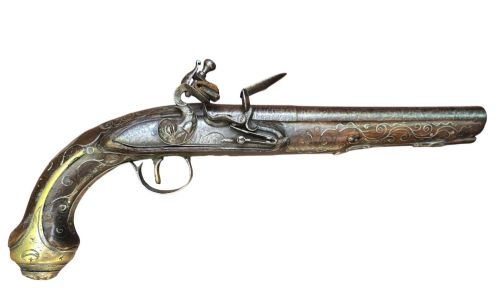
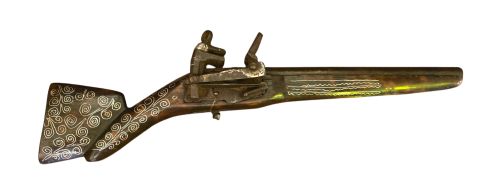
These antique ottoman firearms represent the robust military craftsmanship of an empire, sought after by collectors for their intricate metalwork and historical frontier presence.
Antique Ottoman Firearms
When you search for antique ottoman firearms, you encounter a selection of pistols, muskets, and carbines originating from the eighteenth and nineteenth centuries. These pieces reflect the expansive reach of the Ottoman Empire, drawing on regional traditions from the Balkans, North Africa, and Turkey.
The most common examples on this page are flintlock and snaphaunce pistols, alongside shoulder arms like muskets. Many items bear specific regional markers, such as the distinctive rat-tail or miquelet lock mechanisms associated with the Balkan and Adriatic frontiers.
Forms range from long holster pistols intended for cavalry use to shorter belt pistols and specialised long guns like the Algerian toe-lock musket. Each object demonstrates the practical utility of military hardware combined with decorative local artistry.
Materials and construction
Makers constructed these arms using robust iron and steel for barrels and lock mechanisms, paired with wooden stocks from timber such as walnut. These functional elements provided the durability required for active military service on the frontier.
Decoration relied heavily on contrasting metals and organic materials, incorporating brass mounts, cast silver inlay, and gold highlights. Artisans also utilised bone and mother-of-pearl to embellish grips and stocks, creating intricate surface patterns.
Lock mechanisms varied by region, encompassing standard flintlocks alongside specialised local configurations like the miquelet, snaphaunce, and toe-lock. Barrels frequently featured engraved or cast decoration, occasionally integrating imported locks such as the French Dumarest variant.
Listings feature steel, brass, and silver applied to wooden stocks, spanning the eighteenth and nineteenth centuries across Balkan and North African origins.
Assessing quality and craftsmanship
Quality in these arms lies in the density and precision of the decorative metalwork, particularly the complexity of silver inlay and cast brass mounts. Superior pieces display crisp, deep engraving on the barrel and lock plates rather than shallow surface scratching.
The integration of materials also defines the tier of the piece, with well-executed mother-of-pearl or bone panels fitted flush to the wood stock indicating higher skill. The presence of specialised mechanisms, such as a finely shaped rat-tail bolster, further elevates the work.
The Antique Ottoman Firearms Glossary
- Flintlock
- A firearm ignition mechanism that uses a flint struck against a steel frizzen to create sparks. This system superseded earlier matches and wheel-locks, dominating military arms throughout the eighteenth century.
- Snaphaunce
- An early flintlock predecessor utilising a steel separate from the frizzen and a sliding pan cover. The design offers a distinct mechanical ancestor to the standard flintlock.
- Holster pistol
- A large handgun designed to be carried in a saddle holster rather than worn in a belt. These arms typically saw service with cavalry units on campaign.
- Toe-lock
- A specialised ignition mechanism found on certain North African long guns. The unusual geometry engages the mainspring near the toe of the lock plate.
Antique Ottoman Firearms: Frequently Asked Questions
What is a miquelet lock?
A miquelet lock is a distinct form of flintlock ignition featuring an external mainspring and a combined steel and frizzen. It is widely found on arms originating from the Ottoman Mediterranean and Balkan regions.
This mechanism differs from standard European flintlocks through its rugged construction and specific internal geometry. Collectors prize these locks for their regional character and mechanical reliability.
How do I date an Ottoman pistol?
Dating relies primarily on stylistic indicators, lock types, and regional hallmarks evident in the metalwork and stock shape. Most examples date from the late eighteenth to the early nineteenth century.
Changes in mount decoration and barrel manufacture help narrow the period of origin. Comparing specific regional traits, such as Bosnian Sarajevo work, provides further chronological context.
Were these firearms used in combat?
Many of these pieces served as functional military weapons on the frontiers of the Ottoman Empire. Cavalry and infantry relied on them during conflicts in the Balkans and North Africa.
Their robust construction reflects practical battlefield utility rather than purely decorative manufacture. Wear patterns often confirm active service life.
What is a rat-tail pistol?
A rat-tail pistol refers to a firearm featuring a lock plate with a narrow, tapered tail extension resembling a rat's tail. This shape is particularly characteristic of Balkan and Ottoman snaphaunce and miquelet arms.
The feature serves both a structural purpose in securing the mechanism and an aesthetic one. It remains a key identifier for regional attribution among collectors.