
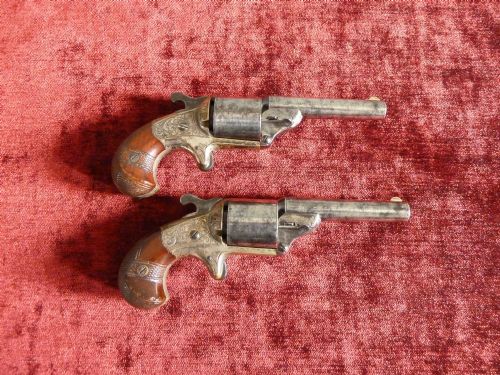


Engraved Brass Pistol
These engraved brass pistol examples combine functional mechanics with decorative metalwork across multiple centuries.
Engraved Brass Pistol
An engraved brass pistol represents a distinct category of antique firearm, firearm accessory, or edged weapon. Buyers seeking an engraved brass pistol will find examples spanning several centuries.
The selections range from Ottoman Balkan flintlocks and holster pistols to English Queen Anne turn-off pistols and American rimfire revolvers. Regional styles dominate the available inventory, particularly pieces originating from the Ottoman Empire, Turkey, and provincial European workshops.
Most items combine brass mounts, plates, or barrels with timber stocks made of walnut or wood, frequently accented with mother-of-pearl or silver inlay.
Materials and construction methods
Makers utilised cast and sheet brass for barrels, lock plates, and decorative mounts, pairing these yellow-metal components with hardwood stocks in walnut or general wood. Structural strength relied on steel for internal locks and mechanisms.
Artisans applied surface decoration through hand-engraving directly onto the brass mounts, alongside silver wire inlay and mother-of-pearl panel application. Flintlock, snaphaunce, miquelet, and percussion mechanisms were fitted to timber frames tailored for pocket, holster, or belt carry.
Listings feature brass, steel, walnut wood, and mother-of-pearl across eighteenth-century and nineteenth-century periods.
Evaluating craftsmanship and condition
The standard of execution in the metal engraving and inlay work separates standard utility arms from superior decorative pieces. Crisp, deep chisel-cut lines on brass mounts and precise placement of mother-of-pearl panels indicate higher workshop ability.
Originality of components, including matching locks, barrels, and signed lock plates bearing maker names like Thomas Henshaw or I Parr, influences the standing of a firearm. The integration of regional artistic traditions, such as Balkan rat-tail forms or Ottoman frontier styling, further defines the character of individual examples.
Thomas Henshaw·I Parr·J Robinson·A W Spires
The Engraved Brass Pistol Glossary
- Flintlock
- An ignition mechanism utilising a flint struck against a steel frizzen to create sparks for powder ignition. This system dominated firearm production for centuries.
- Snaphaunce
- An early precursor to the flintlock featuring a separately hinged steel and pan cover. It represents an intermediate step in firearm evolution.
- Miquelet
- A distinct form of snaplock common in the Mediterranean and Ottoman regions, featuring an external mainspring and heavy security dog. This lock type is frequently encountered on Balkan and Turkish firearms.
- Turn-off pistol
- A firearm where the barrel unscrews from the breech to facilitate loading from the front. This design eliminates the need for a separate ramrod.
- Holster pistol
- A large firearm designed to be carried in a saddle holster rather than on a belt. These pieces typically possess longer barrels and robust mounts.
Engraved Brass Pistol: Frequently Asked Questions
How do I identify an Ottoman pistol?
Ottoman and Balkan pieces typically display distinctive rat-tail stocks, extensive brass mountings, and surface ornamentation involving silver inlay or mother-of-pearl panels.
Lock mechanisms on these regional arms often utilise miquelet or snaphaunce systems rather than standard European flintlocks.
What is a turn-off barrel?
A turn-off barrel unscrews entirely from the breech frame, allowing the user to drop the ball and powder directly into the chamber.
This construction was popular on pocket and coat pistols during the eighteenth century for quick reloading.
How are these pistols dated?
Dating relies on mechanical typology, regional decorative styles, proof marks, and signatures engraved on the lock plates or barrels.
Stylistic shifts from seventeenth-century snaphaunces to nineteenth-century percussion systems provide clear chronological markers.
Were these weapons used in combat?
Many holster and belt pistols served as functional sidearms for military officers, travellers, and cavalry on the frontier.
Others were manufactured primarily as civilian pocket arms for personal protection or as decorative presentation pieces.