


Silver Inlaid Flintlock
A silver inlaid flintlock combines mechanical precision with striking metalwork, offering collectors a tangible piece of centuries-old martial history.
Silver Inlaid Flintlock
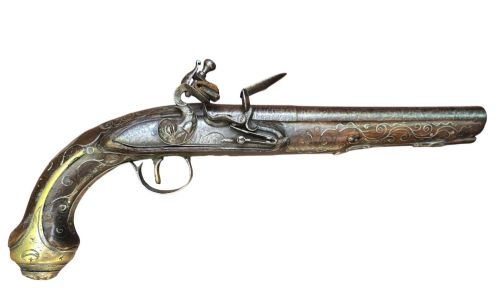
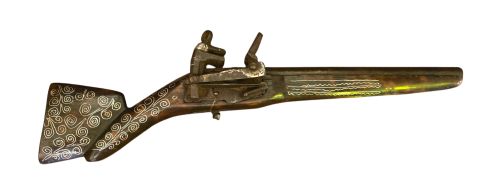
When you search for silver inlaid flintlock, you encounter historic firearms ranging from pocket-sized travelling companions to full-length holster and long pistols. These functional weapons span several distinct regional traditions, from Scottish scroll-butt pieces to English Queen Anne designs and Ottoman cavalry models.
The versions most likely to meet you on this page date predominantly from the eighteenth and nineteenth centuries. They encompass diverse stylistic influences including French Rococo, Balkan Ottoman, and Highland Georgian aesthetics.
Makers such as John Campbell of Doune, James Barber of London, and R. Willoughby of Birmingham represent the standard of workmanship found in these antique firearms. Collectors appreciate them for their intricate wire or plate inlay and regional lock mechanisms.
Construction and materials
The construction of a silver inlaid flintlock relies on a combination of forged steel, iron, and brass for the mechanical lock and barrel assemblies. Stocks are typically carved from dense hardwoods such as walnut, providing a sturdy foundation for the intricate decorative work.
Artisans applied silver wire, sheet, or parc directly into channels carved into the wooden stocks. Additional embellishments frequently include cast brass mounts, grotesque butt caps, and occasional gilt inlay decoration upon the barrel.
Quality and execution
The distinction between ordinary and exceptional examples rests upon the finesse of the metalwork and the crispness of the lock mechanism. Master gunsmiths integrated silver inlay flush with the timber, creating harmonious patterns that complemented the form of the grip and barrel.
Provenance and maker attribution elevate certain pieces significantly. Signed locks by known makers like John Campbell or James Barber demonstrate superior craftsmanship compared to unmarked domestic or provincial pieces.
John Campbell of Doune·James Barber·R. Willoughby·Dumarest
The Silver Inlaid Flintlock Glossary
- Flintlock
- A firearm ignition mechanism that uses a flint struck against a steel frizzen to create sparks. This system dominated personal and military weaponry for centuries.
- Silver inlay
- Ornamental metal embedded into the stock or barrel of a firearm. Artisans used this technique to create decorative scrolls and geometric patterns.
- Scroll-butt
- A distinct curved pistol grip shape associated with eighteenth-century Scottish Highland firearms. It provides a secure hold during use.
- Queen Anne style
- An English firearm design featuring a barrel and breech forged from a single piece of metal. This form became popular during the early eighteenth century.
- Holster pistol
- A large firearm designed to be carried in a saddle holster. These weapons served military and travelling officers throughout the period.
Silver Inlaid Flintlock: Frequently Asked Questions
What periods do these pistols come from?
The pieces originate primarily from the eighteenth and nineteenth centuries, spanning the Georgian and Ottoman eras.
Examples date from the early decades of the 1700s through to the nineteenth century, reflecting various regional manufacturing standards.
How do English and Ottoman styles differ?
English pistols from makers like James Barber often feature refined Queen Anne actions with precise silver wire inlay. Ottoman and Balkan pieces frequently display bolder brass mounts and extensive silver parc.
Regional preferences dictated both the shape of the stock and the complexity of the barrel decoration.
Were these weapons used in combat?
Many holster and travelling pistols served as functional sidearms for military officers and travellers navigating dangerous routes. Their robust construction was intended for practical defensive use.
Over time, technological advancements rendered the flintlock obsolete, turning these operational firearms into collector pieces.
How should I care for a flintlock pistol?
Keep the piece in a stable environment away from excess moisture to preserve the walnut stock and iron components. Gentle dusting and appropriate metal conservation maintain the condition of the silver inlay.
Avoid harsh chemical cleaners that might strip the historic patina from the steel and wood.