


Antique Cavalry Pistol
An antique cavalry pistol is a martial firearm built for mounted service, prized by collectors for its battlefield history and robust mechanical design.
Antique Cavalry Pistol
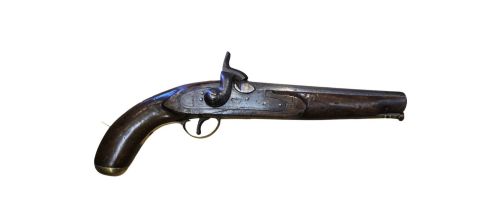
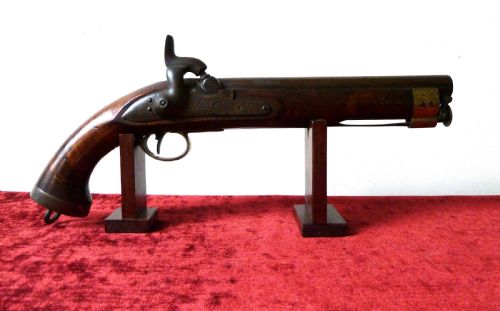
When you search for an antique cavalry pistol, you encounter military sidearms designed to be carried on horseback by troopers and officers. These pieces span the eighteenth and nineteenth centuries, capturing key eras of European and Ottoman conflict.
The examples on this page range from regulation British service arms to Ottoman Balkan holster pistols. You see flintlock and percussion ignition systems across various calibres and barrel lengths.
Most pieces date from the late eighteenth century through the Napoleonic era and into the mid nineteenth century. These firearms reflect the evolving tactical requirements of cavalry units on the battlefield.
How they were made
Maker construction relies on forged steel barrels combined with sturdy wood stocks, predominantly walnut or other dense hardwoods. Brass mounts frequently reinforce the frame, adding structural integrity and protection against harsh field use.
Surface decoration on specific regional variants includes silver inlay work and cast brass mounts. Lock mechanisms are hand-fitted steel components designed to withstand the rigours of military service.
Listings feature steel, walnut, brass, wood, silver, and iron materials across eighteenth-century and nineteenth-century periods.
What varies in quality
Quality in these firearms rests upon the crispness of maker signatures, proof marks, and the original integrity of the lock mechanism. Regulation military issue pieces with clear ordnance markings hold distinct historical weight compared to unmarked variants.
The preservation of metal surfaces and the stock wood defines the upper tier of survivorship. Retaining original mounting brass and clear proof stamps separates standard service arms from exceptional surviving examples.
T. Potts·Henry Nock·Wilson
The Antique Cavalry Pistol Glossary
- Flintlock
- An ignition mechanism utilising a piece of flint held in a cock to strike a steel frizzen, creating sparks to ignite the priming powder. This system dominated military sidearms through the eighteenth and early nineteenth centuries.
- Percussion cap
- A later ignition system employing a small priming cap placed on a nipple, struck by the hammer to fire the charge. This method replaced the flintlock due to its reliability in wet weather.
- Holster pistol
- A large handgun designed to be carried in a saddle holster rather than on a belt. These arms feature substantial barrel lengths and heavy grips suitable for mounted troops.
- Bore
- The interior diameter of the firearm barrel. Military regulations specified precise measurements such as twelve-bore or fourteen-bore to standardise ammunition.
- Proof marks
- Official stamps struck onto the barrel and action indicating that the firearm successfully underwent testing with high-pressure powder charges.
Antique Cavalry Pistol: Frequently Asked Questions
What is an antique cavalry pistol?
An antique cavalry pistol is a muzzle-loading handgun issued to mounted troops for close-range combat during the eighteenth and nineteenth centuries. These arms were carried in leather saddle holsters and designed for rugged service conditions.
The selection includes flintlock and percussion models produced by notable makers for British and international military contracts. Each piece represents the tactical technology of its specific conflict era.
How do flintlock and percussion pistols differ?
Flintlock pistols use a piece of flint striking steel to ignite loose gunpowder in a pan, a system susceptible to damp weather. Percussion pistols employ a sealed metal cap struck by a hammer, offering vastly superior reliability in the field.
The transition from flintlock to percussion occurred during the early nineteenth century as military forces sought more dependable ignition methods for active campaigns.
How were cavalry pistols carried in service?
Troopers carried these sidearms in heavy leather holsters draped across the horse's saddle immediately in front of the rider. This placement allowed rapid access during mounted engagements once swords or sabres were deployed.
The size and weight of holster pistols made belt carriage impractical for ordinary cavalrymen, necessitating specialised saddle equipment.
How do I identify the period of a pistol?
Period identification relies on examining the lock mechanism, barrel shape, stock contour, and any official proof marks or maker signatures. Regulation military patterns often follow strict design changes introduced in specific years.
Stylistic details such as brass mount shapes and decorative silver inlay also point toward particular regional origins and manufacturing decades.