

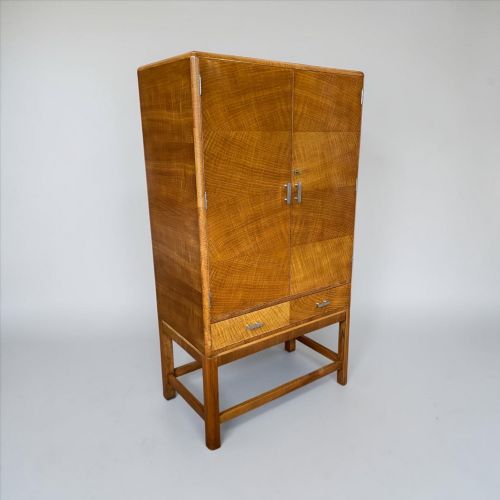
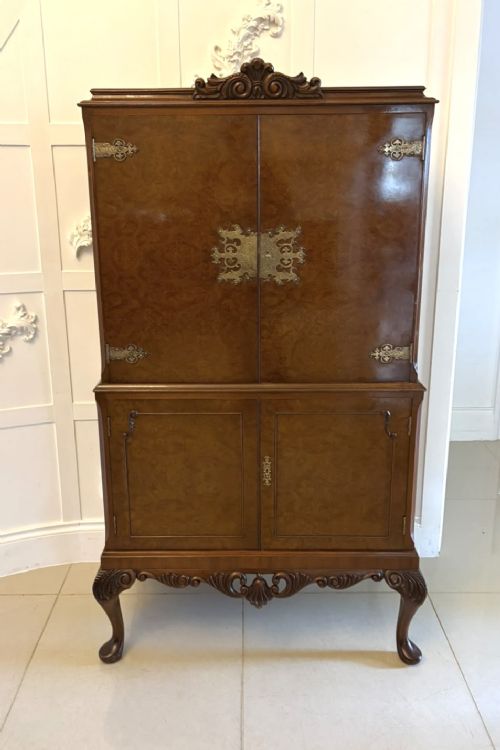
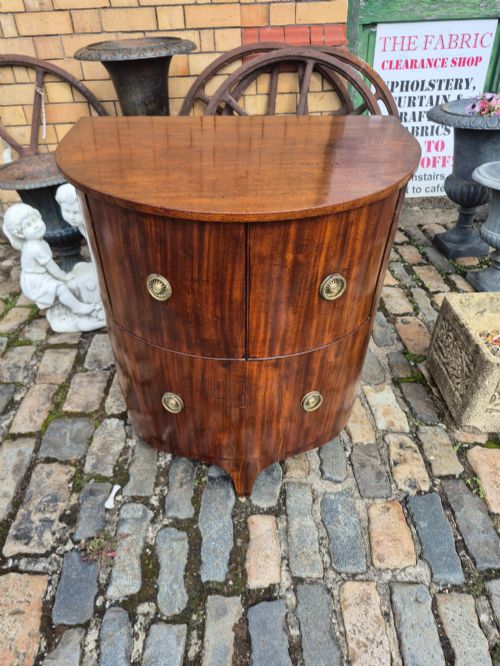
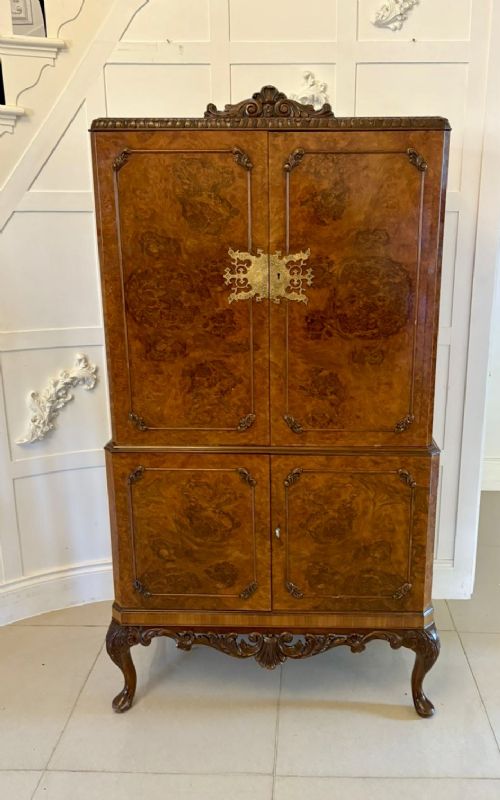
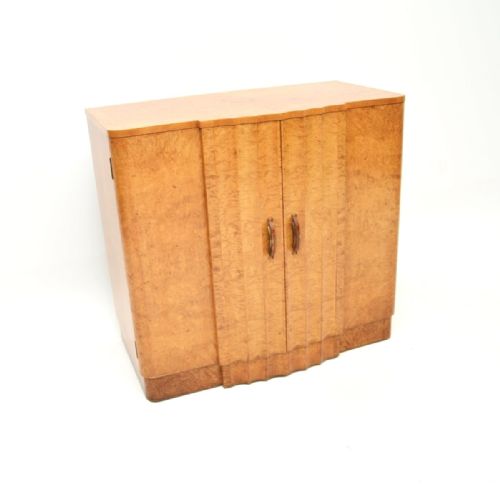
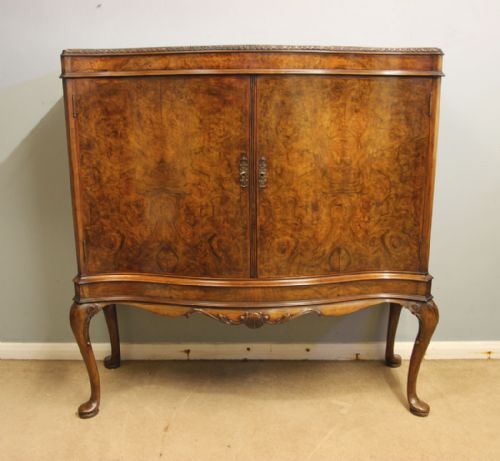
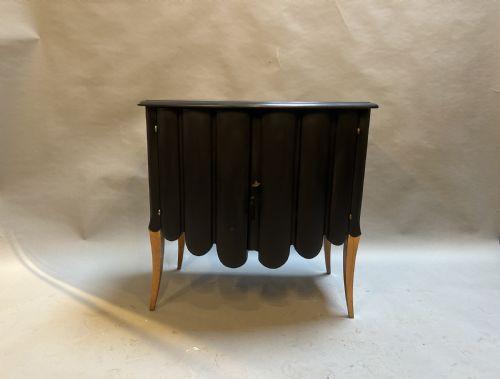
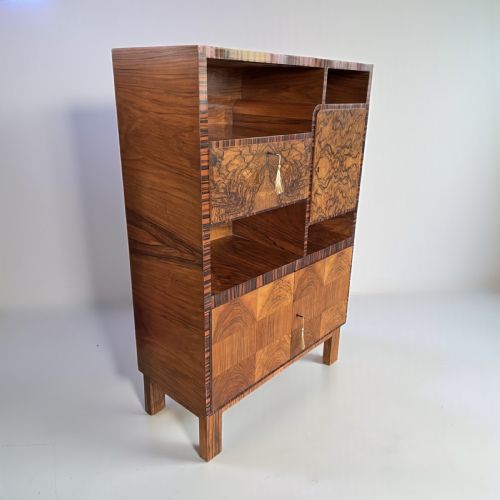


Cocktail Storage Cabinet
A cocktail storage cabinet is a dedicated piece for hosting drinks, appearing across Art Deco and Edwardian periods in burr walnut and mahogany.
Cocktail Storage Cabinet
A cocktail storage cabinet brings spirit bottles, glassware and mixing tools together into a single dedicated home for entertaining. When searching for a cocktail storage cabinet, buyers encounter forms ranging from compact cupboards on stands to grand sideboards.
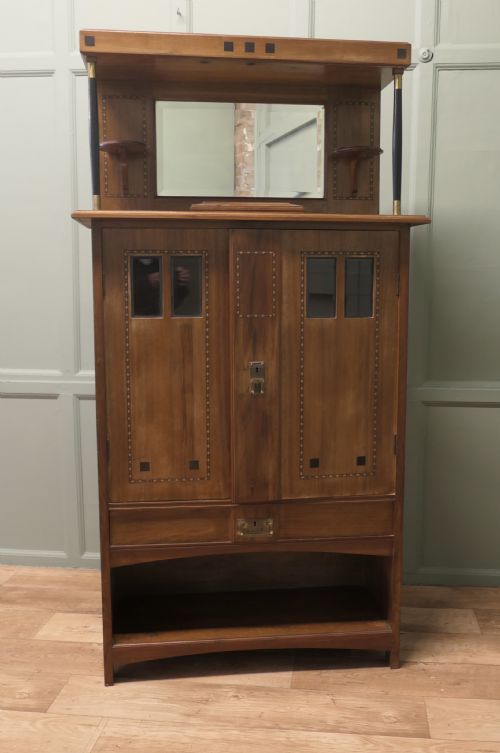
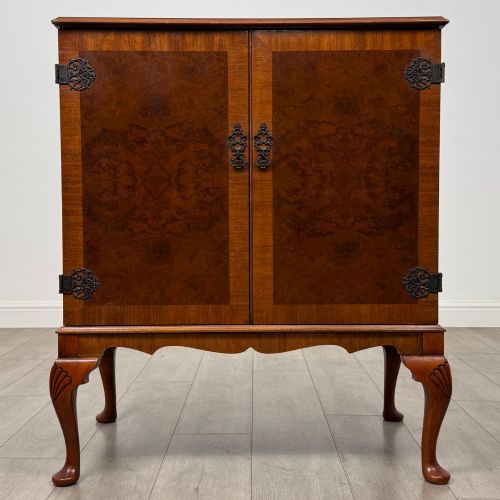
The selections span distinct periods, with the 1930s yielding numerous Art Deco examples alongside Edwardian and 19th Century iterations. Makers approach the form through various revivals, including Queen Anne and Jacobean styles.
Most pieces meet the eye in rich woods such as walnut, burr walnut and oak, while surface treatments like red lacquer and Chinoiserie provide visual weight. Buyers find that many units utilise specialised internal fittings to secure bottles and glassware.
How they were made
Cabinet makers utilised choice timbers such as walnut, burr walnut, mahogany, oak and rosewood, often applying figured veneers to create striking surface patterns. Metal elements like brass and cast-iron appear on hardware and support legs, giving structural contrast to the timber bodies.
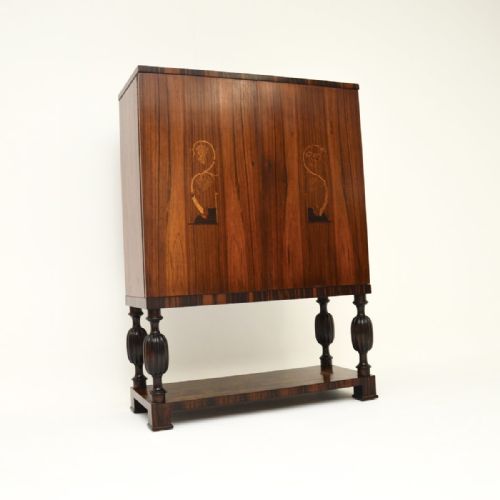
Decorative techniques recorded in the pieces include red lacquered Chinoiserie finishes, intricate marquetry and inlaid details. Specialised woods like birch, elm, camphor wood and kingwood are employed alongside bakelite fixtures in period examples.
Cocktail Storage Cabinet Retail Price Guide 2026
Typical asking prices for cocktail storage cabinet among the pieces listed under this phrase on Sellingantiques today, from the lower quarter to the upper quarter. They describe what is for sale here now, not the wider market.
Materials span burr walnut, oak, mahogany, rosewood, camphor wood, and red lacquer.
What varies in quality
Quality separates through the selection and matching of wood veneers, particularly on burr walnut surfaces where symmetrical grain patterns require high skill. The choice of secondary woods and the precision of joinery define the internal integrity of each piece.
Hardware execution and specialised decorative details, such as hand-applied Chinoiserie lacquering or fine brass fittings, separate standard production from maker-attributed works.
Harry and Lou Epstein·Hille·Hamptons of Pall Mall London·Waring & Gillows
The Cocktail Storage Cabinet Glossary
- Burr walnut
- A figured wood grain derived from the wart or burl growths of walnut trees, prized for swirling patterns on cabinet doors.
- Chinoiserie
- European decorative style inspired by Chinese artistic traditions, featuring hand-painted motifs on lacquered surfaces.
- Marquetry
- The art of applying pieces of veneer to a structure to form decorative patterns and pictorial designs.
- Secessionist
- A stylistic movement rejecting traditional academic art, focusing on clean geometric lines and modernist proportions.
- Cabinet on stand
- A freestanding storage compartment elevated on a dedicated wooden or iron base framework.
Cocktail Storage Cabinet: Frequently Asked Questions
What periods do these cabinets date from?
The pieces span multiple eras, with a heavy concentration of Art Deco designs from the 1930s. Earlier examples stretch back through the Edwardian period, 1900, 19th Century, and Regency.
Revival styles also introduce Jacobean and Queen Anne influences into the timelines. Each era brings distinct structural proportions and decorative finishes to the form.
How were these cabinets used originally?
These units served as private bars and storage hubs for entertaining guests in domestic drawing rooms and living spaces. Internal compartments held bottles, decanters, and cocktail glasses.
Drop-down doors frequently doubled as mixing shelves for preparing drinks. Specialised fittings kept glassware secure during daily household use.
What materials are most common?
Walnut and burr walnut dominate the selection, offering rich brown tones and swirling grain patterns. Oak and mahogany also appear frequently in both solid and veneered constructions.
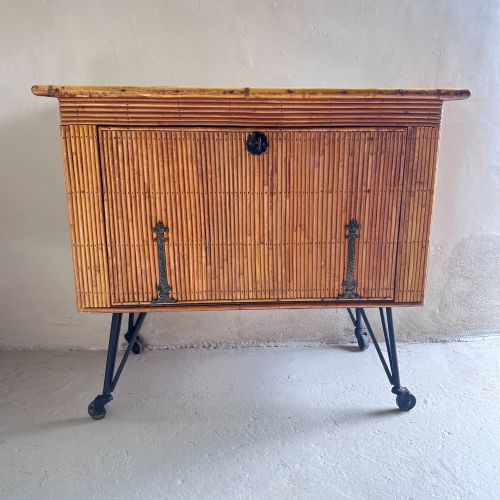
More decorative items feature red lacquer, bamboo, kingwood, rosewood, and inlaid brass details. Structural elements occasionally incorporate cast-iron legs and bakelite fixtures.
How do I identify Art Deco pieces?
Art Deco pieces from the 1930s display symmetrical geometry, streamlined silhouettes, and dramatic burr walnut veneers. They often omit heavy carving in favour of sleek, polished surfaces.
French variations introduce distinct touches like bamboo or cast-iron supports. Maker attributions to firms like Hille or the Epstein brothers further clarify the origin.