
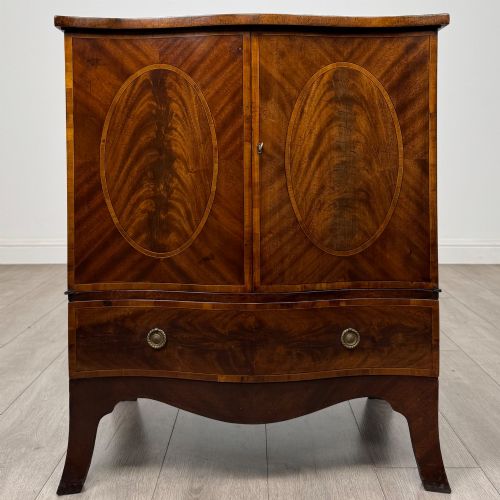

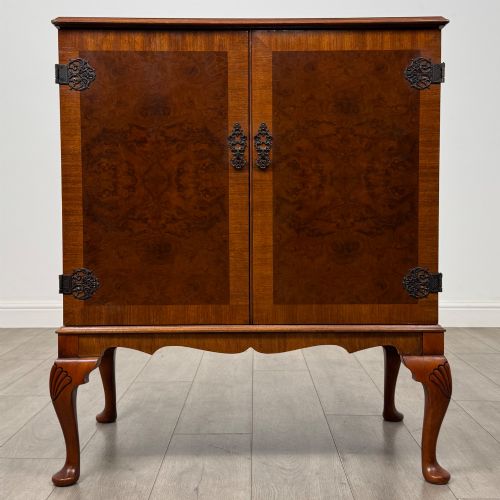
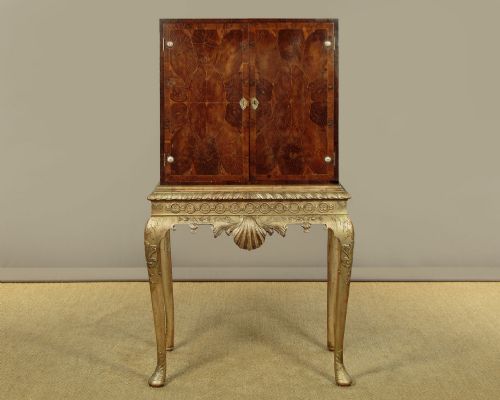
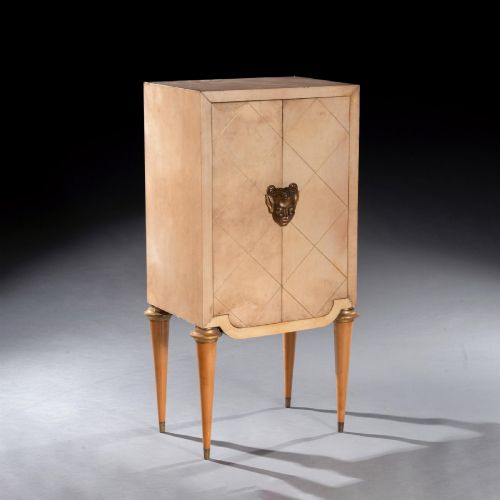
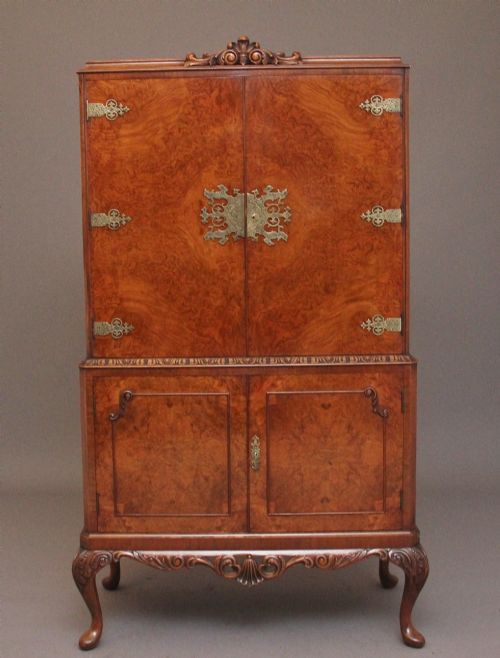
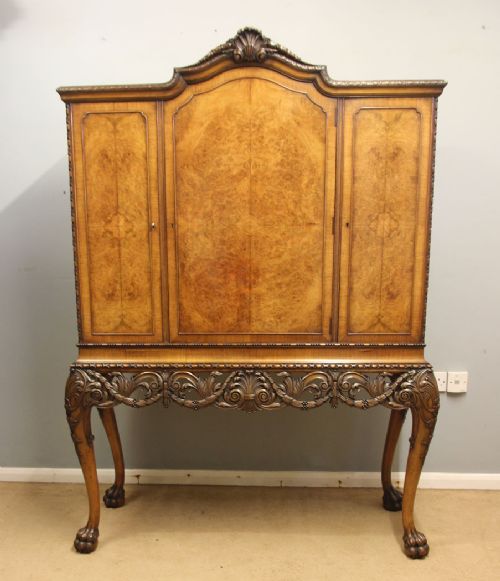
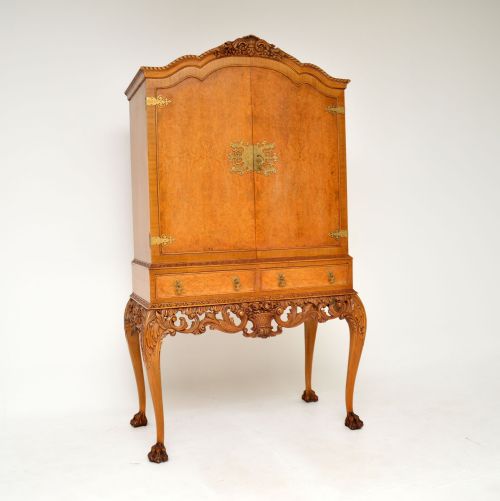
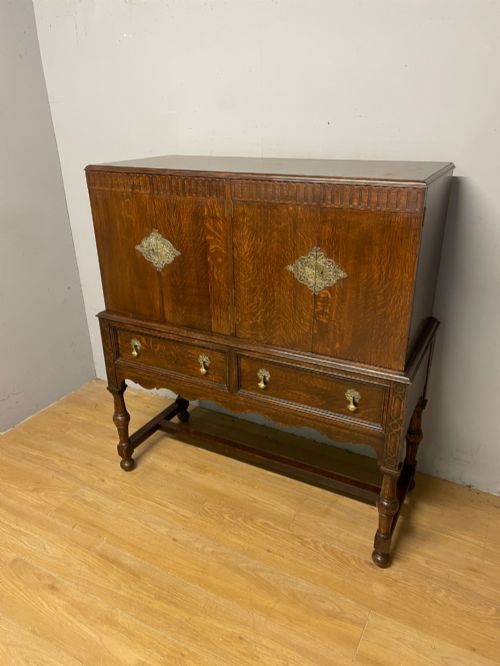
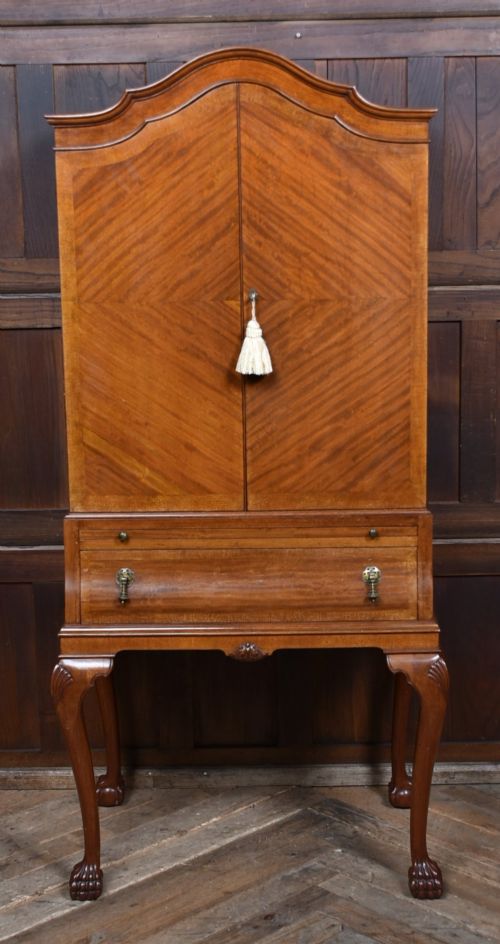
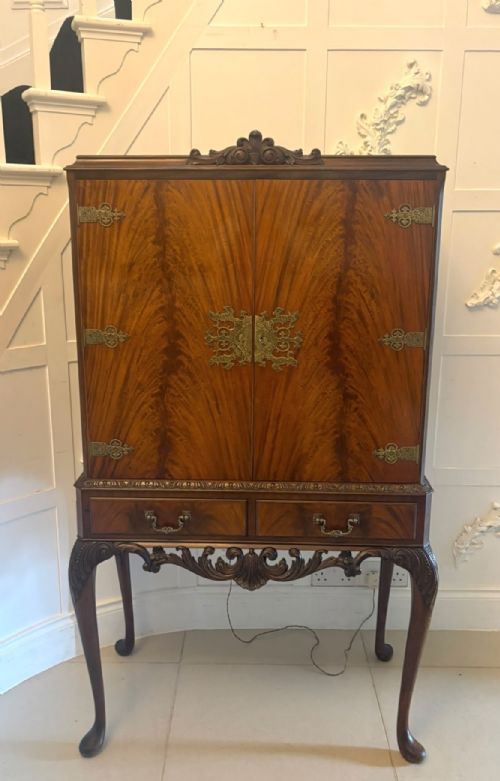
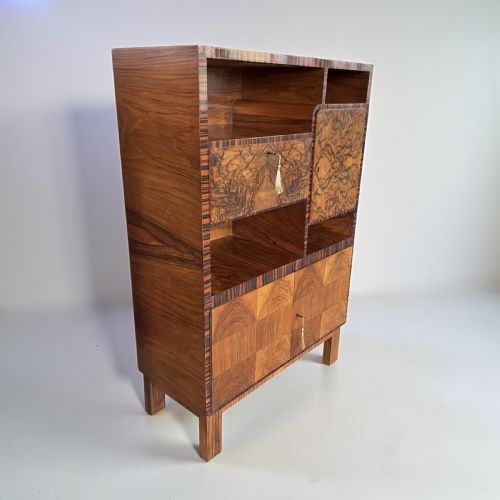


Cocktail Cabinet on Stand
A cocktail cabinet on stand brings serious glamour to a room, offering a dedicated home for glassware and spirits.
Cocktail Cabinet on Stand
A cocktail cabinet on stand elevates the ritual of serving drinks, combining a storage body with an integrated raised base. When searching for a cocktail cabinet on stand, buyers encounter pieces primarily from the 1920s and 1930s, alongside earlier revival styles and occasional Georgian or Regency precedents.
The form typically pairs a drop-front or cupboard top with carved, gilded, or straight supports underneath. Walnut, burr walnut, and rich lacquer finishes dominate the selections, creating striking focal points for modern interiors.
How they were made
Cabinetmakers utilised dense timbers such as mahogany and oak as structural carcases, applying highly figured burr walnut veneers to external surfaces for dramatic visual grain patterns. Brass hardware, from hinges to drop handles, provides functional contrast against the polished wood.
Lacquered examples involve complex layers of coloured varnish built up to create deep, reflective surfaces, frequently decorated with hand-painted Chinoiserie motifs in gold and red. Giltwood stands employ carved wooden frames finished with thin layers of gold leaf to support heavy upper cabinets.
Cocktail Cabinet on Stand Retail Price Guide 2026
Typical asking prices for cocktail cabinet on stand among the pieces listed under this phrase on Sellingantiques today, from the lower quarter to the upper quarter. They describe what is for sale here now, not the wider market.
Periods represented span from the Georgian era through Edwardian designs to Art Deco creations.
What varies in quality
The grade of the timber veneer defines the visual merit of the piece, with tightly swirled burr walnut commanding greater presence than plain or straight-grained alternatives. The crispness of hand-carving on the stands and the depth of the lacquer finishes separate standard production items from master-workshop commissions.
Internal engineering also dictates standing power, seen in smooth-sliding shelves, intact fitted glass trays, and mirrors that remain secure within their rebates. Original metalwork and sturdy joinery between the cabinet and its supporting base ensure longevity.
Maurice Jallot·Hille·Epstein and Co Furniture·Waring & Gillows·Liberty's of London
The Cocktail Cabinet on Stand Glossary
- Burr walnut
- A wood veneer taken from the wart-like growths on walnut trees, prized for its swirling, highly decorative grain patterns. It appears frequently on interwar drinks furniture.
- Chinoiserie
- European decorative art imitating Chinese artistic styles, typically featuring raised gold or coloured motifs on a lacquered background. This finish is a hallmark of decorative cocktail cabinets.
- Drop-front
- A hinged panel that folds down horizontally to create a mixing surface or serving shelf when opened. It conceals fitted glass holders and mirror backs inside.
- Giltwood
- Wood that has been coated with a thin layer of gold leaf or gold paint for decorative effect. It is often found on the carved stands supporting 1930s cabinets.
- Serpentine
- A curved furniture front characterised by a convex centre flanked by concave sides. This undulating shape adds movement to mahogany and walnut sideboards.
Cocktail Cabinet on Stand: Frequently Asked Questions
What fits inside a cocktail cabinet on stand?
Interiors typically feature racks for stemmed glasses, spaces for bottles, and pull-out slides for mixing drinks.
Many examples include mirrored back panels and built-in lighting to display glassware effectively.
How do I care for a lacquered cabinet?
Keep lacquered surfaces away from direct sunlight and excessive heat to prevent cracking or fading of the finish.
Dust gently with a dry microfibre cloth and avoid using chemical polishes or water on decorated panels.
Are these cabinets stable on their stands?
The upper cabinet and lower stand are engineered to bear significant weight when filled with bottles and crystal.
Heavier pieces benefit from placement against a wall, particularly if positioned on thick carpets.
How do I distinguish 1920s styles from earlier periods?
Interwar pieces often embrace Art Deco geometry or 18th-century revivals with high-gloss burr walnut finishes.
Earlier Edwardian or Victorian iterations lean towards heavier carved mahogany and more traditional cupboard layouts.