
Cobalt Porcelain Urns
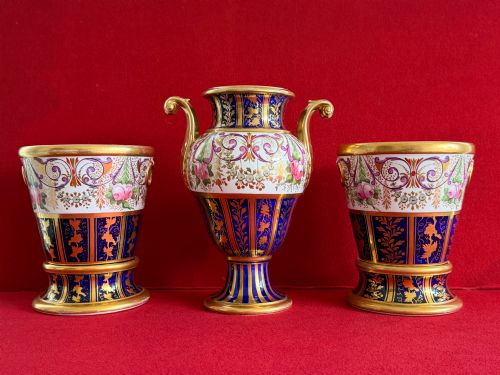
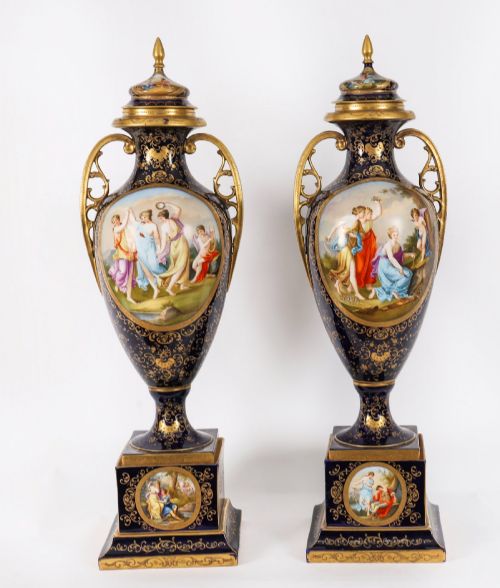
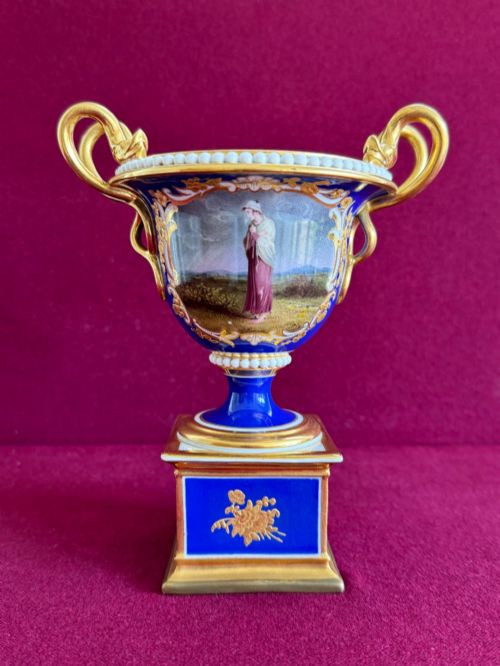
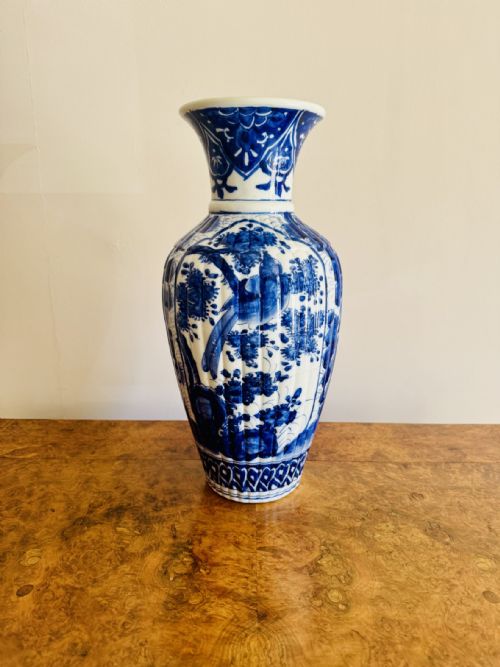
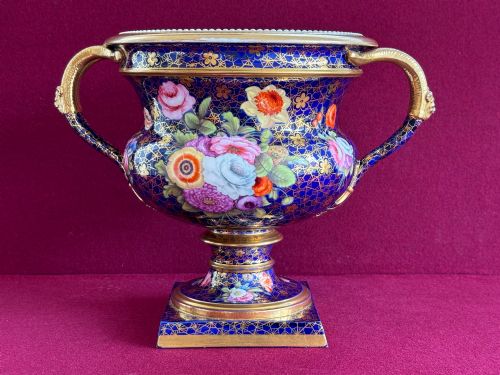
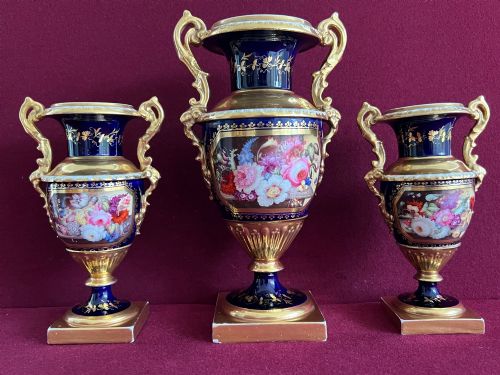
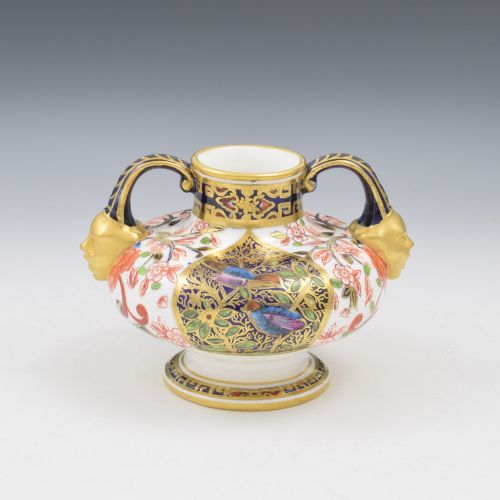
Cobalt porcelain urns are striking blue-bodied vessels shaped across the nineteenth and early twentieth centuries for display.
Cobalt Porcelain Urns
When buyers search for cobalt porcelain urns, they encounter a range of lidded jars, campagna urns, amphoras, and floor-standing vases produced across the eighteenth, nineteenth, and early twentieth centuries. These vessels combine rich blue grounds with varied decorative vocabularies spanning English porcelain factories, French workshops, and Japanese export wares.
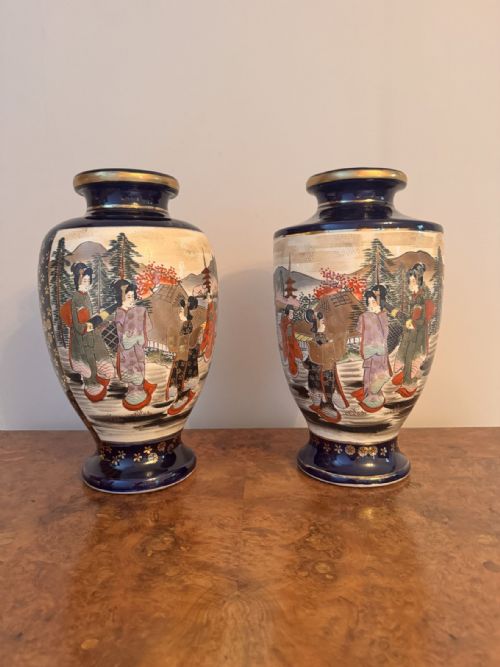
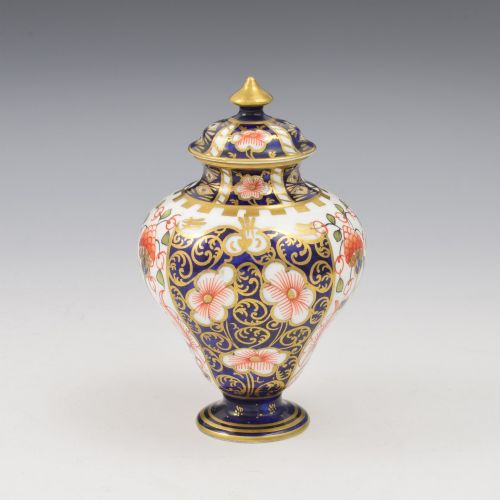
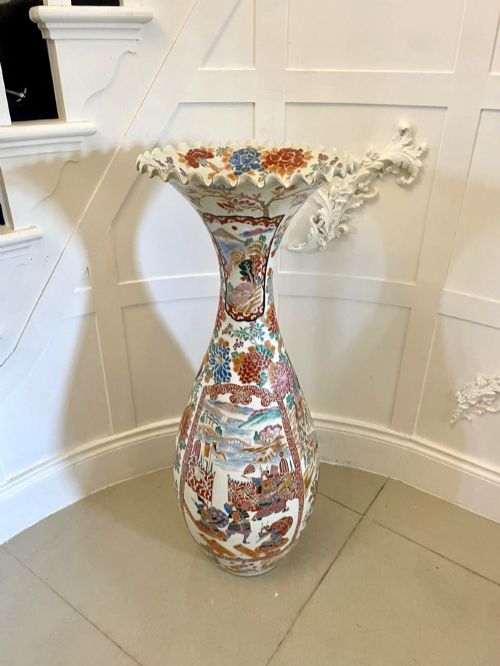
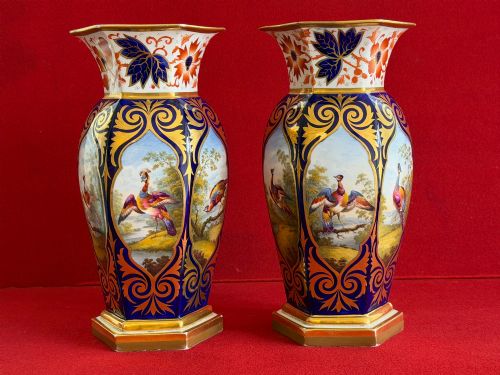
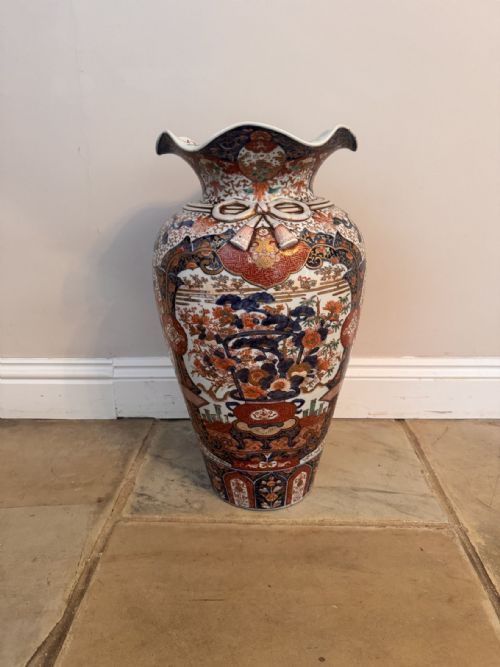
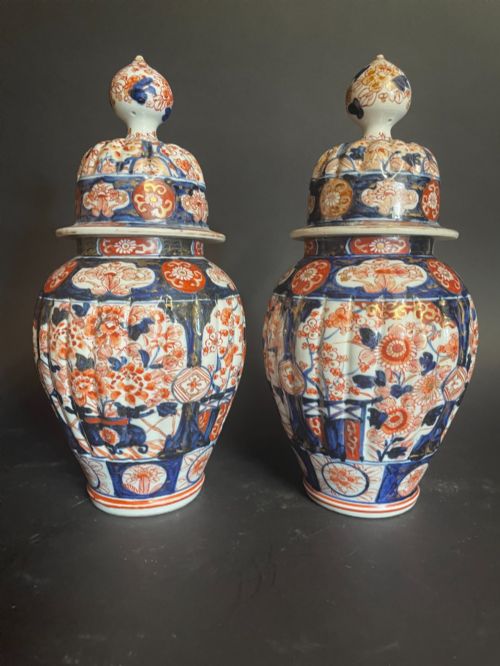
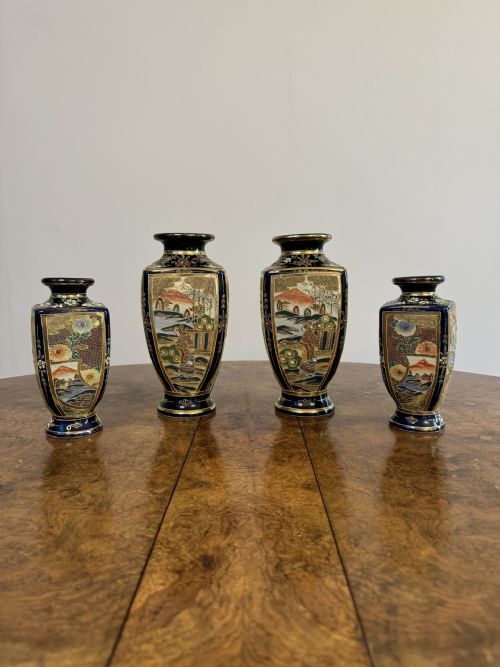
The most frequent examples met on this page are nineteenth-century Japanese Imari and Satsuma vases featuring deep cobalt tones alongside iron red and gold, alongside English factory pieces from Worcester, Derby, and Coalport. These forms range from miniature cabinet scent bottles to substantial floor-standing pieces standing several feet high.
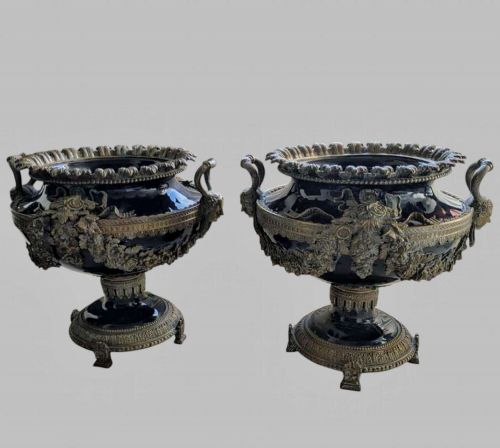
French contributions in this category lean toward Sevres-style production and gilt bronze or ormolu mounts, pairing deep blue ceramic bodies with classical cast metal details. Whether configured as lidded jars, table lamps, or garniture sets, these vessels serve primarily as decorative focal points.
How they were made
The foundation of these pieces relies on refined porcelain or earthenware clay bodies shaped by throwing or moulding before receiving cobalt glaze or underglaze blue pigment. Cobalt oxide provides the characteristic deep blue ground, capable of withstanding high kiln temperatures without losing intensity.
Surface enrichment often involves the application of gold leaf, gilt, enamel, and hand-painted scenes directly over the glaze or fired layers. Many nineteenth-century and Edwardian examples incorporate cast bronze or ormolu mounts fitted securely around the ceramic rims and bases.
Some miniature scent bottles measure barely a few inches tall, standing in direct contrast to towering floor vases that reach nearly five feet.
What varies in quality
Quality in these pieces is dictated by the crispness of the hand-painted detail, the depth and evenness of the cobalt glaze, and the precision of any gilt work. Superior examples display finely controlled brushwork on figurative or floral scenes rather than repetitive stencilling.
The integration of metal mounts also separates tiers of production, where cast ormolu or gilt bronze elements fit the ceramic contours precisely. Factory attribution, such as signed panels by named artists or recognised marks from English and continental potteries, further defines the upper end of the range.
Royal Crown Derby·Flight Barr And Barr·Chamberlain Worcester·Mason S Patent Ironstone·Royal Doulton·Coalport·Crown Staffordshire
The Cobalt Porcelain Urns Glossary
- Cobalt glaze
- A high-temperature metallic glaze producing a rich, deep blue colour on ceramic bodies. It remains stable under intense heat, allowing for sharp definition beneath clear glazes.
- Imari
- A Japanese export style originating in Arita, characterised by a palette of cobalt blue, iron red, and gold. These designs frequently incorporate intricate floral and brocade patterns.
- Campagna urn
- A classical bell-shaped vessel with a flared rim, spreading foot, and often loop handles. This form was widely adopted by nineteenth-century English porcelain manufacturers.
- Ormolu
- Gilt bronze mounts used to embellish decorative porcelain vessels and lamps. The technique involves applying a gold amalgam to cast bronze before heating.
- Garniture
- A set of matching vases or jars designed to be displayed together on a mantelpiece or cabinet. These typically comprise three or more graduated pieces.
Cobalt Porcelain Urns: Frequently Asked Questions
How do I date a cobalt porcelain urn?
Dating relies on factory marks stamped or painted on the underside, combined with stylistic cues such as Victorian revival motifs or Edwardian gilt patterns. Examining the manufacturing technique and glaze characteristics helps narrow the period of production.
Unmarked pieces require careful comparison of the ceramic body, cobalt tone, and mounting styles against documented examples from English, French, and Japanese kilns.
Were these urns used for ashes?
Despite the term urn, the vast majority of these decorative vessels were designed for display rather than funerary use. Lidded jars, campagna shapes, and floor vases served as ornamental centrepieces in period interiors.
Many feature narrow necks or delicate handles that preclude practical storage, functioning instead as focal points on mantelpieces, pedestals, and tables.
How do I distinguish Japanese Imari from European copies?
Japanese Imari pieces from the Meiji period typically feature dense cobalt blue and iron red painting over a slightly greyish or pitted porcelain body. The hand-applied pigments often show subtle variations and brush texture.
European factories like Royal Crown Derby produced their own interpretations of these Japanese designs, utilising refined white porcelain bodies and distinct factory cyphers beneath the glaze.