
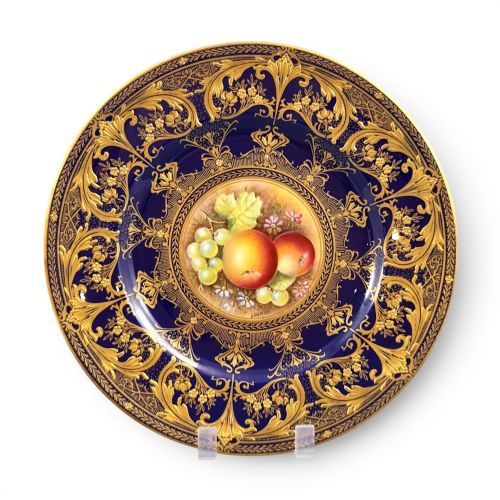


Cobalt Gold Display Dish
A cobalt gold display dish brings rich blue pigment and bright metal together to anchor a room.
Cobalt Gold Display Dish
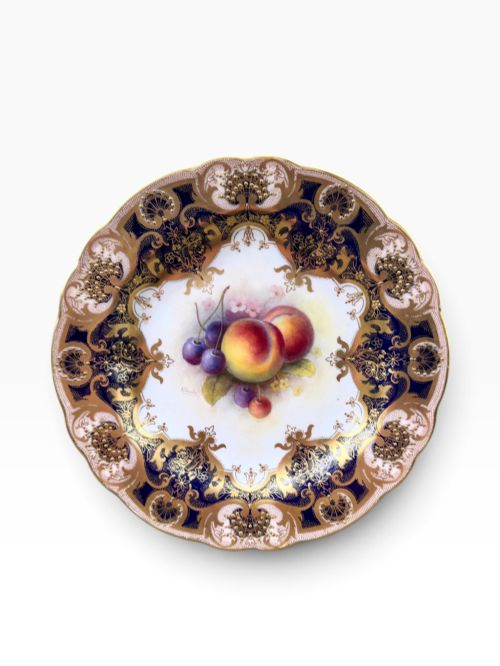
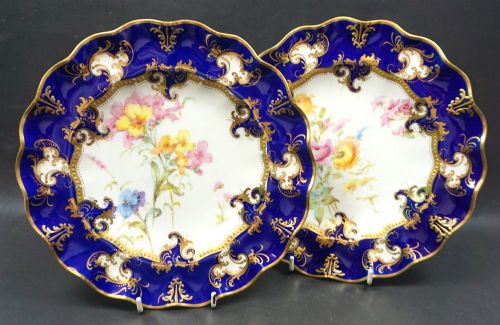
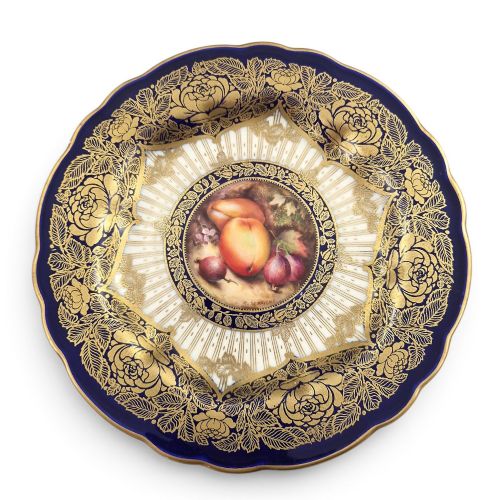
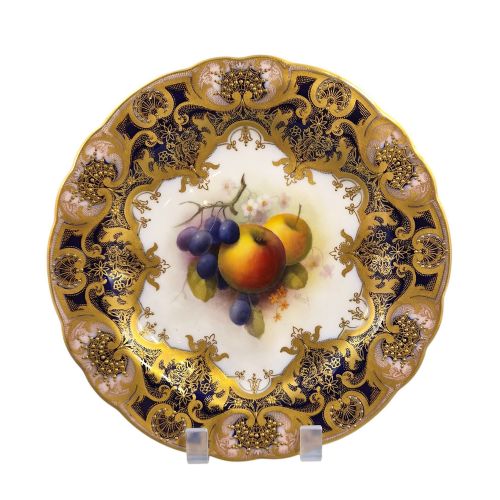
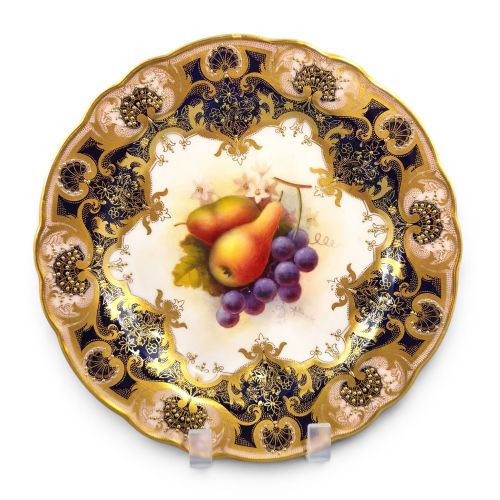
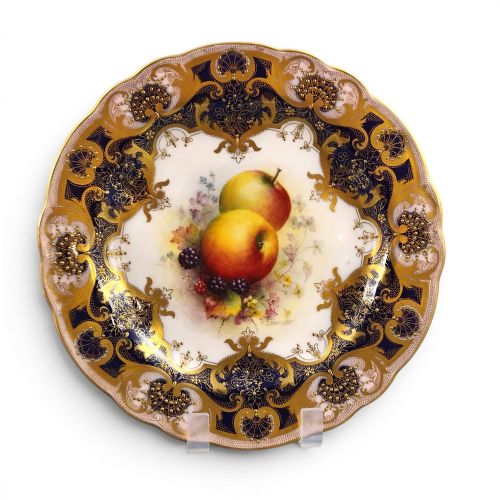
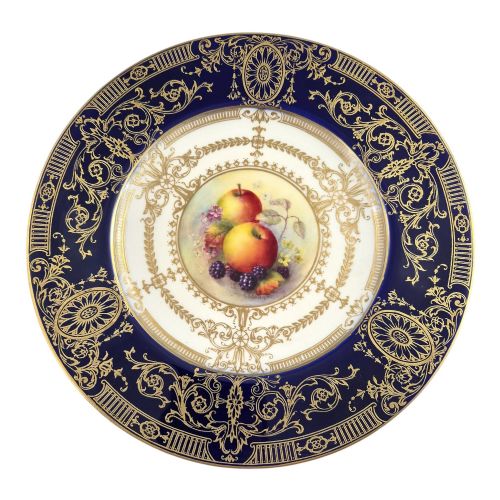
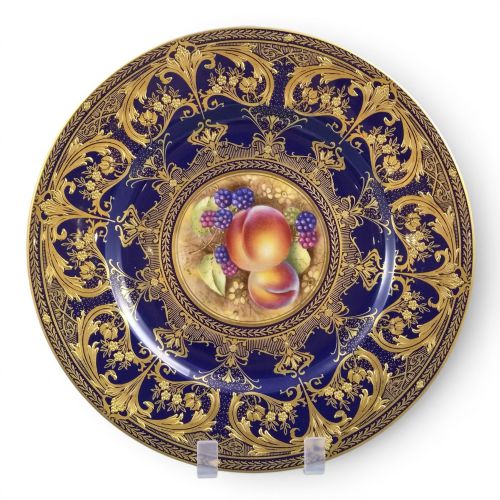
A cobalt gold display dish appears primarily in forms such as cabinet plates, decorative plates, and serving dishes. These pieces function as visual centerpieces rather than functional tableware, designed for display in cabinets or on walls.
The selection ranges from Georgian and Victorian eras through the Edwardian period and into Art Deco designs. British factories like Royal Worcester, Coalport, and Royal Crown Derby sit alongside continental makers such as Sevres and Royal Vienna.
How they were made
Potters shaped porcelain and bone china before applying deep cobalt glaze and detailed hand paint. Artisans then added gold leaf, gilding, and enamel work to complete the surface decoration.
Many examples required multiple firings in kilns to fix the cobalt ground underglaze before layering the delicate gilt tooling and enamel pigments on top.
Cupid and Psyche occasionally share plate space with botanical fruit studies and historical battle scenes.
What varies in quality
Quality rests on the fineness of the hand-painted details, from botanical studies to mythological scenes signed by studio artists. The precision of the tooled gilding against the deep cobalt ground also distinguishes finer pieces.
The weight and translucency of the porcelain or bone china body contribute to the overall standard of the dish. Maker attribution and documented artist signatures elevate specific examples above standard production.
Royal Worcester·Royal Crown Derby·Pucher Deroche·Coalport·Royal Vienna·Meissen·Ridgway·Aynsley·New Hall·Sevres
The Cobalt Gold Display Dish Glossary
- Cabinet plate
- A decorative plate intended for display in a cabinet rather than for dining use. These often feature elaborate hand-painted scenes and rich gilding.
- Cobalt
- A deep blue metallic oxide used to glaze ceramic bodies before firing. It creates an intense, stable colour that contrasts sharply with gold leaf.
- Gilding
- The application of gold leaf or gold paint to the surface of porcelain. Skilled artisans use tooling to create textured patterns within the metal.
- Bone china
- A type of soft-paste porcelain containing animal bone ash. This material allows for thin, translucent walls while maintaining structural strength.
- Enamel
- Opaque glass applied to ceramic surfaces for decoration. It fuses with the glaze during a low-temperature firing.
Cobalt Gold Display Dish: Frequently Asked Questions
How do I display a cabinet plate?
Cabinet plates sit securely in specialised wall hangers or dedicated display stands on flat surfaces.
Keep them away from direct sunlight to protect the enamel colours and gold leaf over time.
Can I use these dishes for food?
These decorative items serve primarily as visual ornaments rather than tableware for serving meals.
Hand-washing gently in warm water preserves the delicate gilding and hand-painted surfaces if cleaning becomes necessary.
What periods do these dishes cover?
The selection spans from the Georgian era through Victorian times, the Edwardian period, and into Art Deco.
Earlier pieces often show botanical or neoclassical motifs, while later examples feature signed fruit studies or romantic scenes.
How do I identify the maker?
Makers mark the underside of the porcelain with stamped ciphers, painted factory names, or impressed cera symbols.
Artist signatures sometimes appear on the front near the edge of painted scenes.