


Gilded Sevres Porcelain Dish
A gilded sevres porcelain dish brings rich French porcelain artistry and gold leaf into a room, offering both history and vibrant hand-painted detail.
Gilded Sevres Porcelain Dish
A gilded sevres porcelain dish encompasses plates, bowls, boxes, and tureens originating from France across the eighteenth and nineteenth centuries. When searching for a gilded sevres porcelain dish, buyers encounter various forms including cabinet plates, pedestal bowls, and centrepieces adorned with porcelain, enamel, and gold leaf.
The objects stem from distinct periods ranging from the late eighteenth century through the Victorian era up to nineteen hundred. Styles stretch across French Rococo Revival, Louis XVI Revival, French Restauration, and French Neoclassical aesthetics.
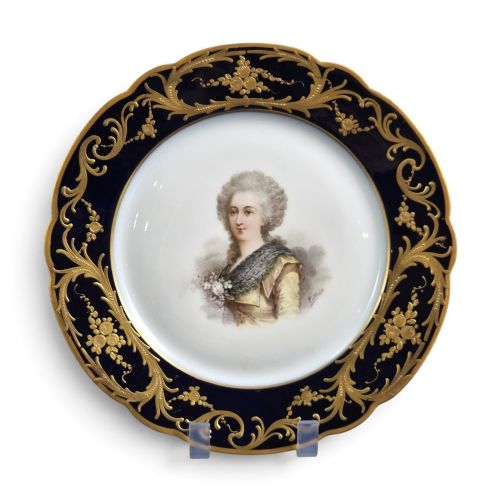
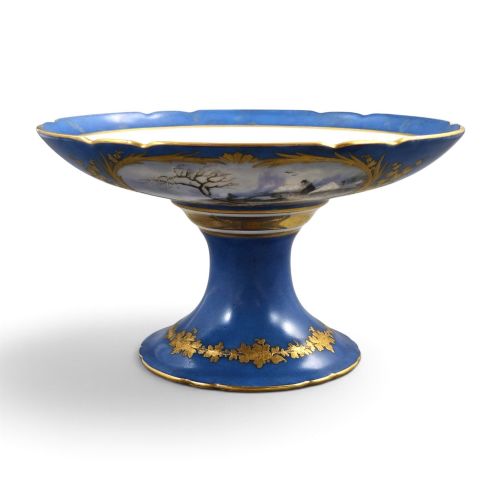
The selection here frequently presents cabinet plates, oval dishes, and centrepieces, often featuring blue grounds, hand-painted portraits, and historical scenes. Each piece reflects the decorative traditions of French porcelain production and its subsequent nineteenth-century revivals.
How they were made
Makers shaped these items from porcelain, applying cobalt and other enamel colours by hand before firing. Artisans then added intricate gold leaf and gilding to highlight borders, motifs, and narrative scenes.
Mounts in gilt bronze appear alongside champlevé enamel on larger pieces such as centrepieces and tazzas. These metallic additions are joined securely to the porcelain bodies, combining ceramic craft with metalwork.
Mme Élisabeth smiles out from a cobalt plate, forever trapped in nineteenth-century paint while medieval battles rage on the plates next to her.
What varies in quality
The refinement of the hand-painted details, from portraiture to battle scenes, sets certain pieces apart. Precision in the application of gold leaf and the crispness of the gilt bronze mounts also distinguish finer examples.
The complexity of the form itself influences the character of the object, with intricate centrepieces and champlevé enamel combinations showing greater technical ambition than standard cabinet plates.
Edm e Samson
The Gilded Sevres Porcelain Dish Glossary
- Cabinet plate
- A decorative ceramic plate intended for display in a cabinet or on a wall rather than for dining. These often feature detailed painted scenes or portraits.
- Gilt bronze
- An alloy of copper and zinc treated with a gold coating, frequently utilised for mounts and decorative trims on nineteenth-century French pieces. It adds structural weight and metallic contrast.
- Champlevé enamel
- A technique where troughs are dug into a metal surface and filled with enamel powder before firing. This method creates colourful geometric or pictorial patterns within bronze mounts.
- Tazza
- A shallow bowl or cup raised on a high foot and stem, designed as a centrepiece or decorative dish. The form highlights painted ceramic grounds and elaborate rims.
- Soup tureen
- A large, deep serving vessel with a lid, intended for broth or soup. In porcelain, these incorporate handles and matching stands alongside gilded details.
Gilded Sevres Porcelain Dish: Frequently Asked Questions
What is a sevres porcelain dish?
A sevres porcelain dish is a ceramic decorative item originating from France, known for fine painting and gold leaf detailing. These pieces range from cabinet plates to oval serving dishes created across the eighteenth and nineteenth centuries.
They serve primarily as display items rather than functional tableware. Collectors prize them for their historical French revival styles and intricate hand-painted motifs.
How do I date a french porcelain dish?
Dating relies on stylistic clues, historical references painted on the surface, and the manufacturing context of the period. Nineteenth-century pieces frequently adopt earlier Rococo or Neoclassical revival designs.
Examining the type of gilding, enamel work, and any associated bronze mounts also helps establish the era of production. Documentation or titled battle scenes on the front provide further chronological context.
Where should I display a cabinet plate?
Cabinet plates suit dedicated display cabinets, wall brackets, or plate stands where their painted surfaces remain protected. Placing them away from direct sunlight preserves the vibrancy of the enamels and gold leaf.
Larger items like centrepieces and tazzas sit well on open tables or sideboards as standalone decorative focal points. Their gilt bronze mounts and cobalt grounds benefit from good ambient lighting.
What styles influence these porcelain pieces?
French Rococo Revival, Louis XVI Revival, and French Neoclassical aesthetics dominate these items. These styles draw on earlier royal French design traditions, reinterpreted during the nineteenth century with rich gilding and vibrant enamel grounds.
Historical narratives, battles, and portraits frequently appear within these stylistic frameworks. The resulting pieces combine classical forms with nineteenth-century decorative techniques.