
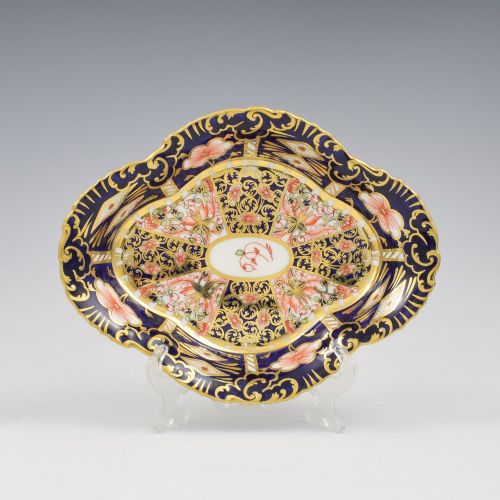


Cobalt Gilt China Bowl
A cobalt gilt china bowl offers a striking contrast of deep blue and bright metal that commands attention on any dining table or sideboard.
Cobalt Gilt China Bowl
A cobalt gilt china bowl combines deep blue pigment underglaze with rich gold leaf or gilding applied to the surface. These decorative pieces appear across several periods, including the Georgian, Regency, and Victorian eras, reflecting shifting tastes in domestic display.
The selection here encompasses decorative bowls alongside related forms such as tea sets, sugar bowls, and covered vessels created in porcelain and bone china. Makers utilised traditional ceramic bodies ranging from standard porcelain to ironstone ceramic.
Buyers encounter styles spanning from Rococo Revival and Victorian Imari to Aesthetic Movement and Chinoiserie patterns. These varied forms demonstrate how British potteries adapted classical motifs and Eastern designs for nineteenth-century homes.
Materials and construction
Potters formed these vessels using fine porcelain, bone china, or robust ironstone ceramic, shaping them into bowls, tureens, and matching sets. Cobalt provided the intense blue ground, often applied before the glaze was fired in kiln environments.
Gold leaf and gilding were subsequently painted or applied over the glaze and subjected to a lower temperature firing to bond the metal to the ceramic. Enamel details occasionally supplement the palette, adding secondary colours to the blue and gold scheme.
Some nineteenth-century decorators squeezed gold leaf through tiny paper cones by hand before firing.
Distinctions in quality
The refinement of the ceramic body and the precision of the hand-painted decoration distinguish finer examples from standard production pieces. Potteries such as Worcester and Derby employed skilled artisans who achieved exceptional control over the cobalt blue scaling and gilding.
The crispness of the gilt work and the depth of the cobalt pigment indicate the care taken during manufacturing. Superior pieces maintain integrity in the metallic application and show balanced proportions across handles, rims, and matching stands.
Mason’s Patent Ironstone·Mintons·Royal Crown Derby·Doulton Burslem·Derby·Royal Davenport·Flight Barr and Barr Worcester·Grainger and Co Royal Worcester
The Cobalt Gilt China Bowl Glossary
- Cobalt
- A metallic element used to create a deep, stable blue colour in ceramics under high temperatures. This intense pigment forms the dark background characteristic of many traditional decorative vessels.
- Gilding
- The application of gold leaf or gold powder to the surface of porcelain or pottery. Artisans used this technique to highlight rims, handles, and painted motifs.
- Ironstone ceramic
- A dense, durable type of earthenware patented in the nineteenth century to imitate true porcelain. It provided a robust body for large bowls and kitchenware.
- Bone china
- A type of soft-paste porcelain incorporating animal bone ash for added strength and translucency. British manufacturers favoured this material for fine tea sets and decorative tableware.
- Chinoiserie
- European artistic styles reflecting Chinese motifs and decorative techniques. Craftsmen applied these imaginative landscapes and figures to various ceramic forms.
Cobalt Gilt China Bowl: Frequently Asked Questions
How do I clean a cobalt gilt china bowl?
Wash the vessel gently by hand using warm water and a mild soap. Avoid abrasive sponges or harsh detergents that can wear away the delicate gold leaf.
Dry the piece immediately with a soft cloth to prevent water spots from forming on the glazed ceramic surface.
Can I use these bowls for serving food?
Many antique vessels remain structurally sound for holding dry food items or fruit. However, historic gilding and enamel can degrade with frequent use and exposure to acidic foods.
Displaying the piece safely on a sideboard or within a cabinet preserves the painted surfaces for the future.
How do I distinguish eighteenth-century pieces from Victorian items?
Examine the weight, translucency, and paste of the ceramic body alongside any visible factory marks. Earlier pieces often display distinct blue scale grounds or hand-painted botanical motifs typical of Georgian manufactories.
Victorian items frequently utilise heavier ironstone bodies and incorporate revival styles such as Rococo or Aesthetic Movement patterns.
What does Imari mean on these bowls?
Imari refers to a decorative style inspired by Japanese export porcelain featuring a palette of cobalt blue, iron red, and abundant gold. British potteries adopted this aesthetic to satisfy nineteenth-century demand for vibrant, patterned tableware.
Pieces bearing this description combine traditional European forms with complex oriental panel designs.