

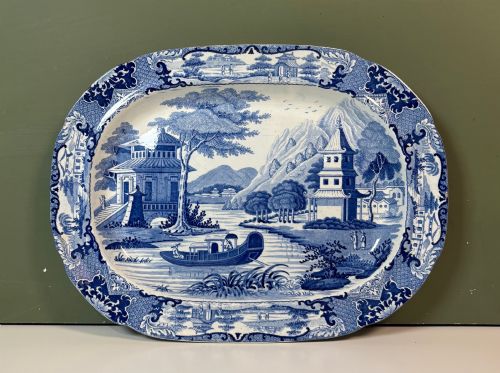
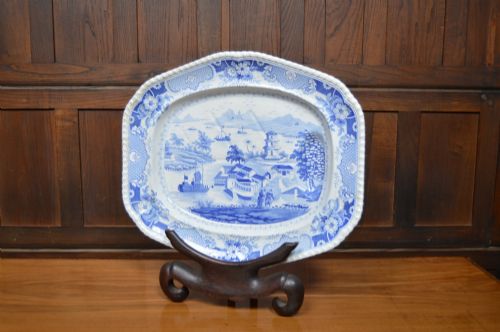
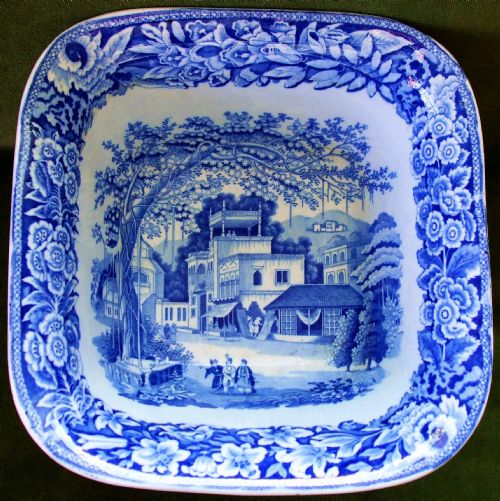
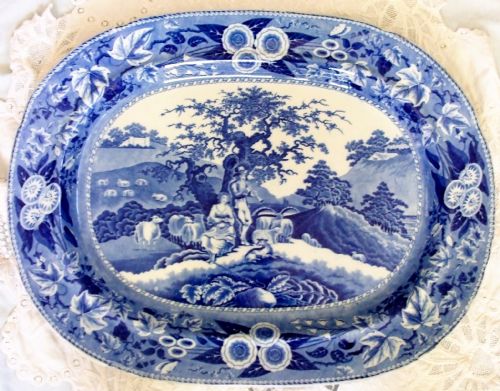
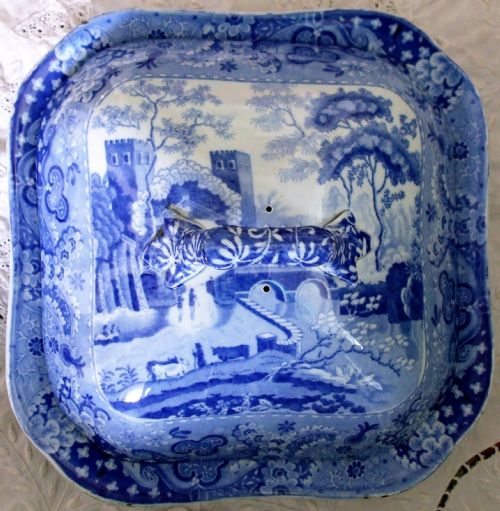


Cobalt Blue Transferware Dish
A cobalt blue transferware dish brings rich narrative scenes into domestic spaces through deep iron-oxide pigments bonded beneath glossy ceramic glazes.
Cobalt Blue Transferware Dish
A cobalt blue transferware dish encompasses everything from large serving platters and meat plates to deep vegetable tureens, bread stands, and decorative bowls. Most examples encountered here belong to the nineteenth century and the Georgian or Victorian eras, reflecting a golden age of Staffordshire pottery production.
The forms range from utilitarian dining table servants like meat platters and cheese dishes to intricate pierced serving dishes and trefoil plates. Makers adapted these vessels for both functional service and ornamental display within British and European households.
The pictorial subjects span pastoral scenes, classical ruins, exotic landscapes, and Chinoiserie motifs. Collectors encounter named patterns such as India Temple, Piping Shepherd, and Bridge of Lucano alongside topographical views like Fair Mount near Philadelphia.
How they were made
Potters built these vessels using earthenware, pearlware, stoneware, or ironstone, shaping the clay bodies before drying and firing. Artisans then applied finely ground cobalt pigment onto tissue paper from engraved copper plates, transferring the intricate design directly onto the ceramic surface.
A transparent lead or salt glaze was applied over the transferred design to protect the pigment and seal the porous ceramic body. Subsequent kiln firings fused the cobalt oxide into the glaze, producing the characteristic deep blue tones and vitreous shine.
Cobalt Blue Transferware Dish Retail Price Guide 2026
Typical asking prices for cobalt blue transferware dish among the pieces listed under this phrase on Sellingantiques today, from the lower quarter to the upper quarter. They describe what is for sale here now, not the wider market.
Listings feature earthenware, pearlware, and ironstone bodies decorated with cobalt pigment under clear glazes across the Georgian and Victorian periods.
What varies in quality
The crispness of the transfer print defines the primary tier of quality, distinguishing sharp, detailed copperplate impressions from blurred or smudged applications. Depth of the cobalt pigment and the clarity of the underlying glaze also separate superior factory output from standard commercial wares.
Forming complexity elevates certain pieces, such as pierced reticulated rims, moulded handles, and well-fitted covers on tureens and cheese dishes. The artistic ambition of the pictorial subject and the established reputation of the pottery influence the desirability of each individual vessel.
J. & R. Riley·J. & R. Clews·Doulton Burslem·John Ridgway·Spode·Stubbs·Pettys and Co. Leeds·Thomas Lakin·Don Pottery·Brameld and Co.·John Rogers and Son·John Davenport·Copeland and Garrett·Masons
The Cobalt Blue Transferware Dish Glossary
- Transferware
- Ceramic pottery decorated by printing a design from an engraved copper plate onto tissue paper, which was then transferred onto the unglazed or bisque ceramic body.
- Cobalt Pigment
- A metallic blue colorant derived from cobalt ores that withstands high kiln temperatures without losing its intense hue beneath the glaze.
- Pearlware
- A refined earthenware developed in the late eighteenth century featuring a thin glaze with a faint bluish tint that pooled in crevices to mimic Chinese porcelain.
- Chinoiserie
- European decorative motifs and scenes imitating Chinese artistic styles, frequently featuring pagodas, exotic bridges, and figures in traditional dress.
- Tureen
- A deep covered serving bowl designed for holding soups, vegetables, or sauces at the dining table, often paired with an matching serving platter.
Cobalt Blue Transferware Dish: Frequently Asked Questions
How are cobalt blue transferware dishes dated?
Porters rely on a combination of ceramic body composition, glaze characteristics, and specific maker marks stamped or impressed into the base. Stylistic cues like Georgian border designs or Victorian shape profiles also help narrow down the manufacturing decade.
Written registry marks and named topographical views provide further historical context, linking individual pieces to exact production years between the late eighteenth and late nineteenth centuries.
What is the difference between earthenware and ironstone?
Earthenware forms the softer, more porous ceramic body typical of early nineteenth-century Staffordshire production, requiring a thick glaze for liquid containment. Ironstone represents a much denser, heavily vitrified stoneware developed for enhanced durability.
Ironstone dishes withstand heavier daily use and often display a heavier weight and crisper white ground beneath the cobalt transfer print compared to standard pearlware.
Why do transfer prints sometimes look blurred?
Blurring occurs when the tissue paper carrying the cobalt pigment slips slightly during the transfer process onto the curved ceramic surface. Variations in kiln temperature could also cause the cobalt pigment to bleed into the melting glaze during firing.
Such printing anomalies reflect the hand-operated workshop conditions of historical potteries rather than modern mechanized precision.