

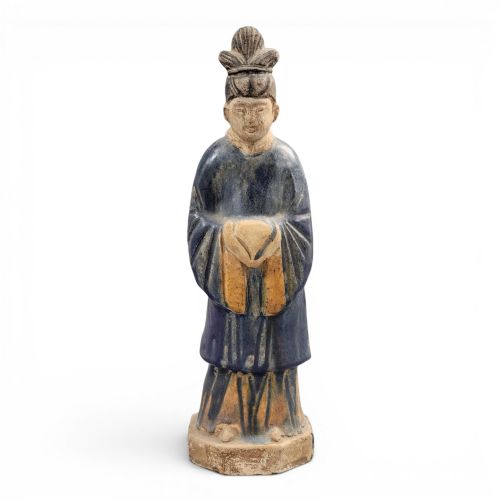


Cobalt Blue Pottery Figure
A cobalt blue pottery figure brings domestic colour and Victorian character to a mantelpiece, combining rich oxide glazes with sculptural form.
Cobalt Blue Pottery Figure
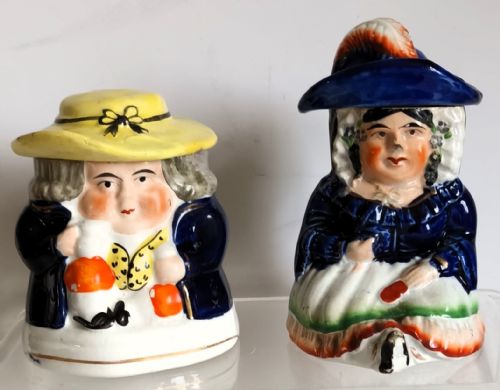
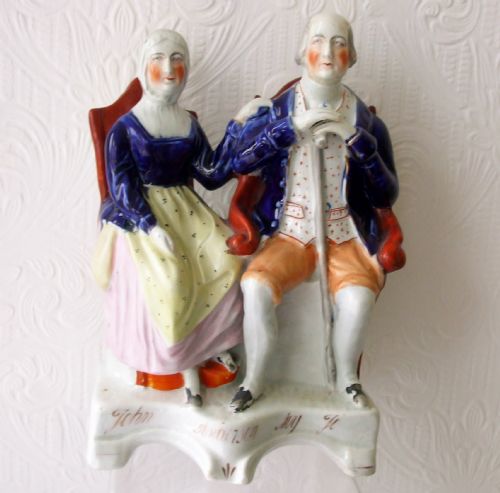
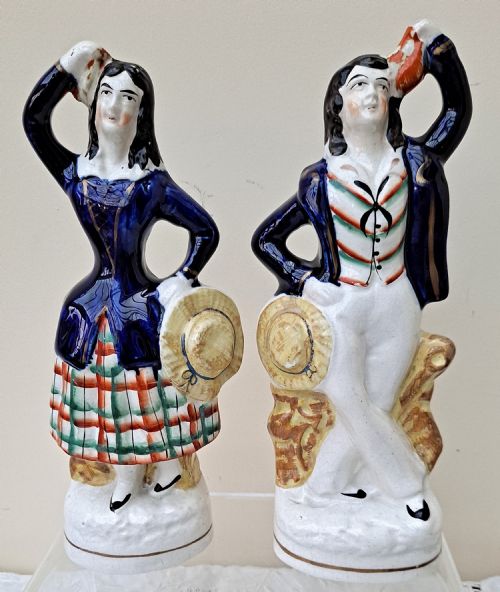
A cobalt blue pottery figure encompasses a variety of ceramic forms, most commonly found as nineteenth-century Staffordshire earthenware rather than distinct standalone sculptures. These pieces range from portrait figures and royal groups to theatrical pairs, animal studies, and quill holders produced during the Victorian era.
Beyond English earthenware, the selection includes Chinese and Japanese ceramic traditions showing cobalt grounds, ranging from Tang dynasty funerary figures to Satsuma vases with court scenes and Qing dynasty porcelain vessels.
How they were made
Makers utilised earthenware, ceramic, and porcelain bodies finished with lead glazes, enamel paint, and occasional gold leaf or gilt highlights. Cobalt oxide provided the deep blue ground or decorative accents fired into the glaze.
Moulds shaped the figures before hand-painting and glazing, producing the flatbacks, spill vases, and inkwells recorded across the Victorian and Asian examples.
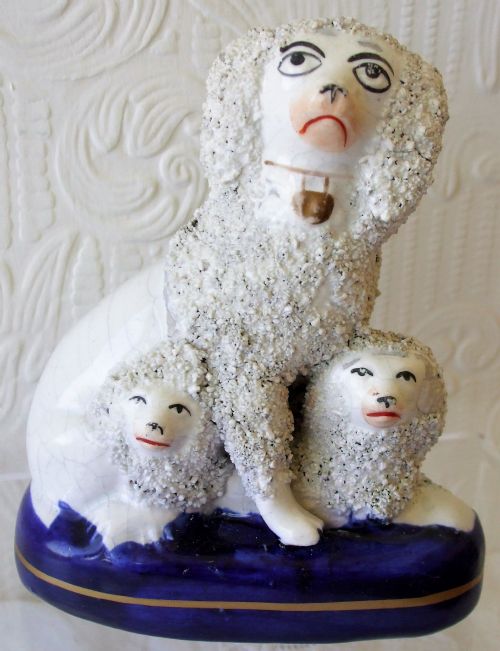
Dalmatians and poodles appear with surprising frequency keeping watch over inkwells and mantelpieces.
What varies in quality
The crispness of the moulding and the precision of the hand-applied enamel painting determine the visual strength of a piece. Finer examples show careful control of the cobalt blue glaze and consistent application of gilt or gold leaf details.
Depth of character in portrait subjects and animals separates standard production items from superior works, particularly within Staffordshire earthenware groups and Japanese Satsuma wares.
Kinkozan Kyoto·Wedgwood
The Cobalt Blue Pottery Figure Glossary
- Flatback
- A Staffordshire figure modelled with a finished front and sides while the back remains unadorned for placement against a wall.
- Lead glaze
- A shiny coating applied to earthenware pottery that enhances the depth of underlying colours such as cobalt blue.
- Spill vase
- A hollow ceramic cylinder attached to a figure designed to hold wooden spills for lighting candles.
- Moriage
- A Japanese decorating technique using raised slip to create textured decorative patterns on pottery vessels.
Cobalt Blue Pottery Figure: Frequently Asked Questions
What is a Staffordshire flatback?
A Staffordshire flatback is a ceramic figure designed with a blank, unpainted rear side intended to sit neatly against a mantelpiece or wall.
These pieces were produced in large numbers during the nineteenth century to commemorate royals, literary characters, and domestic animals.
How do I date Victorian pottery?
Dating Victorian pottery involves examining the ceramic body, the style of the hand-painting, and the characteristics of the glaze.
Marks, titles impressed into the base, and specific historical subjects also help narrow down the period of manufacture.
What is cobalt glaze?
Cobalt glaze is a mineral-based colouring agent applied to pottery before firing to achieve a rich, deep blue tone.
It remains stable at high temperatures, making it a durable choice for both English earthenware and Asian porcelain.
How were inkwells used?
Inkwells served as desktop receptacles for liquid ink, often combined with quill holders or designed as sculptural animal figures.
They were common accessories in nineteenth-century studies and writing desks.