

Cobalt and Gold Vase
A cobalt and gold vase brings intense blue and brilliant metal together, offering a striking centrepiece for any room.
Cobalt and Gold Vase
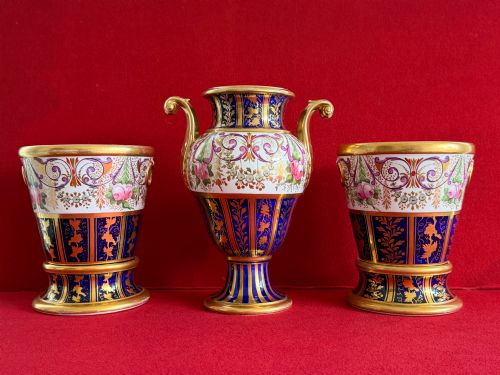
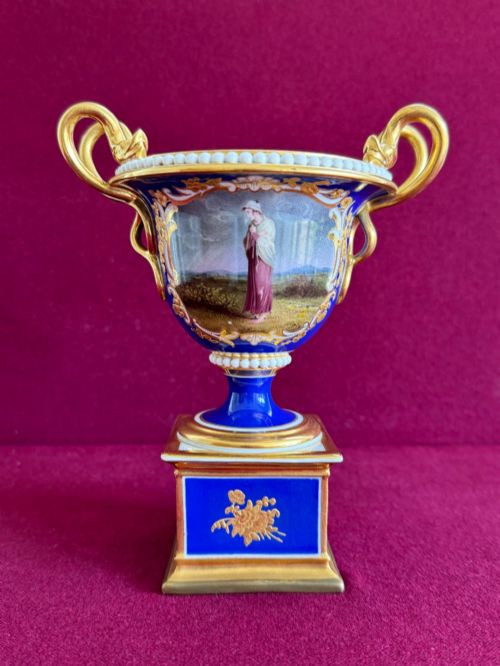
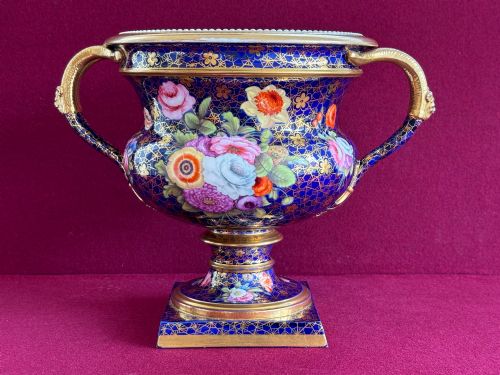
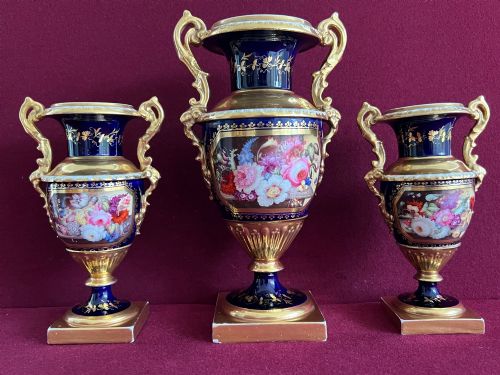
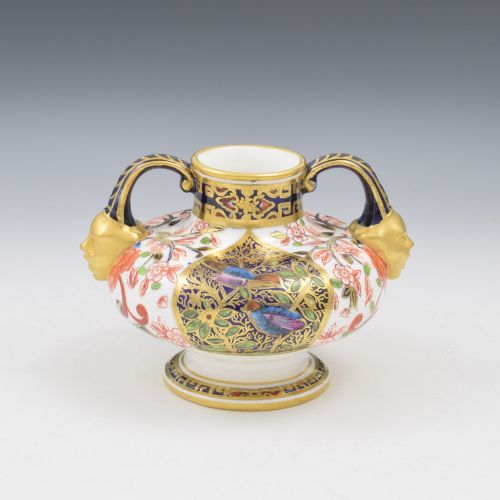
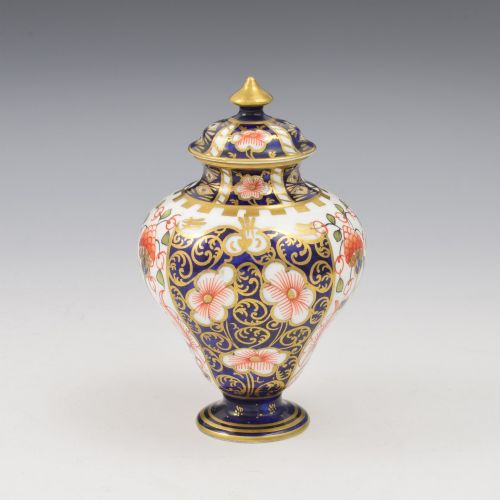
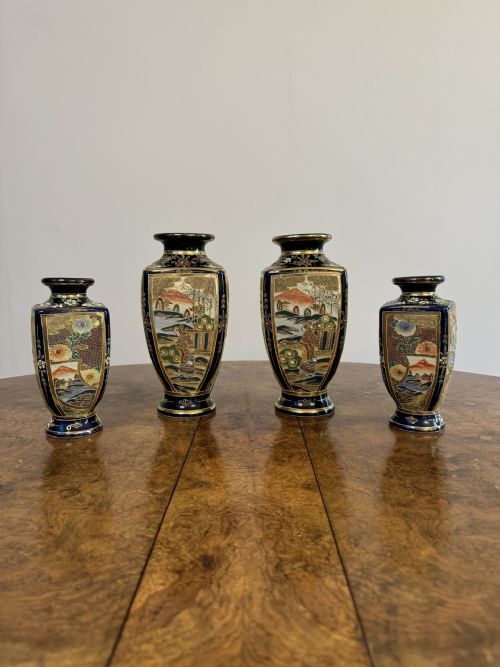
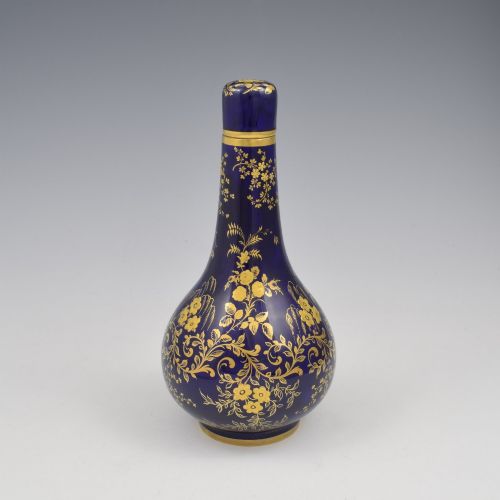
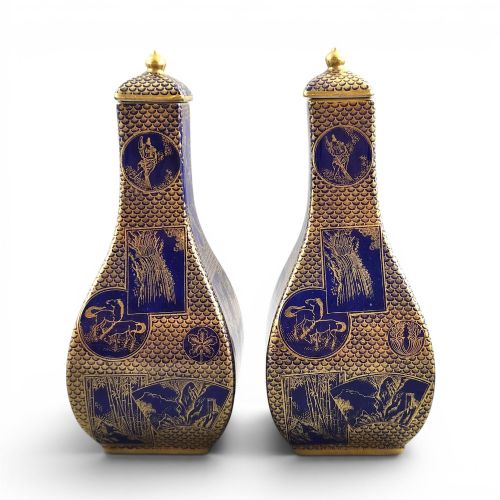
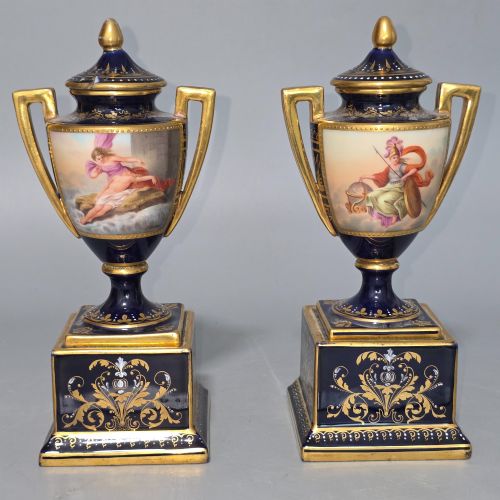
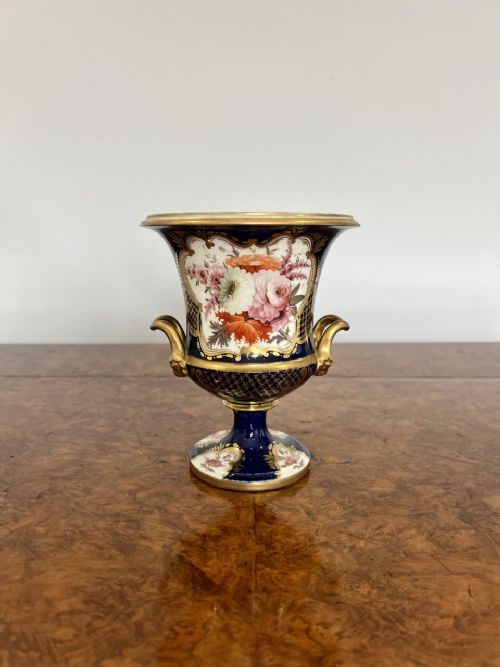
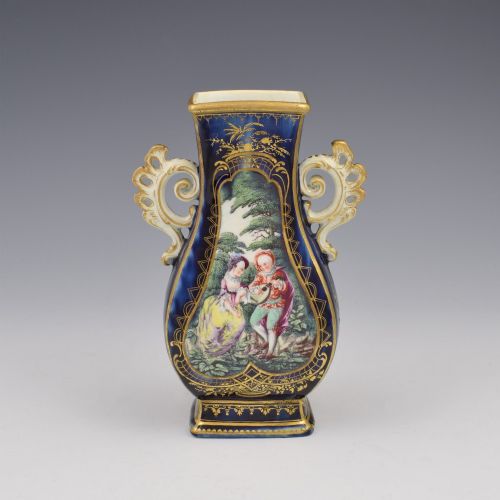
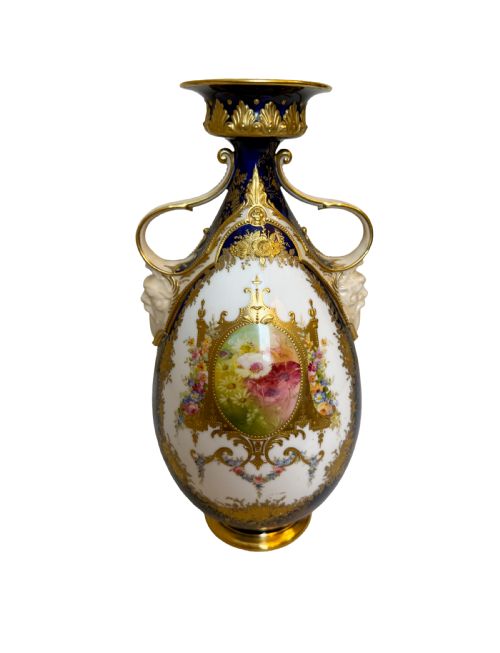
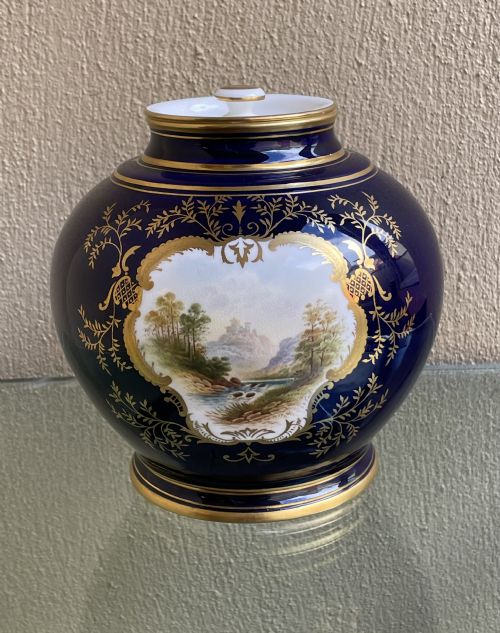
A cobalt and gold vase combines deep blue ceramic bodies with rich gilding, spanning diverse international traditions from European porcelain manufactories to Japanese Satsuma workshops. These vessels take many forms, including Campagna urns, lidded jars, amphorae, and garniture sets designed for prominent display.
The pieces appearing on this page stretch chronologically from the Georgian and Regency eras through the Victorian period, Edwardian times, and into the early twentieth century. English porcelain houses and continental makers dominate the selection, alongside Meiji period Japanese works featuring intricate moriage decoration.
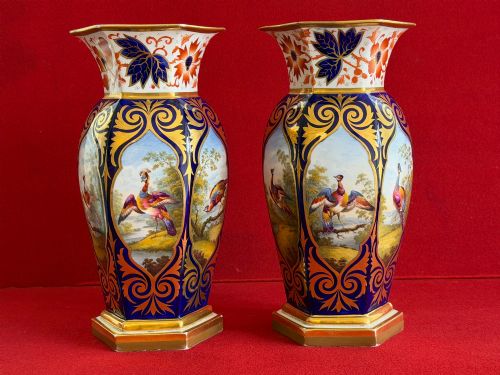
Buyers encounter both single statement pieces and matched pairs intended for mantlepieces or side tables. Forms range from miniature cabinet vessels to large decorative urns carrying hand-painted landscapes or classical scenes.
How they were made
Potters shaped these vessels using porcelain, earthenware, and ironstone bodies, often applying cobalt oxide directly to achieve the characteristic deep blue ground before glazing and firing. Artisans then added intricate gold leaf, liquid gilding, or ormolu mounts to the fired surfaces.
Many items required multiple kiln firings to set the cobalt underglaze, enamel colours, and final raised gold details securely. Skilled painters frequently embellished the reserves with hand-painted scenes, while metalworkers cast bronze trim to frame the ceramic forms.
Listings feature porcelain, earthenware, and ironstone bodies decorated with enamel, gold leaf, and gilt bronze mounts.
What varies in quality
The refinement of the hand-painted artistry separates standard production items from exceptional workshop pieces. Master painters executed detailed portraits, landscapes, and intricate gilt tooling that demanded years of specialised training.
The weight and precision of the mountings, such as gilt bronze trim or cast ormolu handles, indicate the original cost of manufacture. Rich, thick application of gold leaf and well-preserved raised moriage work demonstrate superior material investment.
Royal Crown Derby·Flight Barr And Barr·Royal Doulton·Coalport·Carlton Ware·Kinkozan·Ernst Wahliss
The Cobalt and Gold Vase Glossary
- Campagna urn
- A bell-shaped vessel with a flared rim and footed base, frequently produced in porcelain during the nineteenth century.
- Garniture
- A matched set of three or more decorative vases or urns designed to be displayed together on a mantelpiece or sideboard.
- Moriage
- A Japanese ceramic technique using piped slip to create raised decorative patterns, often highlighted with heavy gilding.
- Ormolu
- Gilded bronze mounts and decorative trims applied to ceramic bodies, popular in French and English decorative arts.
- Amphora
- A two-handled jar with a narrow neck, modelled on ancient Greek forms and revived during the nineteenth century.
Cobalt and Gold Vase: Frequently Asked Questions
How do I care for a gilded vase?
Clean these surfaces gently with a soft, dry cloth to remove dust without disturbing the delicate gold leaf or hand-painted enamels. Avoid using liquid cleaners or abrasive materials entirely, as moisture and harsh scrubbing can permanently damage historic gilding.
Keep the vessel away from direct sunlight and areas prone to heavy temperature fluctuations to protect the ceramic body and glaze. Proper placement ensures the fragile enameled details remain stable for years to come.
Where were these vases displayed?
Nineteenth-century homes typically showcased these decorative vessels on mantelpieces, central tables, and large pedestals within formal reception rooms. Matched pairs and garniture sets created a balanced, symmetrical focal point for interior decoration.
Smaller cabinet pieces found a home inside glass-fronted display furniture alongside other prized ceramics. Their vibrant blue and gold colour palette was specifically chosen to catch the flickering light of candles and gas lamps.
How can I tell English from Japanese pieces?
English examples usually rely on European porcelain bodies decorated with neoclassical motifs, transfer printing, or hand-painted botanical and landscape panels. Look for factory marks specific to Staffordshire or Worcester manufactories on the underside.
Japanese pieces from the Meiji period often utilise distinct earthenware bodies covered in dense Satsuma crackle glaze and raised enamel work. Signatures of specific artists or studios are frequently painted in gold or red characters on the base.
What is a vase garniture?
A garniture is a matching set of three, four, or five vessels designed to be arranged together across a prominent architectural surface. These sets typically feature a central larger urn flanked by smaller matching vases or lidded jars.
Originating in popularity during earlier centuries, nineteenth-century makers revived the format for grand domestic interiors. Finding an intact, matching set preserves the original decorative intent of the workshop.