

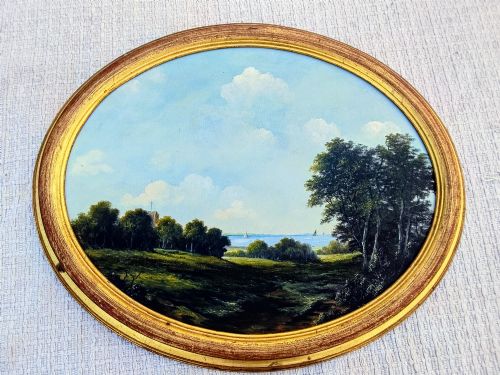
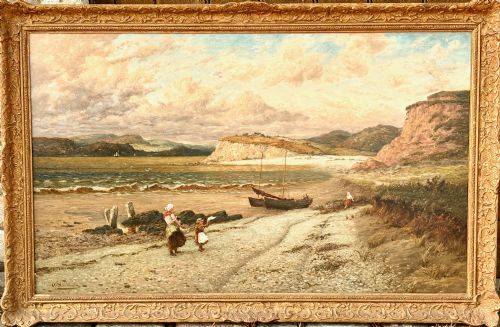


Coastal View Oil Painting
A coastal view oil painting captures the light, water, and shoreline of maritime scenes across centuries.
Coastal View Oil Painting
A coastal view oil painting depicts harbours, cliffs, beaches, and marine expanses across the nineteenth and twentieth centuries. These artworks range from precise topographical records of Victorian piers to expressive mid-century impressions of French and British ports.
Buyers encounter works on stretched canvas, wooden panels, and boards, executed by both named artists and skilled regional painters. The subjects span local British bays, Mediterranean shores, and Scandinavian waters, reflecting changing artistic approaches to light and atmosphere over time.
How they were made
Artists built these coastal view oil painting works using oil paint applied to canvas, board, or wood panels, sometimes incorporating gesso grounds to prepare the surface. Pigments were brushed, layered, or worked with a palette knife to render the texture of water, sky, and stone.
Frames completed the construction, utilising carved and gilded wood to protect the edges and complement the palette of the maritime scene within.
The selection includes works rendered on canvas, board, and wood, spanning Victorian marine landscapes to mid-century impressionism.
What varies in quality
The distinction between standard works and exceptional examples rests in the confidence of brushwork and the handling of atmospheric light. Finer paintings capture the transient qualities of sea mist, breaking waves, and shifting coastal weather with precise tonal harmony.
Compositional balance and the preservation of the original paint surface also divide works of routine recording from those of high artistic achievement.
Clifford Hanney·Erich Mercker·Gyrth Russell·Stanley Leader·William Raymond Dommersen·James Webb·Thomas Rose Miles·James Torrington Bell·Owen Bowen·William Sidney Cooper·Daniel Sherrin·Johan Jens Neumann·Augustus William Enness·Vilhelm Arnesen·Gustav Vermehren·Alfred Broge·Benjamin Williams Leader·Poul Friis Nybo·George Aikman·Joseph Vickers De Ville·William Bright Morris·Peter Johan Schou·Alfred Wahlberg·Stanley Montague·David James
The Coastal View Oil Painting Glossary
- Canvas
- A heavy woven fabric stretched across a wooden frame to serve as a painting surface. It provides a slightly flexible ground that accepts oil paint well.
- Gesso
- A white paint mixture consisting of a binder mixed with chalk, gypsum, or pigment. It was applied to wood panels or canvas to prepare the surface for oil painting.
- Board
- A rigid flat sheet of wood or composite material used as a stable support for oil paint. It was frequently utilised for smaller plein air studies.
- Impressionism
- An artistic style characterised by relatively small, thin yet visible brush strokes and an accurate depiction of changing light. It influenced many twentieth-century maritime painters.
- Palette knife
- A blunt tool used for mixing paint on a palette or directly applying thick, textured pigment to canvas. It creates bold impasto effects found in marine art.
Coastal View Oil Painting: Frequently Asked Questions
How do I date a coastal view oil painting?
Dating relies on stylistic clues, framing methods, and the type of canvas or board used by the artist. Victorian pieces often feature detailed topographical accuracy, whereas mid-century works lean towards looser brushwork.
Signatures, artist dates, and inscriptions on the reverse of the stretcher or panel provide further confirmation of the period.
Where were these maritime scenes usually painted?
Artists painted these scenes both on location along the shoreline and back in the studio from preparatory sketches. Coastal locations included British fishing ports, Welsh bays, Scottish harbours, and Mediterranean shores.
Many works document the bustling trade, pleasure piers, and everyday coastal life of their respective eras.
How should I care for an antique oil painting?
Keep the artwork away from direct sunlight, extreme temperature shifts, and high humidity to protect both the canvas and the oil pigments. Dust the surface gently with a soft, dry brush without applying pressure to the paint layer.
Avoid using water or chemical cleaners on the paint or the wooden frame.
What is the difference between canvas and board supports?
Canvas provides a woven texture that yields slightly under pressure and is typically stretched over a wooden frame. Board offers a completely rigid surface that resists punctures and movement over time.
Both supports were common, though smaller outdoor studies were frequently painted directly on board.