


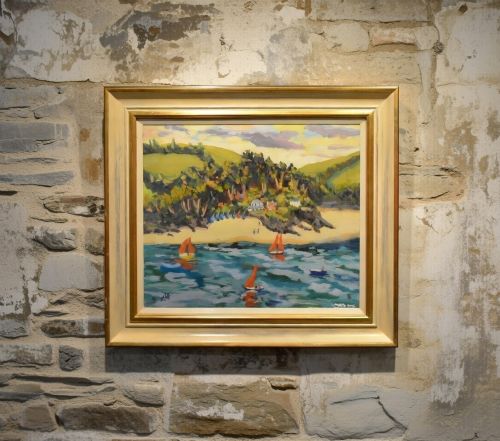
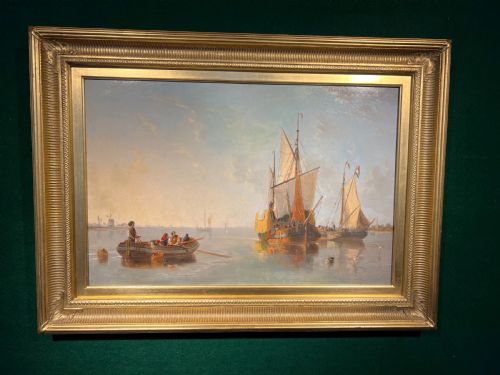
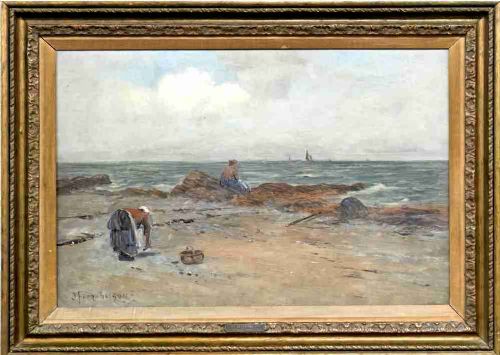

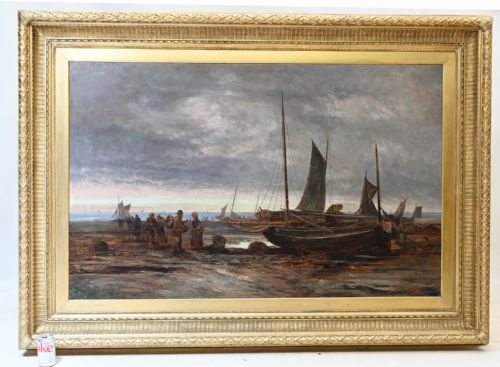


Coastal Seascape Canvas Picture
A coastal seascape canvas picture brings the shifting moods of the shore, harbour and open water directly into a room.
Coastal Seascape Canvas Picture
A coastal seascape canvas picture captures maritime life, coastal topography and harbour scenes through oil paint. These works span from the nineteenth century into the mid-twentieth century, recording British and European shores, fishing communities and shipping activity.
The Victorian era is particularly well represented, alongside later British and continental Impressionist approaches. Buyers encounter everything from large gallery canvases depicting shipwrecks and lighthouses to smaller oval sea views and harbour studies.
Subjects range from Cornish fishing ports and Welsh bays to Mediterranean viewpoints in Italy and France. Oil on canvas remains the dominant medium, often housed in period giltwood and gesso frames.
Materials and execution
Canvas stretched over wooden frames serves as the primary support for these oil paintings, providing a textured surface that holds thick applications of pigment. Artists built up compositions using oil paint, sometimes adding textured media or gesso ground layers beneath the colour.
Frames are constructed from wood and finished with intricate gesso and giltwood ornamentation. These surrounds often reflect the specific period of the artwork, from heavy Victorian mouldings to simpler mid-century profiles.
Listings feature Victorian and mid-century oil paintings on canvas, highlighting coastal views, lighthouses, and harbour scenes across Britain and Europe.
Distinctions in quality
Quality rests upon the artist's handling of light, atmosphere and maritime perspective, distinguishing routine topographical records from accomplished impressionistic or realist works. The confidence of brushwork and the accurate depiction of water movement, rigging or coastal architecture reveal the painter's skill.
The condition of the original canvas and the survival of matching period giltwood frames also influence the standing of a piece. Works retaining their untouched surface texture and appropriate framing hold greater integrity.
John Wilson Carmichael·Joseph Farquharson·Charles Napier Hemy·Gyrth Russell·Gustave De Bréanski·James Webb·John Douglas Perrett·Alfred Henry Vickers·George Henry Knight·Thomas Rose Miles·Jeffrey Pratt·Owen Bowen·Edward Henry Holder·William Langley·Robert Farren·John James Wilson·Frank Myers Boggs·William Shayer
The Coastal Seascape Canvas Picture Glossary
- Giltwood
- Wood carved and covered with a thin layer of gold leaf or metallic powder. This finish appears frequently on nineteenth-century frames surrounding marine art.
- Gesso
- A plaster-like mixture applied to wood frames to create smooth or moulded decorative surfaces before gilding. It provides the detailed relief work seen on period framing.
- Impressionism
- An art movement focusing on the visual impression of the moment, particularly shifting light and colour. Works in this style use rapid brush strokes rather than precise academic detail.
- Maritime Art
- Painting or visual art that depicts or draws inspiration from the sea, ships and coastal views. This genre includes harbour scenes, shipwrecks and open ocean vistas.
- Provenance
- The documented history of ownership surrounding an artwork. Clear provenance helps verify the attribution of nineteenth and twentieth-century paintings.
Coastal Seascape Canvas Picture: Frequently Asked Questions
How do I date a maritime oil painting?
Dating relies on stylistic clues, clothing styles of any figures depicted, and the construction methods of the canvas stretcher and frame. Signatures, exhibition labels, and written inscriptions on the reverse also offer reliable chronological markers.
Comparison with documented works by the same artist or regional school helps narrow the decade of creation. Material analysis of the pigments and canvas weave provides further confirmation for older pieces.
Where should I hang a canvas seascape?
These paintings suit spaces with steady ambient light away from direct sunlight, which can degrade oil pigments and dry out canvas over time. A wall with balanced room lighting allows the textured brushwork and varnished surface to be viewed without distracting glare.
Matching the scale of the painting to the room is essential, as large Victorian maritime works require substantial wall space. Ensuring the surrounding humidity remains moderate protects both the wooden stretcher and the canvas integrity.
What is the difference between marine art and landscape painting?
Marine art specifically centres on the sea, ships, beaches, and coastal infrastructure, placing water and maritime activity at the core of the composition. Traditional landscapes focus primarily on inland terrain, forests, and fields without a maritime focus.
Many coastal paintings bridge both categories by featuring shorelines with land-based figures, such as flither pickers or fishermen working on the sand. The presence of tides, shipping lanes, and coastal spray defines the distinct character of maritime scenes.