




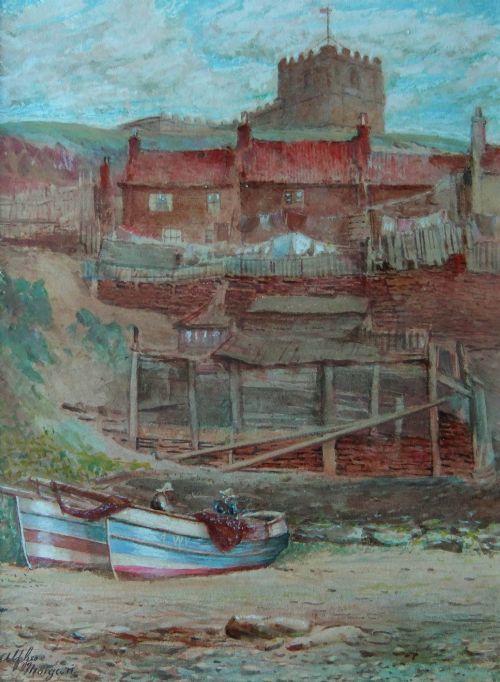
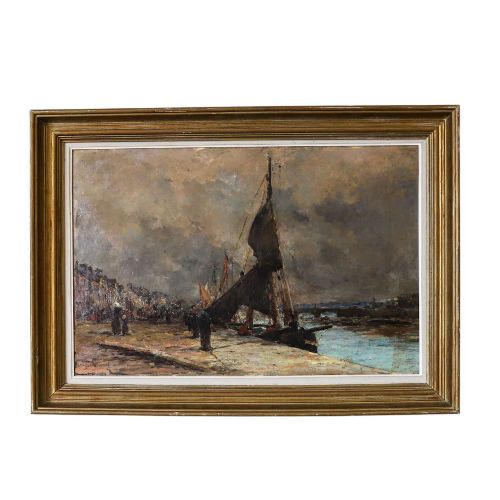
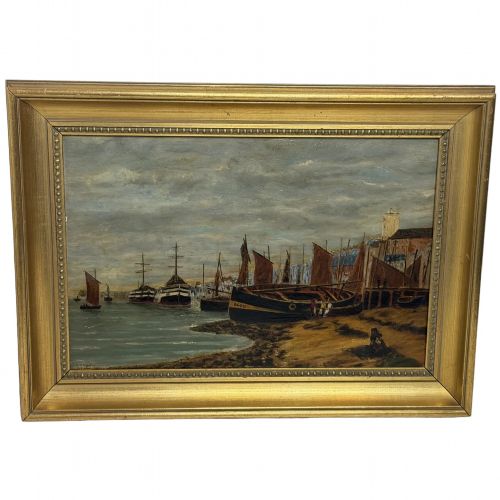
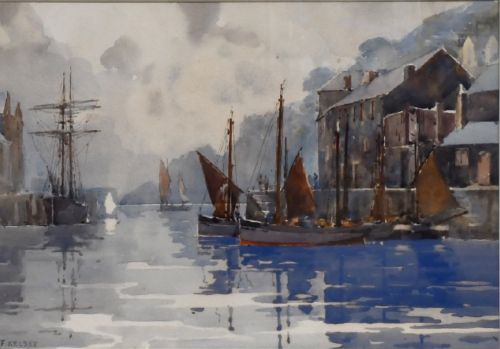
Coastal Harbour Scene Artwork
Coastal harbour scene artwork captures the salt, trade and daily toil of maritime life across centuries of British and European painting.
Coastal Harbour Scene Artwork
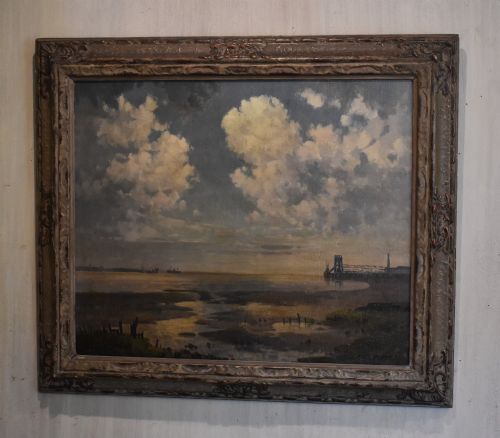
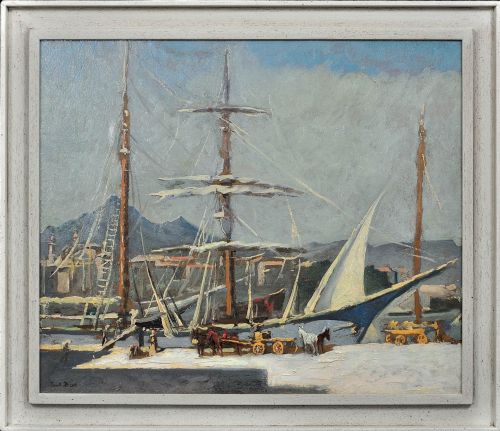
A coastal harbour scene artwork portrays bustling fishing ports, quiet tidal estuaries and weather-beaten quaysides through the medium of paint or paper. Collectors encounter these works primarily in oil and watercolour, stretching from the late eighteenth century into the mid-twentieth century.
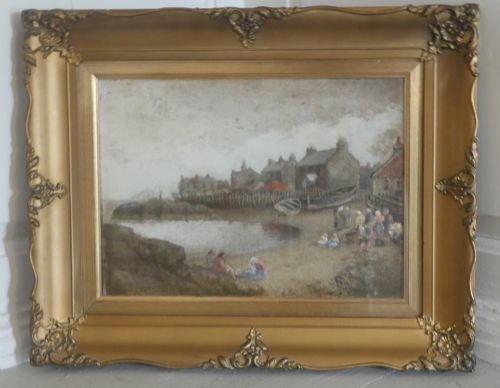
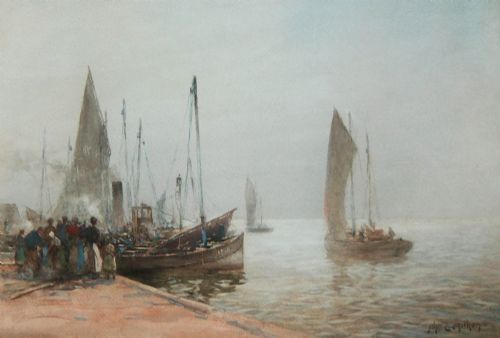
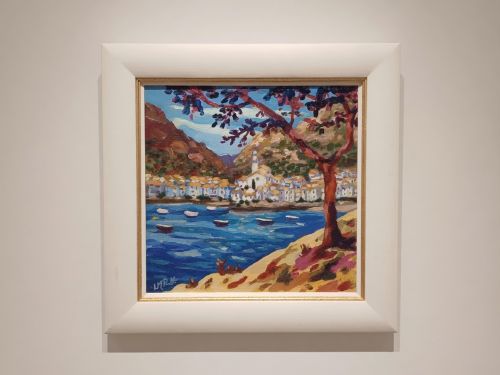
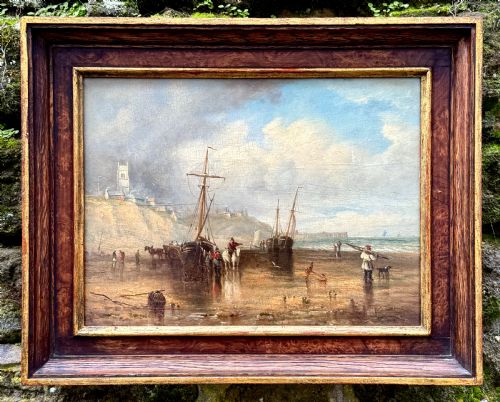
The selection ranges from traditional Victorian depictions of Cornish fishing boats to atmospheric Edwardian watercolours and mid-century modern interpretations of European ports. These paintings document the changing architecture of maritime commerce, from wooden sailing luggers to early steam vessels.
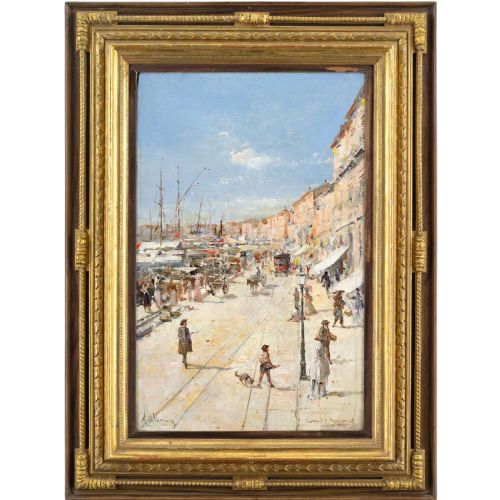
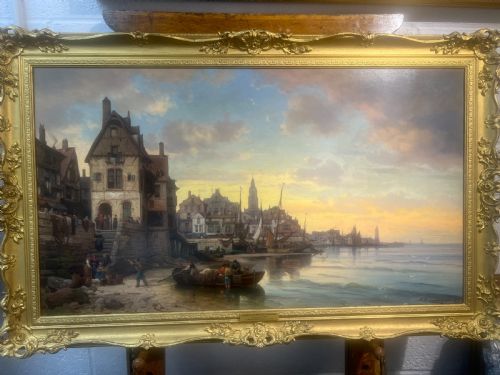
Works originate from prominent coastal art colonies such as St Ives and Staithes, alongside depictions of French, Belgian and Italian harbours. Smaller village inlets appear alongside major trading rivers like the Tees and the Tyne.
How they were made
Painters recorded coastal subjects directly on the shore using portable watercolours on paper or oil paint applied to prepared canvas, board and panel. Watercolours rely on fluid washes and pencil underdrawing to capture fleeting coastal light, while oil paintings utilise thicker impasto and layered glazes to render choppy seas and weathered timber.
Many historical works retain their original gilt wood frames, which protect the edges of the canvas or paper and complement the tonal palette of the maritime subject. Support materials range from heavy woven canvas to wood panels and fine paper sheets.
Several artists painted the exact same Cornish slipway decades apart, leaving a visual diary of changing hats.
What varies in quality
Quality rests upon the artist's handling of atmospheric light, maritime perspective and the natural movement of water. Skilled painters convey the weight of wooden hulls and the damp salt air through confident brushwork and precise tonal contrast.
Compositional balance distinguishes exceptional works from standard topographical views, with superior pieces integrating human activity and shipping vessels naturally into the wider coastal landscape. The preservation of the original paint surface and framing further influences the standing of each piece.
Kenneth Cozens·James E. Aitken·William Banks Fortescue·Augusto Alberici·Paul Bret·Hector Caffieri·Thomas Creswick·Charles Euphraisie Kuasseg·Alfred G. Morgan·Frank Kelsey·George F Pennington·Paul Delvaux·William Edward Webb·Richard Harry Carter·Gyrth Russell·Raymond Picque·William Lee Hankey·George Turland Goosey·James Kyd·Arthur Tucker·Adrian Van Porten·William Tuck·Donald McIntyre·Doyly-John·T.S. Wallis
The Coastal Harbour Scene Artwork Glossary
- Impasto
- Paint applied thickly to a canvas or board so that it stands proud of the surface. This technique creates a textured finish that catches the light and adds physical depth to crashing waves or weathered stone quays.
- Lugger
- A traditional two-masted fishing boat rigged with standing lugsails. These vessels appear frequently in nineteenth and early twentieth-century coastal works from Devon and Cornwall.
- Gilt wood
- Wood carved or moulded and coated with a thin layer of gold leaf or metallic gilt paint. Such frames were designed to isolate the artwork from its surroundings and enhance the warm tones within the paint.
- Provenance
- The documented history of ownership of an artwork from its creation to the present day. Clear provenance helps verify the attribution and period of historical marine paintings.
Coastal Harbour Scene Artwork: Frequently Asked Questions
How do I date a harbour painting?
Dating relies heavily on the style of clothing worn by figures on the quayside, the rigging of the ships, and the framing materials. Clues such as the transition from sailing luggers to steam vessels provide a reliable chronological anchor.
Signatures, exhibition labels on the reverse, and the specific type of canvas or paper board also help narrow down the decade of creation.
Where should I hang maritime art?
These pieces suit rooms with natural light that mimics the open coastal environment, though direct sunlight should be avoided to protect watercolours and oils. Neutral wall colours allow the deep blues and earthy tones of the sea and stone to stand out.
Consider eye-level placement in studies, living rooms or hallways where the detail of the harbour activity can be observed closely.
What is the difference between oil and watercolour harbour scenes?
Oil paintings on canvas or board offer rich textures, deep pigment saturation, and a robust surface that captures heavy seas and dramatic skies. They often have a heavier presence and require sturdy framing.
Watercolours on paper present a lighter, more translucent quality well suited to misty coastal mornings and bright southern European ports, typically displayed behind protective glass.
How do I care for antique maritime paintings?
Keep paintings away from damp environments and extreme temperature fluctuations to prevent canvas slackening or paper foxing. Dust gilt frames gently with a dry, soft brush without applying pressure to carved ornaments.
Ensure watercolours remain sealed behind clean glass and away from direct ultraviolet light to preserve the delicate pigments used by early artists.