



Victorian Sailboat Artwork
Victorian sailboat artwork captures maritime scenes through oil on canvas and watercolour, offering a direct view into nineteenth-century coastal life.
Victorian Sailboat Artwork
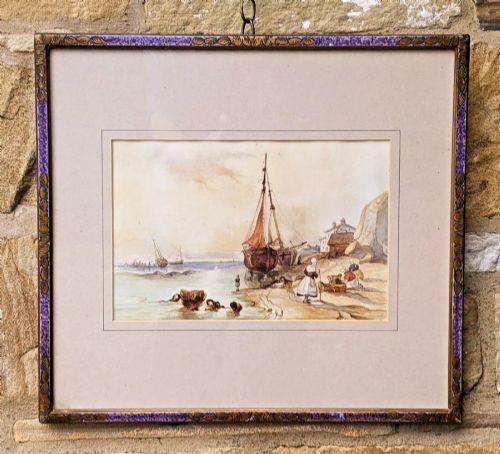
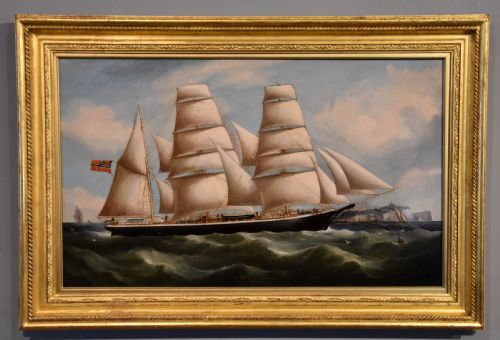
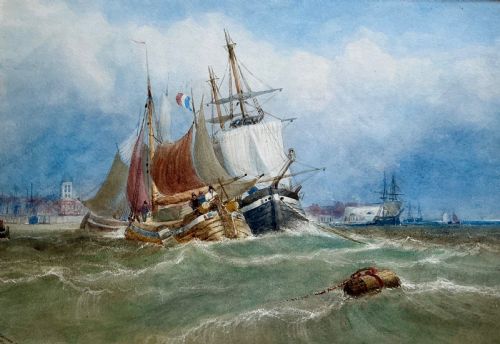
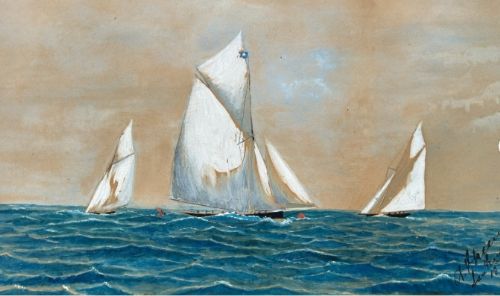
Victorian sailboat artwork spans the nineteenth century, capturing maritime scenes, coastal harbours, and racing yachts on the water. These pieces record working fishing boats, moored ships, and Venetian lagoons through various regional schools.
The version most commonly met on this page is the nineteenth-century watercolour or oil painting on canvas and board. These works range from Cornish and Norfolk coastal views to bustling harbour scenes across Britain and Europe.
Materials and Techniques
Artists utilise oil paint on canvas and board, alongside watercolour pigment on paper, building each coastal scene with layered brushwork or fluid washes. Gilt wood frames frequently enclose these paintings, preserving the paper and canvas surfaces.
Supports include prepared wooden boards and stretched canvases, while watercolours rely on absorbent paper to capture atmospheric light. Protective glass often covers the works on paper to prevent environmental damage.
Object types on this page include paintings, oil paintings, watercolour paintings, wall art, fine art painting, and framed artwork.
Quality Variations
Quality separates through the precision of maritime detail and the handling of atmospheric light across the water and sky. The strongest examples demonstrate confident draughtsmanship in rigging, hull construction, and changing weather conditions.
Compositional balance and the articulation of movement distinguish ambitious coastal scenes from standard topographical records. The integration of the wooden frame with the period canvas also influences the overall integrity of the piece.
Richard B. Spencer·Henry Barlow Carter·F J Aldridge·Charles Harmony Harrison·Jane Vivian·George Henry Knight·John Callow·E Tucker·Gustave De Breanski·Frank Wasley·Harry Wanless·Charles Euphrasie Kuwasseg·Thomas Bush Hardy·William Edward Webb·Samuel Bough·Henry Bright
The Victorian Sailboat Artwork Glossary
- Watercolour pigment
- Finely ground colour mixed with a water-soluble binder, applied in translucent washes on paper. This medium suits rapid sketches of coastal weather and changing light.
- Oil on canvas
- Pigment suspended in drying oil, applied to a woven fabric stretched across a wooden frame. This method allows for rich texture and deep colour layering in marine painting.
- Gilt wood
- Timber treated with a thin layer of gold leaf or metallic gilt, used to ornament picture frames. These frames often complement the period aesthetic of nineteenth-century artworks.
- Board
- A rigid wooden or manufactured panel used as a painting support instead of stretched canvas. Artists frequently utilised board for smaller plein air maritime studies.
Victorian Sailboat Artwork: Frequently Asked Questions
What periods do these artworks cover?
The listed pieces date from the nineteenth century into the early twentieth century, spanning the Victorian era and subsequent decades.
Most works originate from the mid to late nineteenth century, reflecting the period's strong focus on maritime subjects and coastal topography.
How should I display these paintings?
Display these watercolours and oil paintings away from direct sunlight to protect the pigments on paper and canvas from fading.
Keep them in rooms with stable humidity to preserve both the wooden panels and the gilt frames surrounding the artwork.
What subjects appear in these scenes?
Common subjects include fishing boats, racing yachts, moored ships, and bustling harbours along British and European coasts.
Artists also recorded specific locations such as Venice, Scarborough, Whitby, and various coastal spots in the Isle of Man and Cornwall.
How do I identify a watercolour from an oil painting?
Watercolour paintings use pigment on paper and typically sit beneath protective glass to prevent moisture damage.
Oil paintings utilise oil paint on canvas or wooden board, offering a textured surface that remains unglazed.