
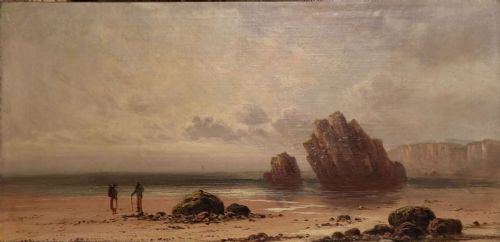

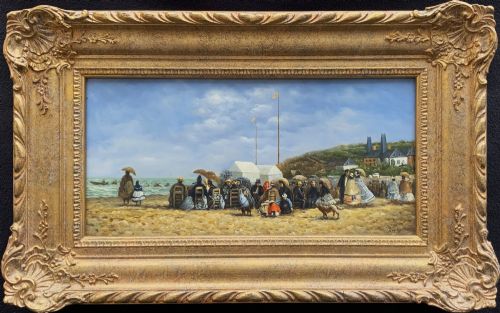

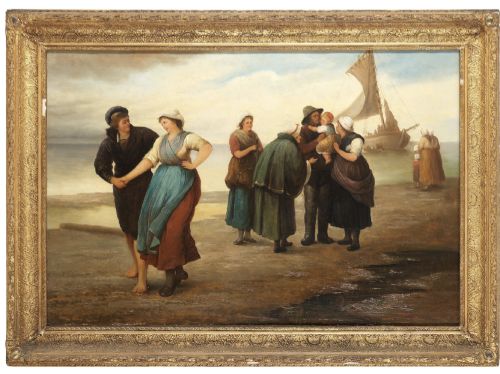
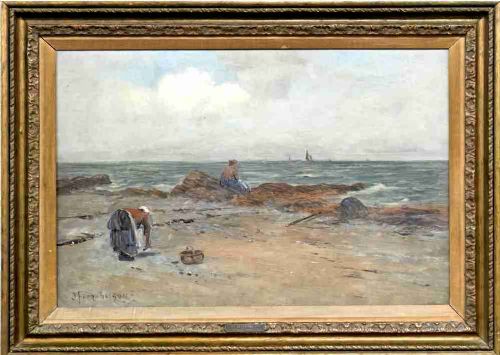


Coastal Beach Scene Painting
A coastal beach scene painting brings the atmosphere of the shore, harbour and sea directly into a room.
Coastal Beach Scene Painting
A coastal beach scene painting captures maritime life, shorelines and seaside gatherings across various periods from the Victorian era to the mid-twentieth century. Buyers searching this phrase encounter works ranging from traditional British watercolours of fishing boats to impressionist oils of figures on the sand.
The selections span regional British harbours, French coastal schools and domestic shores, depicting subjects such as oyster pickers, returning voyagers and children playing by the water. Canvas and paper formats predominate, housed in period giltwood or ebonised frames.
Most examples date from the nineteenth and early twentieth centuries, reflecting changing artistic attitudes toward natural light and coastal topography. Both finished gallery works and smaller plein-air sketches appear across the collection.
How they were made
Painters utilised oil paint on canvas or board to build rich surface textures, often capturing the heavy atmospheres of northern seas and sandy shores. Watercolours on paper offer a lighter, more translucent record of coastal light, particularly in works depicting harbours and low tides.
Listings feature works created using oil paint, watercolour, canvas, paper, wood and gold leaf.
What varies in quality
Handling of light, atmosphere and perspective separates accomplished marine compositions from routine topographical records. The confidence of brushwork or watercolour washes dictates how effectively a piece conveys movement in the sea and air.
The relationship between the artwork and its period frame influences the overall integrity of the piece. Provenance, signature clarity and the preservation of the pigment layer further distinguish works of note.
James Orrock·William Banks Fortescue·Joseph Farquharson·James Webb·Sir William Russell Flint·Frederick William Hattersley·Kate E Booth·Sir David Murray·Jeffrey Pratt·William Shayer·Owen Bowen·Robert Macaulay Stevenson·Daniel Sherrin·Yves Brayer·Markey Robinson
The Coastal Beach Scene Painting Glossary
- British Impressionism
- A painting style focusing on natural light and loose brushwork, developed by British artists influenced by continental movements.
- Seascape
- A work of art depicting the sea, coastal views, beaches or marine activity.
- Giltwood
- Wood that has been coated with a thin layer of gold leaf, commonly used for traditional picture frames.
- Plein-air
- Painting executed outdoors directly in front of the subject to capture transient effects of light.
- Watercolour
- A paint consisting of pigment suspended in a water-soluble binder, traditionally applied to paper.
Coastal Beach Scene Painting: Frequently Asked Questions
How do I care for an old oil painting?
Keep the piece away from direct sunlight and dramatic temperature shifts to protect the canvas and paint layers. Dust the surface gently with a soft, dry brush without applying moisture.
Consult a professional conservator if the canvas requires cleaning or tension adjustment. Avoid chemical sprays or household cleaners near the pigment.
Can I hang watercolours in bright rooms?
Watercolour pigments on paper remain sensitive to ultraviolet light and fade easily when exposed to strong sun. Hang these works on interior walls away from direct windows.
Utilising conservation-grade glass with UV-filtering properties helps protect the paper during display. Rotate pieces periodically if your rooms receive substantial natural light.
What frames belong on these paintings?
Period works typically feature giltwood or ebonised wooden frames chosen to complement the palette and era of the image. Original frames add historical context and value to the piece.
Inspect the corners and moulding details to confirm the frame matches the age of the canvas or paper. Simple restorations by specialists can stabilize antique wooden frames safely.
How do I date a coastal painting?
Examine the materials, including the type of canvas weave, paper watermark and construction of the wooden stretcher or frame. Stylistic clues such as artist signatures, clothing styles of figures and painting techniques also indicate the period.
Compare the signature against known biographical dates for the artist recorded in historical archives. Exhibition labels or inscriptions on the reverse often provide definitive dates.