



Coastal Beach Oil Artwork
Coastal beach oil artwork brings together maritime scenery and painted shores, capturing saltwater air and sand through traditional pigments.
Coastal Beach Oil Artwork
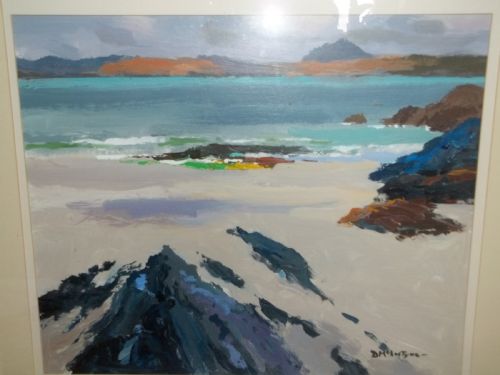
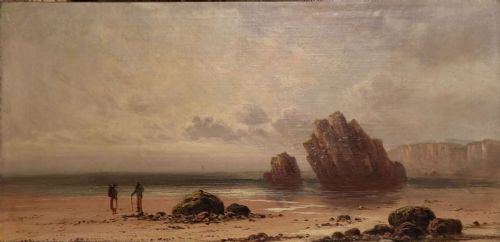
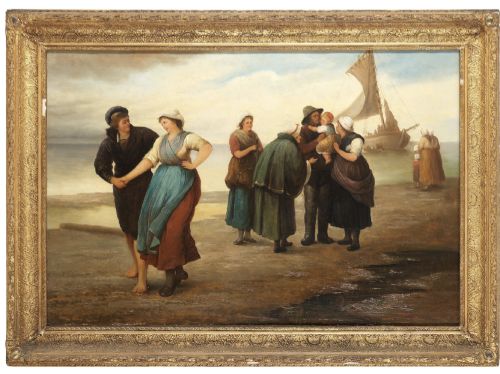
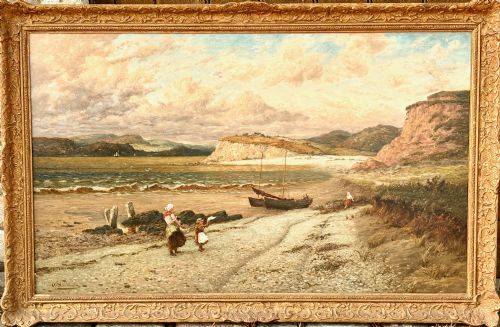
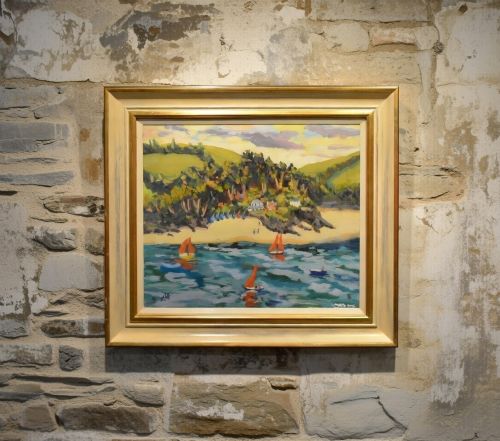
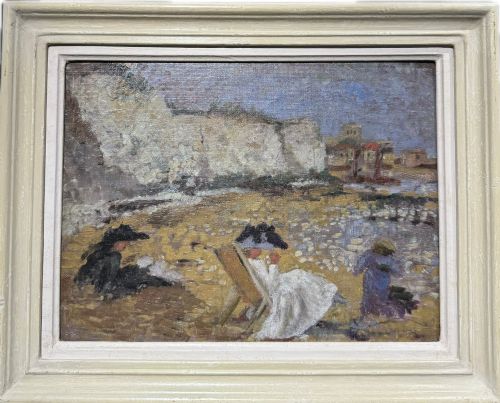
Coastal beach oil artwork encompasses paintings executed on canvas or board that depict maritime views, shorelines, and seaside gatherings. These works span periods from the nineteenth century through to the mid-twentieth century, recording changes in artistic interpretation from realism to impressionism.
The pieces available include depictions of figures on rocky shores, shipwrecks, fishing boats, and coastal towns such as Hastings, St Ives, and Morecambe Bay. Buyers will encounter both intimate cabinet paintings and large landscape canvases executed in various British and European schools.
How they were made
These works rely on oil paint applied to prepared canvas or wooden board surfaces, often framed in timber moulding finished with gesso and gold leaf. Painters built up compositions using brushwork ranging from tight academic precision to loose, impressionistic strokes that capture shifting coastal light.
Support materials such as woven canvas provide the primary ground for the pigment layers, while nineteenth and twentieth-century frames frequently incorporate decorative giltwood or moulded gesso detailing to complement the scene.
Listings feature canvases spanning the nineteenth century through to nineteen sixty, utilising oil paint, gesso, and gold leaf.
What varies in quality
Quality in these coastal paintings rests upon the artist's handling of atmospheric perspective, light, and maritime movement. Superior examples demonstrate a confident command of tone and colour to evoke the particular dampness and luminosity of the shore.
The strength of the composition and the preservation of the original paint surface and frame also distinguish finer works. Stronger pieces reveal assured draftsmanship in figures and vessels, whereas lesser works rely on formulaic repetition.
Lucy Pratt·Joseph Edward Hennah·Donald McIntyre·William Shayer·Alfred Egerton Cooper
The Coastal Beach Oil Artwork Glossary
- Canvas
- A heavy woven fabric stretched across a wooden frame to serve as a support for oil painting. It provides a slightly textured surface that holds layered pigment.
- Gesso
- A traditional paint mixture consisting of a binder mixed with chalk or plaster, used to prepare wood or canvas surfaces and to model decorative frames. It creates a smooth, absorbent base for gilding and paint.
- Impressionism
- A nineteenth-century painting style characterised by relatively small, thin yet visible brush strokes and an emphasis on accurate depiction of light. Artists working in this manner sought to capture momentary visual effects.
- Giltwood
- Wood carved and coated with a thin layer of gold leaf or gold paint, frequently used for traditional picture frames. This finish adds reflective warmth around the perimeter of the artwork.
Coastal Beach Oil Artwork: Frequently Asked Questions
What periods do these paintings cover?
The works span from the eighteenth century through the Victorian era into the mid-twentieth century, encompassing nineteenth-century realism, impressionism, and mid-century modern interpretations.
This broad chronological range allows collectors to trace how artists altered their approach to capturing light, water, and shoreline activity over successive generations.
How should I care for an oil painting?
Oil paintings on canvas require stable indoor humidity and protection from direct sunlight to prevent the pigment and ground from drying out or cracking.
Dust the surface gently with a soft, dry brush and avoid using water or chemical cleaners on either the canvas or the antique frame.
Where were most of these scenes painted?
The locations recorded in the listings include British coastal spots such as Salcombe, Scarborough, Hastings, and Morecambe Bay, alongside continental European shores.
Artists frequently travelled to specific fishing ports and seaside resorts to record local maritime traffic, beach gatherings, and tidal variations.
How do I identify a Victorian coastal scene?
Victorian coastal artworks often feature detailed narratives of fisher folk, sailing vessels, or dramatic shipwrecks rendered with careful attention to traditional maritime rigging and costume.
They are typically housed in heavy giltwood frames and display the more formal compositional structures characteristic of nineteenth-century academic painting.