














Clear Wine Goblet
A clear wine goblet brings the weight and clarity of lead glass and crystal from the eighteenth and nineteenth centuries straight to the table.
Clear Wine Goblet
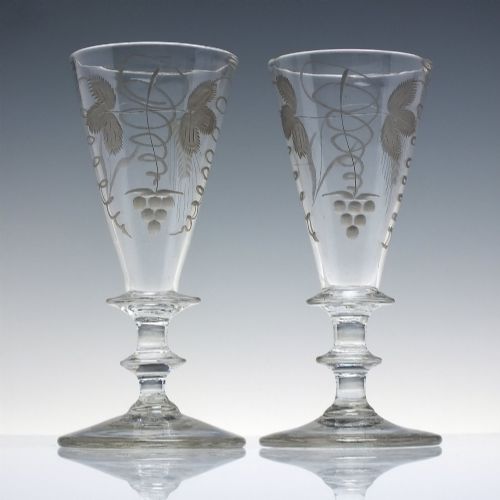
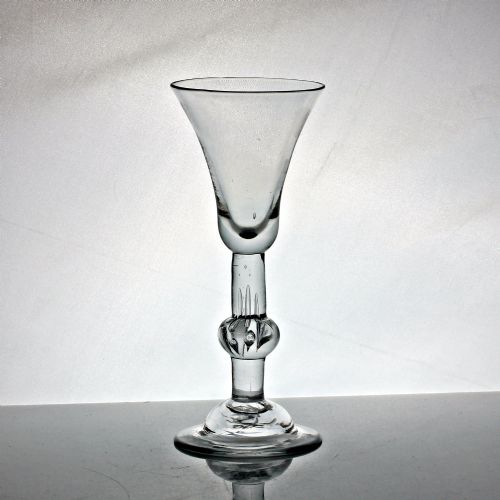
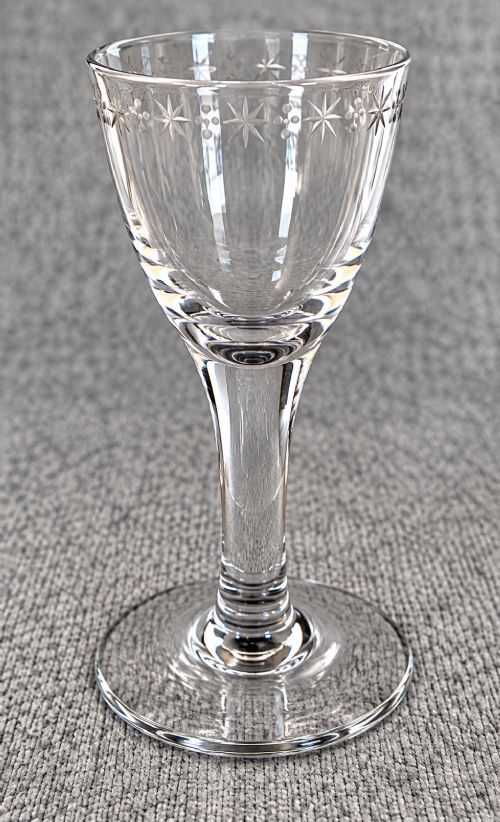
When you search for clear wine goblet, you encounter drinking vessels, stemware, and rummers originating primarily from the Georgian and Victorian eras. These range from heavy balustroid stems and twisted glass variants to later Continental crystal and enamel-decorated hock glasses.
The domestic table of the eighteenth and nineteenth centuries relied on these sturdy yet brilliant forms for serving wine, beer, and spirits. They span simple tavern styles to deeply engraved exhibition pieces designed for formal toasts.
How they were made
Glassmakers shaped lead glass, flint glass, and clear lead crystal by hand, using blowing irons and moulds to form the bowls and feet. Twists inside the stems were created by trapping air bubbles or canes of white enamel within the molten metal before drawing and spiralling the stem.
Surface decoration involved wheel engraving, cutting, and gilding, sometimes accompanied by applied white enamel details. Tooling produced distinctive structural elements such as folded feet, domed bases, and air tears trapped inside knops.
Clear Wine Goblet Retail Price Guide 2026
Typical asking prices for clear wine goblet among the pieces listed under this phrase on Sellingantiques today, from the lower quarter to the upper quarter. They describe what is for sale here now, not the wider market.
Listings feature lead glass, flint glass, and enamel across the eighteenth and nineteenth centuries.
What varies in quality
The refinement of the metal itself and the precision of the optical effects determine the standing of each piece. Superior examples show high light refraction in the lead crystal and perfectly drawn twists without distortion in the glass.
Artistry in the hand-engraving of the bowl and the proportion between foot, stem, and bowl separate standard utility glassware from exhibition-grade goblets.
Baccarat·Moser Bohemian·Theresienthal
The Clear Wine Goblet Glossary
- Lead glass
- Heavy glass containing lead oxide, which increases brilliance and weight. It became the standard medium for fine British drinking vessels from the late seventeenth century onward.
- Air twist
- A stem containing elongated internal air bubbles drawn into spiral threads. This optical effect was achieved by poking holes in a hot glass blank before twisting and pulling the stem.
- Opaque twist
- A stem containing white enamel rods pulled into thread-like spirals. Single and double series refer to the complexity and number of these internal enamel twists.
- Balustroid
- A stem form derived from the architectural baluster, featuring a knop above a tapered lower stem. It provides tactile grip and visual weight to eighteenth-century drinking vessels.
- Folded foot
- A base whose outer rim is doubled under while hot to strengthen the edge. This technique is commonly found on early English wine glasses and goblets.
Clear Wine Goblet: Frequently Asked Questions
What is a clear wine goblet?
A clear wine goblet is an antique drinking vessel made from lead glass, flint glass, or crystal, featuring a stem and a capacious bowl for serving wine.
These pieces range from tall Georgian balustroid drinking glasses to nineteenth-century Continental crystal vessels designed for formal dining.
How do I date a glass?
Dating relies on observing manufacturing techniques, bowl shapes, and stem formations, such as air twists or heavy baluster knops characteristic of the eighteenth century.
Changes in glass chemistry, pontil mark removal, and foot profiling further help distinguish Georgian examples from later Victorian pieces.
How were these glasses used?
They served alcoholic beverages such as wine, ale, and rum at the dining table and during formal toasts.
Specific forms, from gin glasses to heavy rummers, dictated the strength of the drink and the occasion of the gathering.
Are these glasses dishwasher safe?
Antique lead glass and crystal require careful hand washing in warm water to preserve their fragile rims, historical surface wear, and delicate engravings.
Thermal shock and harsh detergents can permanently cloud the metal or weaken ancient glass structures.