
Clear Lead Crystal Glass
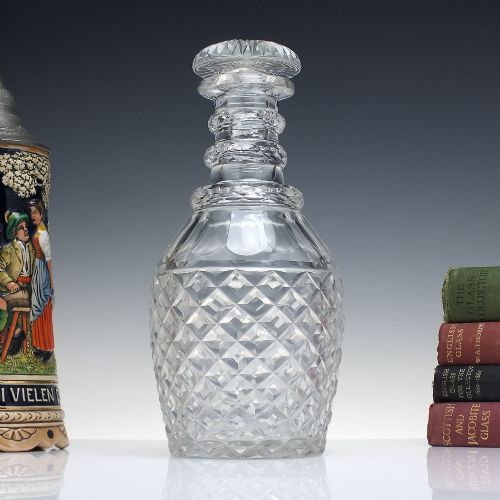
Clear lead crystal glass brings weight, ring and brilliance to the table, spanning heavy Georgian rummers and slender Edwardian decanters.
Clear Lead Crystal Glass
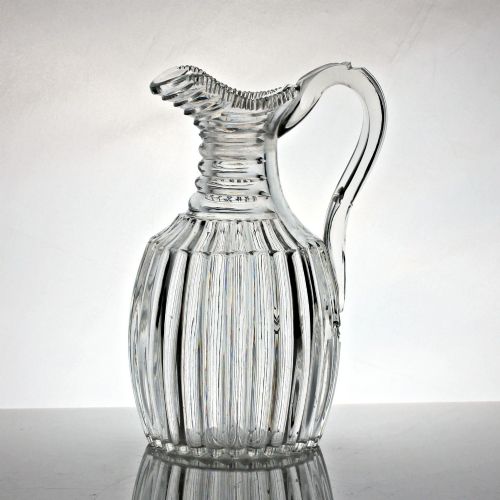
When you search for clear lead crystal glass, you encounter drinking vessels, decanters and tablewares spanning the eighteenth century through to the twentieth century. The selection ranges from plain stem wine glasses and air twist ale glasses to heavy Victorian rummers and cut glass water jugs.
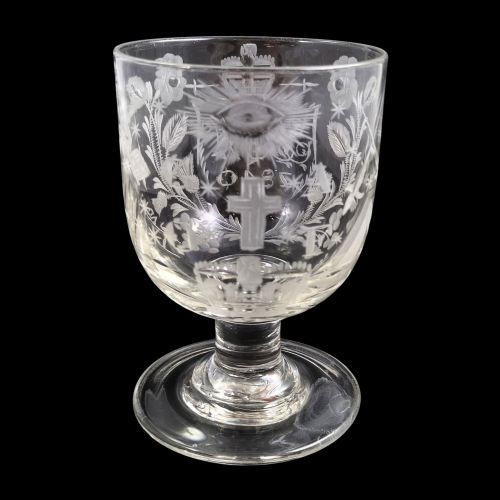
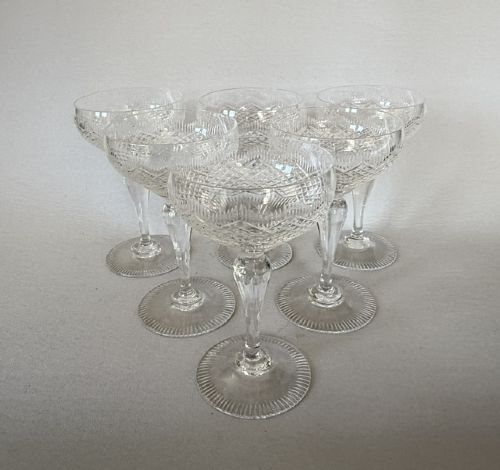
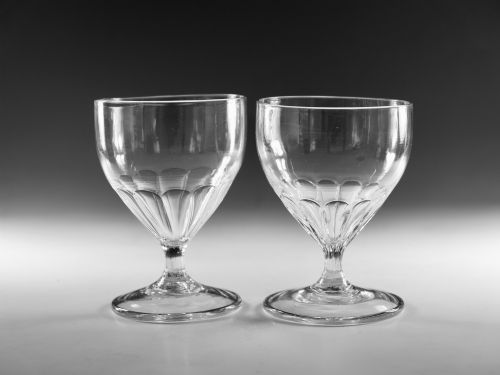
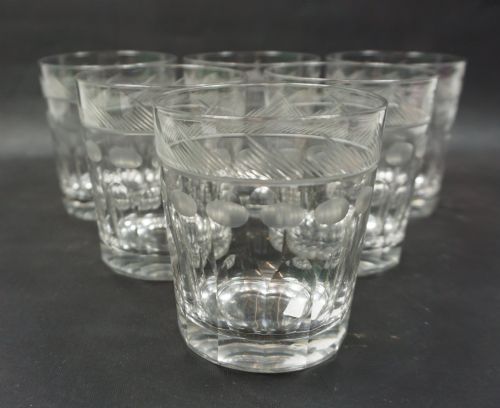
Drinking glasses dominate the offerings, particularly Georgian wine glasses and rummers alongside Edwardian decanters and champagne coupes. These items served functional roles at the dining table, evolving from eighteenth-century tavern and parlour use into Victorian and Edwardian formal service.
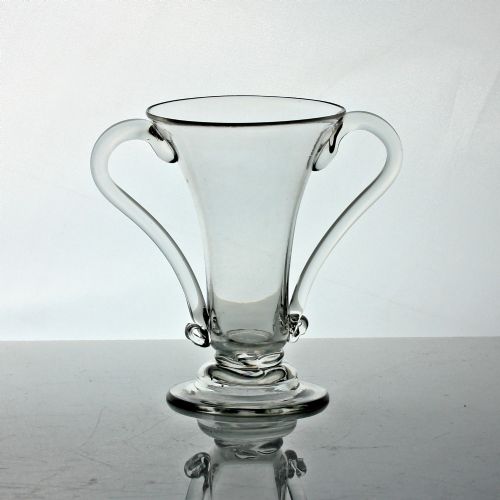
Origins lean heavily toward English production, though pieces such as Belgian baskets and French scent bottles appear. Forms vary from simple jelly glasses to pillar and prism cut water jugs.
How they were made
Glassmakers utilised lead oxide in the melt to increase density and refractive index, producing the characteristic weight and bright clarity associated with flint glass. This heavy formulation allowed deeper facet cutting and sharper engraved decoration without fracturing the material.
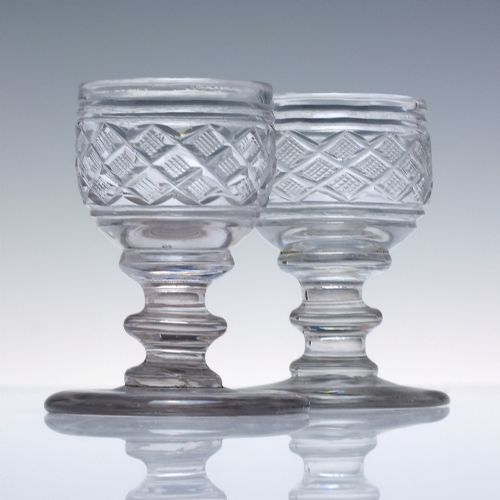
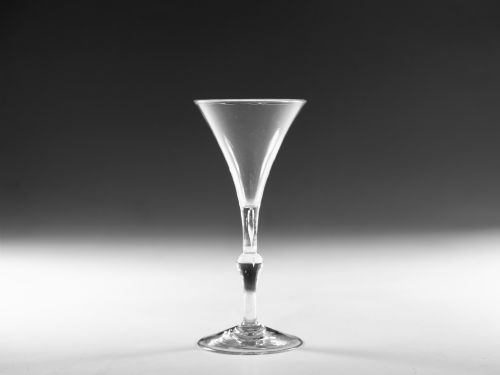
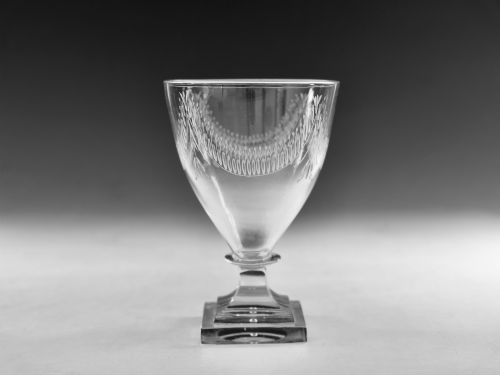
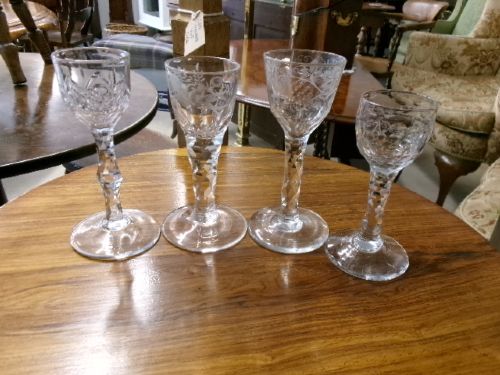
Stems on drinking vessels were formed using techniques such as air twists and opaque twists, entrapping air bubbles or white enamel threads within the molten draw. Moulding created forms like petal bowls, while wheel-cutting achieved facets, flutes and botanical motifs.
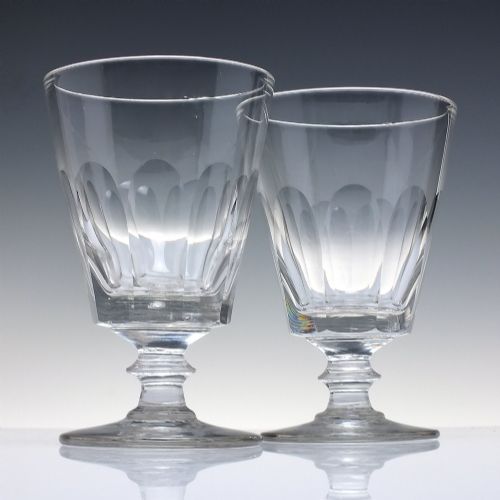
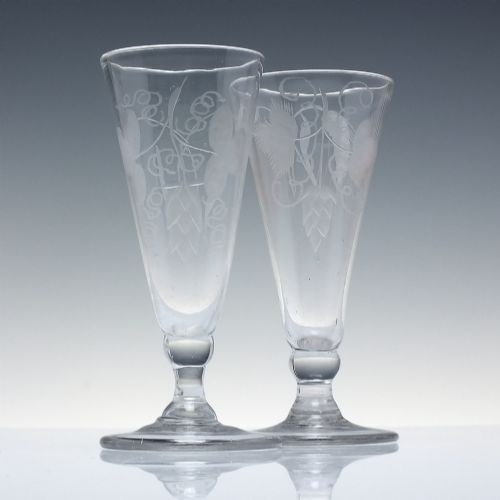
Drinking glasses across the selection include ale flutes, rummers, wine glasses and champagne coupes on air twist or faceted stems.
What varies in quality
Clarity and purity of the metal set the baseline, where absence of seed bubbles and grey discolouration marks finer production. The depth and crispness of wheel-cut facets separate standard utilitarian glassware from pieces finished with sharp, clean edges.
Proportion and balance dictate the appeal of stemware, from the pull of an air twist stem to the stability of a folded foot. Engraving quality ranges from stiff, shallow scratching to deeply wheel-engraved hops, barley and heraldic details executed with confident control.
Val St Lambert
The Clear Lead Crystal Glass Glossary
- Flint glass
- An early British term for clear lead crystal glass, developed to describe heavy glass possessing high brilliance.
- Rummer
- A large, sturdy drinking glass used for wine, ale or punch during the eighteenth and nineteenth centuries.
- Air twist
- A stem decoration formed by elongating trapped air bubbles inside the molten glass into spiral threads.
- Ogee bowl
- A bell-shaped drinking vessel profile curving out at the rim and in at the base, common on eighteenth-century wine glasses.
- Sulphide
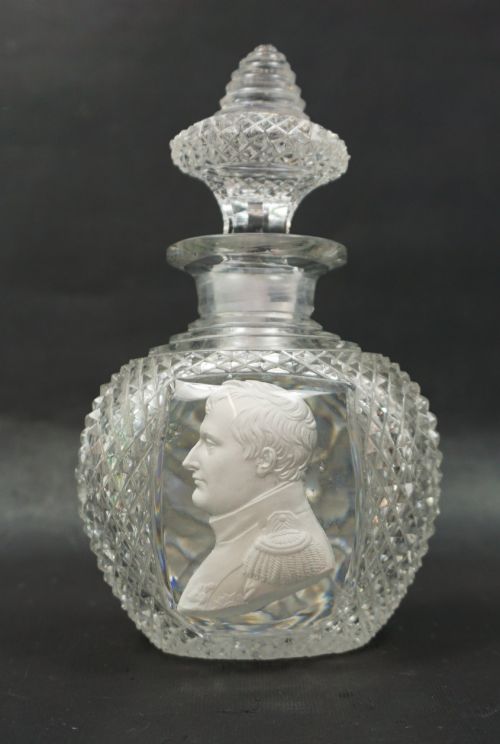
- A small white cameo of ceramic or porcelain embedded within clear glass, popular in nineteenth-century decorative items.
Clear Lead Crystal Glass: Frequently Asked Questions
What is clear lead crystal glass?
Clear lead crystal glass is a heavy, brilliant form of glassware containing lead oxide, used for drinking vessels and decorative items.
It differs from standard soda-lime glass through its higher refractive index and resonant ring when struck.
How do I date Georgian glass?
Dating relies on bowl forms, stem construction such as air twists or balusters, and foot shapes like folded bases.
Tool marks, pontil scars on the underside and wear patterns also help establish the eighteenth-century origin.
Were rummers used for beer?
Rummers served multiple beverages including ale, beer, wine and punch depending on the gathering and capacity.
Their sturdy build made them practical for daily tavern and domestic use throughout the Georgian and Victorian eras.
What are air twist stems?
Air twists are decorative glass stems containing spiral threads of tiny bubbles trapped during manufacture.
Glassmakers created these by piercing hot metal and twisting the draw before cooling.