


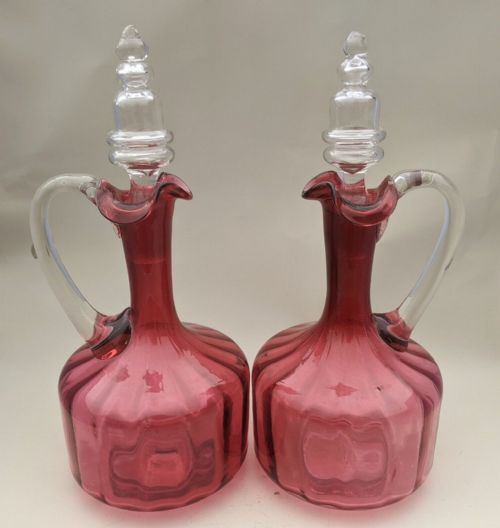
Clear Handle Glass Pitcher
These clear handle glass pitcher selections bring together nineteenth-century and early twentieth-century vessels designed for serving wine, water, and spirits at the table.
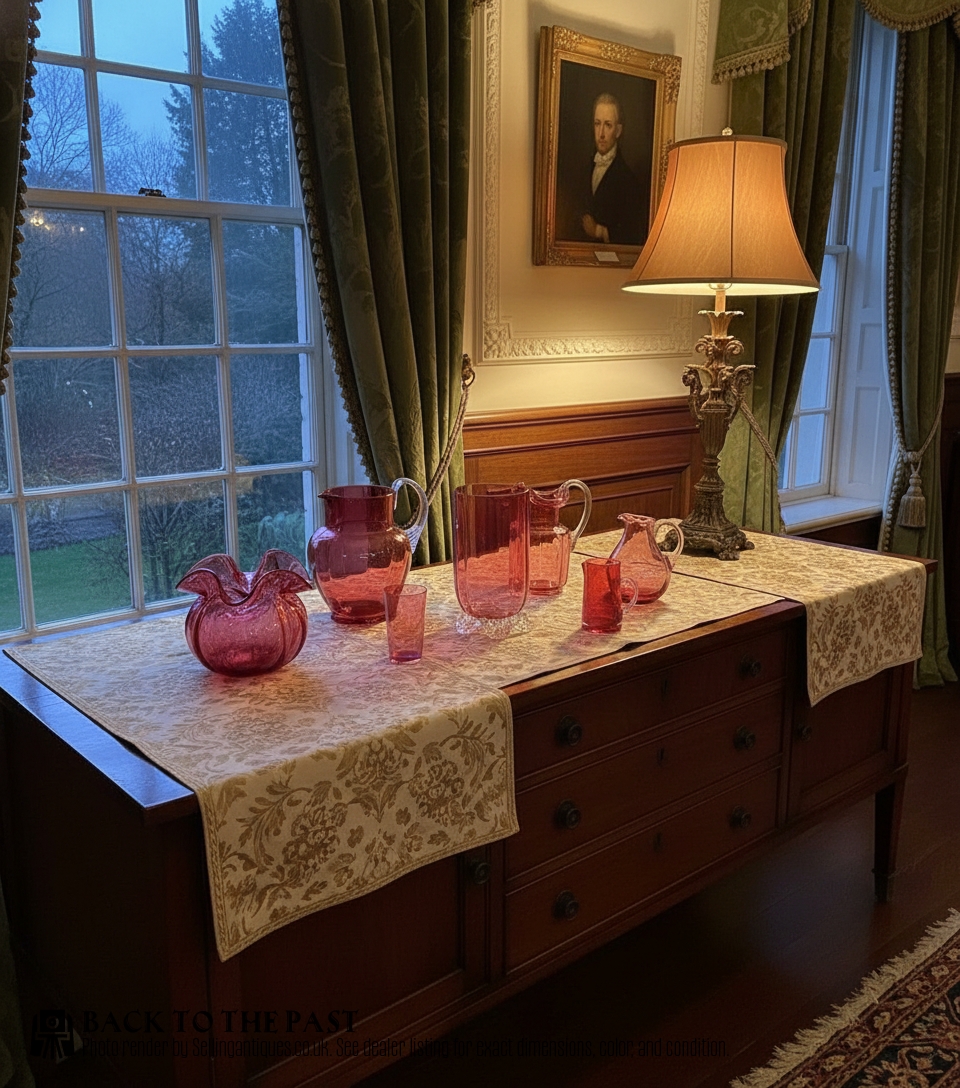
Clear Handle Glass Pitcher
A clear handle glass pitcher encompasses a range of serving vessels including claret jugs, water pitchers, decanters, and spirit ewers produced across the Victorian and Edwardian eras. Buyers exploring this category frequently encounter pieces dating from the eighteen-eighties and nineteen-hundreds alongside nineteenth-century examples.
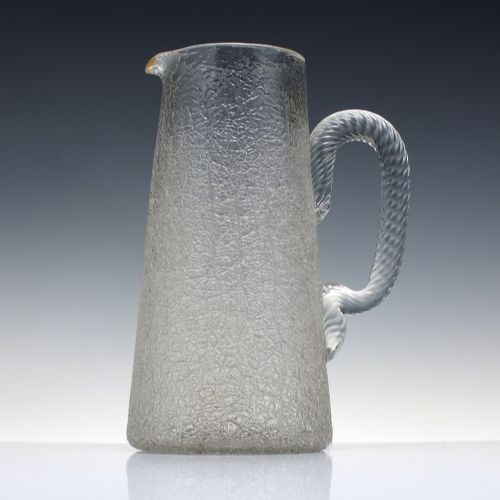
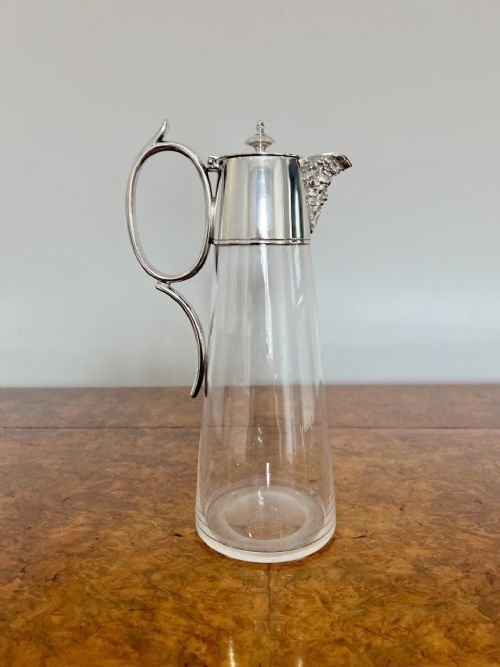
The objects take various functional forms, from substantial overshot water jugs with gilded rims to tall champagne jugs featuring latticinio decoration. Many pieces combine clear or cranberry glass bodies with silver-plated or sterling silver mounts, handles, and hinged lids.
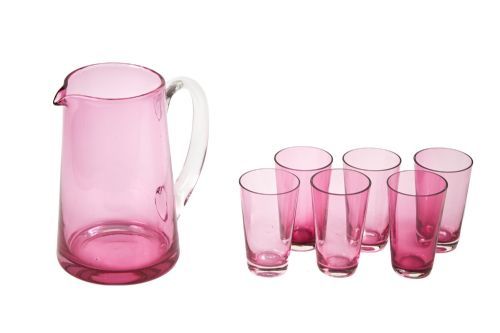
Origins span English workshops and continental makers such as German producers of decorative glassware. Collectors find both standalone vessels and drinkware sets comprising a jug accompanied by matching glasses.
Materials and construction
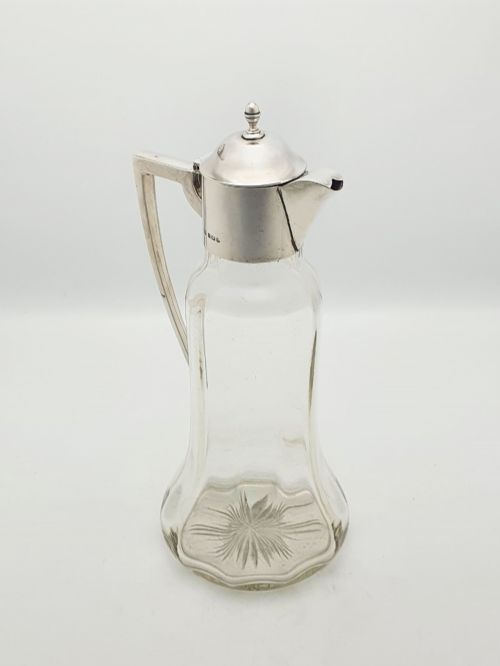
Vessels are formed from glass, clear glass, cranberry glass, cut glass, and lead crystal, occasionally enhanced with gold leaf, white piping, or engraved surface patterns. Production techniques involve free-blowing, moulding, and precise cutting to create faceted or textured surfaces.
Metal components utilise silver plate and sterling silver for mounts, collars, handles, and spouts. These metal mounts are securely fitted to the glass bodies, frequently incorporating hinged lids and applied handles that balance the weight of the vessel.
Some Victorian cranberry jugs wore white piping like tiny icing sugar lines.
Assessing the pieces
Distinctions in quality often rest on the integration between the glass body and the metal mountings, where secure fit and balanced proportions indicate higher workmanship. The clarity of the crystal, precision of the cut glass facets, and crispness of engraving further separate standard production from finer examples.
Named designs by notable makers such as Hukin & Heath or pieces designed by Dr Christopher Dresser demonstrate distinct aesthetic intent and marked model numbers. The depth of colour in cranberry glass and the presence of supplementary decorative elements like gilded rims or latticinio threads elevate individual pieces.
Hukin and Heath·Dr Christopher Dresser
The Clear Handle Glass Pitcher Glossary
- Claret jug
- A specialised vessel designed for serving red wine at the dining table, typically featuring a glass body with a silver-plated or sterling silver handle, mount, and hinged lid.
- Cranberry glass
- A rich pinkish-red glass produced by adding gold chloride to the molten batch, highly popular during the Victorian period for decorative tableware and jugs.
- Latticinio
- A decorative glass technique incorporating fine white or coloured glass threads within clear glass, creating delicate network patterns.
- Silver plate
- A base metal coated with a thin layer of silver, commonly utilised for the mounts, spouts, and handles of nineteenth-century glass jugs.
- Overshot glass
- A style of glass with a textured, rough surface created by rolling a hot vessel over broken glass fragments before final shaping.
Clear Handle Glass Pitcher: Frequently Asked Questions
What were claret jugs used for?
Claret jugs served as table vessels for holding and pouring red wine during formal meals, keeping the drink accessible before pouring into individual glasses.
The hinged lid and silver-plated handle allowed a host to serve wine smoothly while preventing sediment from escaping or keeping out airborne debris.
How do I identify a Victorian piece?
Victorian pieces often display characteristic cranberry coloration, aesthetic movement motifs, or robust silver-plated mounts combined with hand-blown glass bodies.
Examining the weight of the glass, the type of handle application, and any engraved decoration helps connect the vessel to the nineteenth-century production periods seen in this category.
Can these pitchers still be used?
These pitchers remain functional for serving water, wine, or other beverages at the table, provided they are handled with appropriate care.
Hand washing in lukewarm water preserves the glass surfaces and protects nineteenth-century silver plating from harsh detergents or scrubbing.
What is Edwardian glass?
Edwardian glass encompasses tableware and decorative vessels produced during the reign of King Edward VII, spanning the early years of the twentieth century.
These items frequently feature bright cut glass, clear crystal, and refined silver mounts reflecting late art nouveau and traditional stylistic influences.