
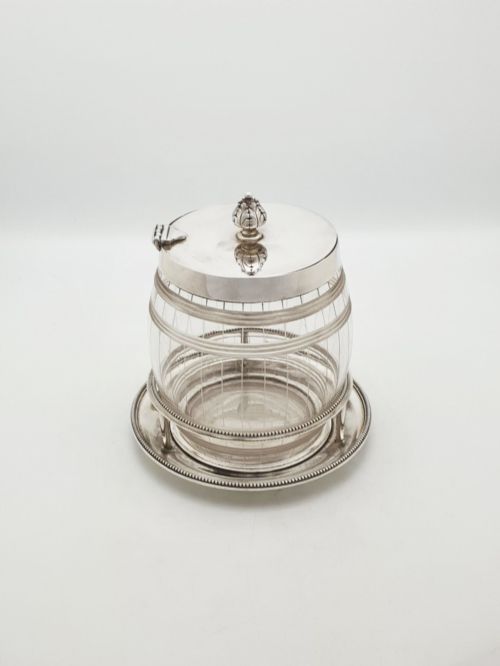
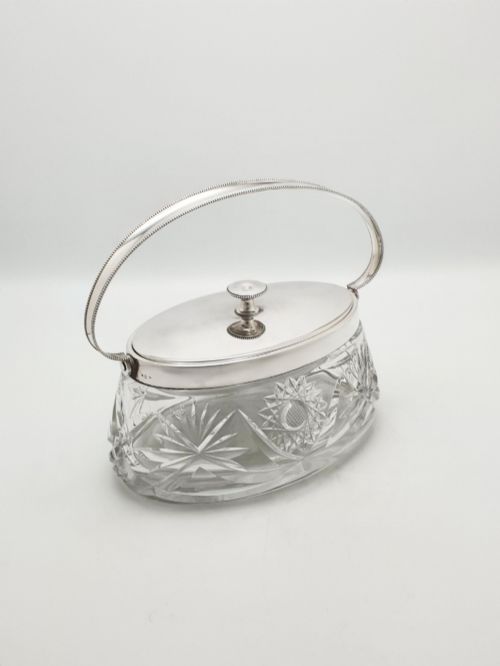


Clear Glass Silver Jar
A clear glass silver jar combines faceted crystal with solid metal mounts, offering a practical container that doubles as a decorative dressing table or dining accessory.
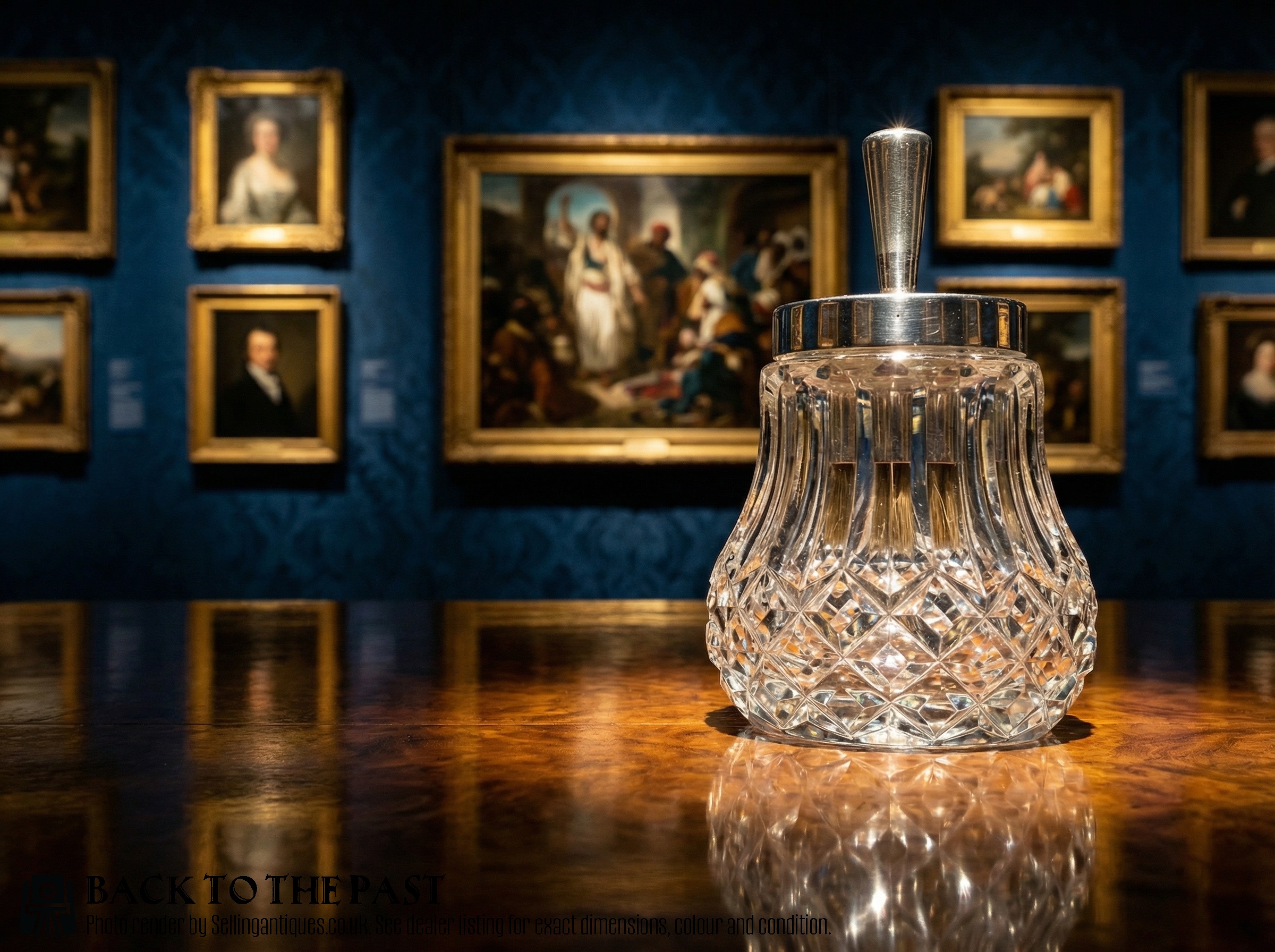
Clear Glass Silver Jar
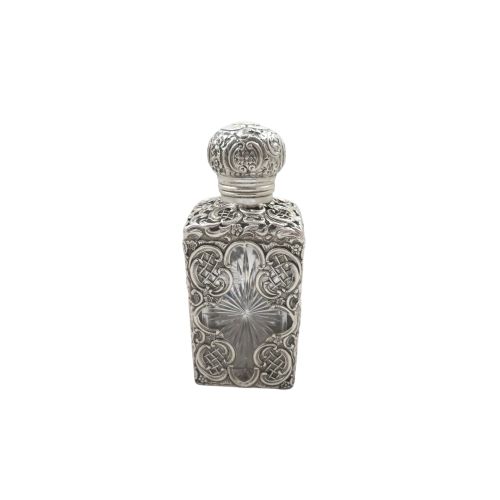
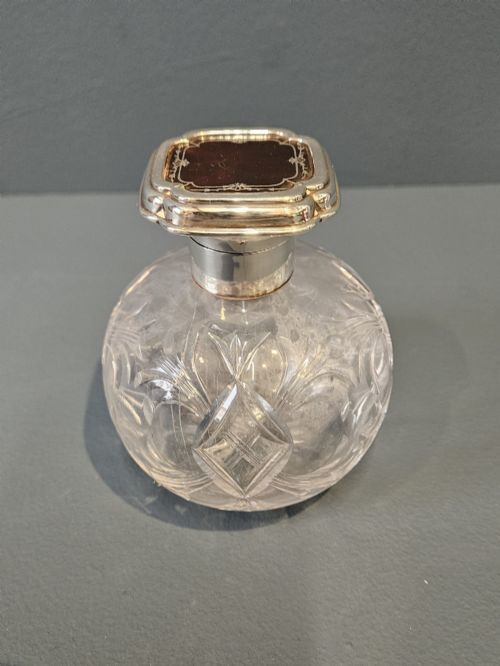
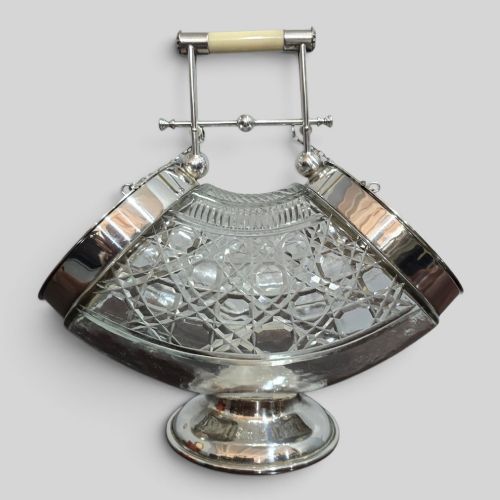
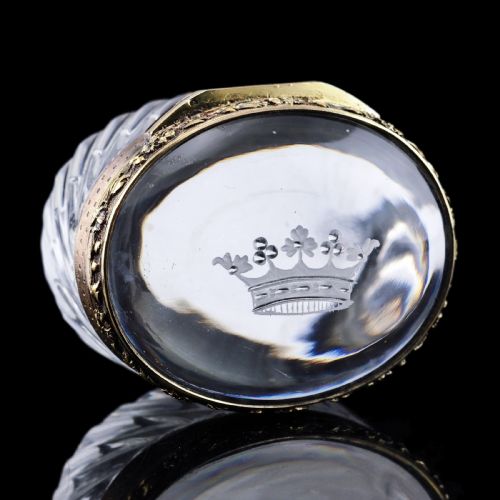
A clear glass silver jar spans several domestic functions, appearing as scent bottles, biscuit barrels, preserve pots, and vanity boxes. When searching for a clear glass silver jar, buyers encounter Victorian, Edwardian, and Art Deco examples produced across the nineteenth and twentieth centuries.
Vessels range from small globular perfume bottles with hinged caps to substantial cut crystal biscuit barrels fitted with swinging handles and matching spoons. The metal component frequently includes sterling silver, silver plate, or silver gilt, applied as screw caps, hinged lids, or decorative collars.
Materials and construction
The body of each piece relies on heavy-walled glass, cut crystal, or hobnail-patterned glass, often shaped with deep facets to catch the light. Artisans paired these transparent containers with hallmarked sterling silver or silver plate, sometimes incorporating tortoiseshell or gilded finishes into the metal mounts.
Metalwork involved pressing, casting, and hand-chasing, with mounts secured tightly to the glass necks using specialised adhesives or snug collars. Silversmiths stamped their makers' marks directly onto the metal lids or rims alongside assay office symbols and date letters.
Some Victorian string jars feature a tiny silver hole in the lid, designed so twine could unwind without the ball rolling across the parlor floor.
Assessing quality and craftsmanship
Quality rests primarily on the depth and crispness of the glass cutting, where sharper facets and heavier crystal indicate superior manufacture. The weight and gauge of the silver mount also dictate standard, with thicker metal resisting dents and retaining crisper engraved decoration over time.
The snugness of the fit between the glass and its metal collar marks better production. Pieces retaining clear hallmarks and original matching lids maintain higher integrity than those with replacement components.
Barnsley and Co·Adie Brothers Ltd·Walker and Hall·Asprey·James Dixon and Sons
The Clear Glass Silver Jar Glossary
- Cut Crystal
- High-clarity glass containing lead oxide, shaped by grinding geometric patterns into the surface. This technique creates sharp refractive edges that scatter light effectively.
- Hallmark
- A series of official stamps applied to precious metal items, indicating the maker, purity of the silver, assay office, and year of manufacture. These marks provide definitive dating evidence.
- Hobnail Cut
- A specific decorative glass-cutting pattern featuring rows of small, pointed pyramids resembling traditional hobnails on boots. It provides exceptional tactile grip and sparkle.
- Silver Gilt
- Sterling silver that has been coated with a thin layer of gold, providing a warm, luxurious golden finish to the interior or exterior mounts.
- Biscuit Barrel
- A covered ceramic or glass container designed to keep dry baked goods fresh on the dining table, typically fitted with a metal handle.
Clear Glass Silver Jar: Frequently Asked Questions
How do I date a silver jar?
Dating relies heavily on the silver hallmarks stamped onto the metal mount or lid, which include specific letters for the assay year. Stylistic cues such as Edwardian proportions or Art Deco geometric cutting also help narrow down the decade.
Without clear hallmarks, one must examine the manufacturing technique of the glass and the style of the engraving on the metal. Comparing the screw threads or hinge mechanisms to documented pieces from the nineteenth and twentieth centuries provides further context.
Are these jars safe for food use?
Many preserve pots and biscuit barrels were originally designed for edible contents on the dining table. The glass and sterling silver materials remain stable and non-toxic for modern use.
Buyers should inspect the interior seals and ensure no historical adhesives or sealants have degraded over time. Gentle hand washing without harsh detergents preserves both the glass clarity and the silver plating.
What caused variations in glass clarity?
The inclusion of lead oxide in high-grade crystal produced a heavier, more brilliant material than standard soda-lime glass. Master glassmakers also refined their melting formulas over the Victorian and Edwardian eras to reduce internal bubbles and impurities.
Pieces intended for dressing tables often utilised thinner blown glass, whereas dining table jars required sturdy, thick-walled pressed or cut crystal to withstand daily handling.