




Clear Glass Clock
These clear glass clock pieces combine functional timekeeping with sculptural display, offering a refined focal point for any interior.
Clear Glass Clock
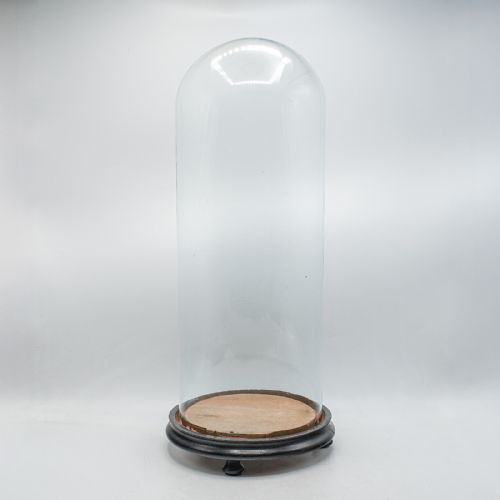
A clear glass clock brings together transparent housing and mechanical timekeeping, taking forms such as mantel clocks and specialised clock domes.
The pieces on this page span Victorian, Edwardian, and Art Deco periods, alongside Mid-Century Modern designs, reflecting shifting domestic tastes in ornament.
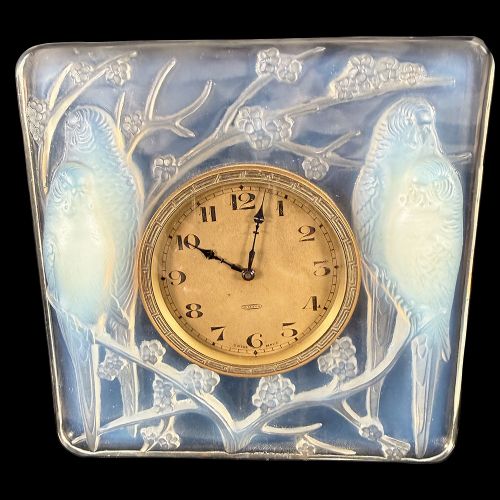
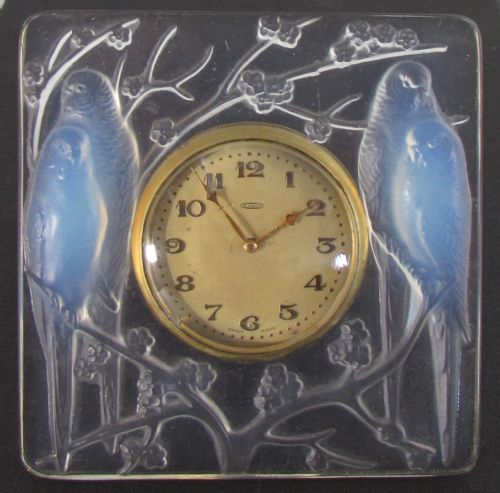
Buyers will encounter items ranging from simple glass clock cases and protective domes to signed works featuring opalescent glass and moulded figures.
Materials and construction
Makers utilised clear glass alongside materials like ebonised wood, brass, velvet, and fabric to build robust bases and surrounds for delicate movements.
Moulding and glassblowing techniques shaped the protective domes and clock bodies, while specialised firms produced signed mechanical clockwork housed within.
Some glass clocks feature romantic love birds or cockerels gazing out from the dial.
Assessing quality and execution
The distinction between standard production items and finer examples rests on the clarity of the glass, the crispness of any moulded detail, and the integrity of the base materials.
Signed pieces and those incorporating opalescent glass or specific artistic collaborations demonstrate a higher tier of design ambition and manufacturing skill.
R Lalique·P.M.Favre
The Clear Glass Clock Glossary
- Clock dome
- A blown or moulded glass cover designed to protect a mantel clock from dust and atmospheric moisture. These protective covers rest securely upon wooden or fabric-lined bases.
- Opalescent glass
- A type of glass that diffuses light with a milky, translucent appearance, frequently utilised in Art Deco decorative objects.
- Skeleton timepiece
- A clock designed with an exposed mechanism where the plates and wheels remain visible through transparent or open framing.
- Display dome
- A protective glass cover traditionally utilised for taxidermy, botanical specimens, or delicate ornaments rather than timepieces.
Clear Glass Clock: Frequently Asked Questions
What is a clear glass clock?
A clear glass clock integrates a timepiece with transparent glass housing, ranging from dedicated mantel clocks to protective glass domes enclosing delicate mechanisms.
These objects serve both a practical timekeeping function and a decorative display purpose within domestic interiors.
How do I style a glass clock?
Place the clock on a stable mantelpiece, desk, or side table where the transparent glass and internal movement catch natural light.
Ensure the surrounding surface is level and free from excessive vibration to protect the mechanical movement inside.
How do I identify the period?
Examine the overall silhouette, decorative motifs, and supporting base materials, noting whether the piece displays Victorian proportions or clean Art Deco lines.
Signatures etched into the glass or stamped onto the movement also offer direct attribution to specific makers and production eras.
Were these clocks used outdoors?
These delicate timepieces were strictly designed for interior domestic use, protected from weather and temperature fluctuations by their glass housings.
Placing them in sheltered indoor environments prevented moisture from damaging the metal clockwork and wooden bases.