
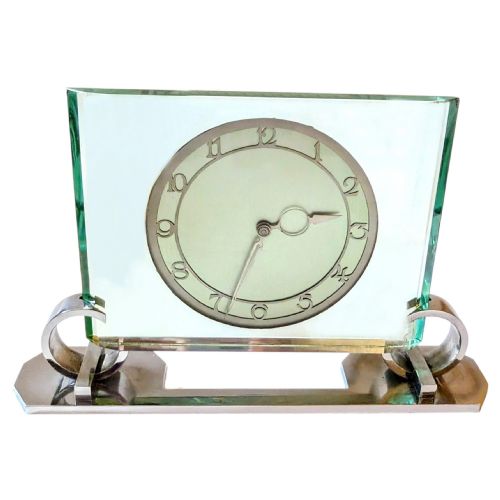
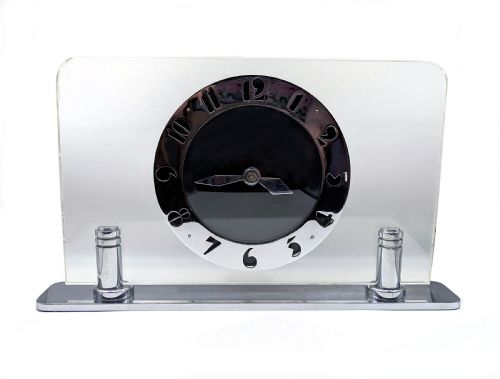


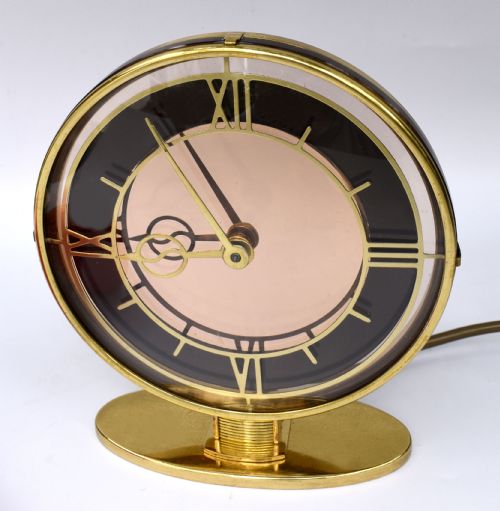

1930s Glass Timepiece
These 1930s glass timepiece examples combine geometric restraint with luminous materials to anchor a mantelpiece or desk.
1930s Glass Timepiece
A 1930s glass timepiece is typically formed as a mantel or desk clock belonging to the Art Deco style. These objects use transparent or coloured glass bodies combined with metal mounts to display the time.
Most pieces seen here date from around 1930, adopting modernist lines and mechanical or electric movements. The design relies on the clean geometry characteristic of the period.
Makers utilised peach mirror glass, opaline glass, and uranium glass to create striking light reflections. These variants form the core of what is available to collectors today.
Materials and construction
The construction brings together thick plate glass or mirrored glass panels mounted on ebonised wood or metal bases. Chrome-plated brass and solid brass components frame the dials and secure the glass structures.
Movements range from mechanical wind-up and eight-day mechanisms to electric systems and Bulle battery-driven movements. Signed dials and etched signatures often mark the work of notable makers and horologists.
Mystery clocks of this era use transparent glass dials that make the hands appear to float entirely by magic.
Factors determining quality
The distinction between standard production and finer examples lies in the complexity of the glass cutting and the quality of the supporting metalwork. Heavier mirror glass panels and superior chrome plating distinguish the top tier.
The sophistication of the movement, whether an eight-day mechanical calibre or an early electric mechanism by a known maker, elevates the standing of the piece. Signed faces and specialised glass colours like uranium or deep blue further separate exceptional items from ordinary ones.
Smiths Clockmakers·Mappin & Webb·P.M.Favre
The 1930s Glass Timepiece Glossary
- Art Deco
- A design style spanning the 1920s and 1930s characterised by streamlined shapes and geometric ornamentation. It governs the entire visual vocabulary of these timepieces.
- Opaline glass
- A semi-translucent glass type that diffuses light softly, often produced in pastel shades. It provides a smooth, milky surface finish on select clock bodies.
- Uranium glass
- Glass containing trace amounts of uranium oxide that glows bright green under ultraviolet light. It was frequently employed in 1930s decorative objects for its visual impact.
- Bulle clock
- An electromechanical clock using an electromagnetic pendulum system patented by Marcel Bulle. These movements represent an innovative horological technology of the era.
- Mystery clock
- A clock design where the mechanism driving the hands is concealed, often within transparent glass panels. This creates the illusion that the hands float without a connection to gears.
1930s Glass Timepiece: Frequently Asked Questions
How do these glass clocks work?
Most pieces rely on traditional mechanical wind-up movements, eight-day springs, or early electric systems. Some utilise specialised Bulle electromagnetic movements driven by battery power.
Servicing is best handled by specialists familiar with vintage horology to keep the delicate glass housings safe during adjustments.
Where should I place a glass timepiece?
These clocks suit prominent locations such as mantelpieces, desks, or glass-fronted cabinets where light can pass through the panels. Position them away from direct sunlight or heavy foot traffic that might cause vibrations.
Ensure the supporting surface is entirely flat to keep the movement running accurately and to protect the glass base from uneven pressure.
How do I identify a 1930s piece?
Look for characteristic modernist geometries, chrome-plated brass mounts, and specific glass types like peach mirror or uranium glass. Signatures on the dial or movement by makers such as Smiths or P.M.Favre offer definitive proof of origin.
The combination of Art Deco styling and period-specific materials distinguishes genuine examples from later reproductions.
Are uranium glass clocks safe?
Uranium glass emits very low levels of radiation that are generally considered harmless for display purposes. The material was common in the 1930s for its distinctive fluorescent green glow under ultraviolet light.
Normal placement in a room poses no risk, provided the glass is kept intact and away from heavy impacts.