



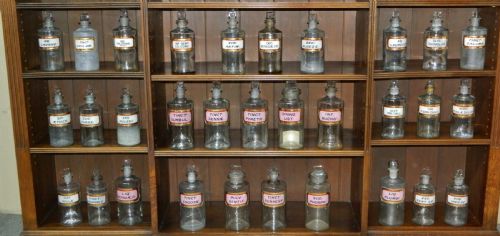

Clear Glass Chemist Jar
A clear glass chemist jar holds the history of old medicine, bringing clean lines and industrial utility into a modern room.
Clear Glass Chemist Jar
A clear glass chemist jar represents the functional glassware used in pharmacies and apothecaries during past centuries. These vessels served to store medicines, herbs, and chemical compounds on wooden dispensary shelves.
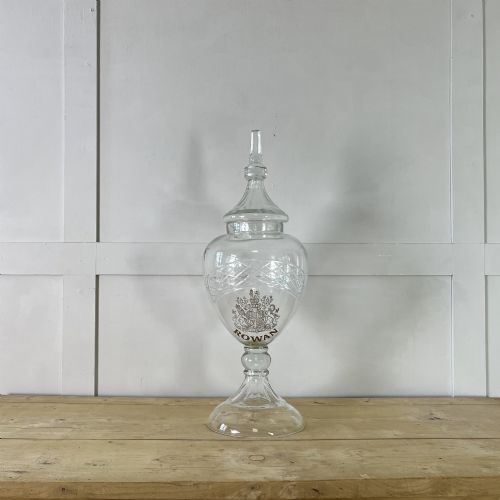
Buyers searching for a clear glass chemist jar encounter varied forms spanning the Georgian, Victorian, and Edwardian eras. The selection includes large display carboys, tall storage jars with matching covers, and smaller tincture bottles.
Origins stretch across English workshops and French glasshouses, showing both plain utilitarian vessels and more decorative etched designs. Most examples found here date from the nineteenth century up to the early twentieth century.
How they were made
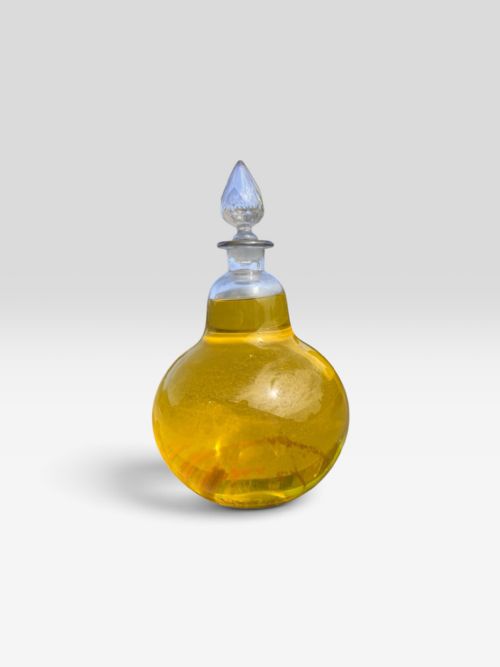
Makers shaped clear glass through traditional hand blowing techniques, resulting in the subtle surface irregularities and bubbles typical of antique production. Skilled workers formed carboys and jars while hot, sometimes applying cut glass detailing for display pieces.
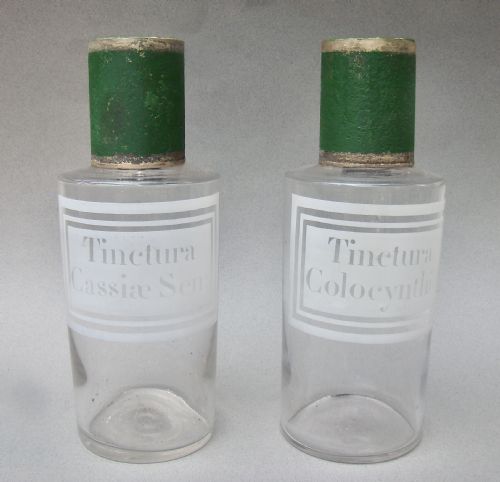
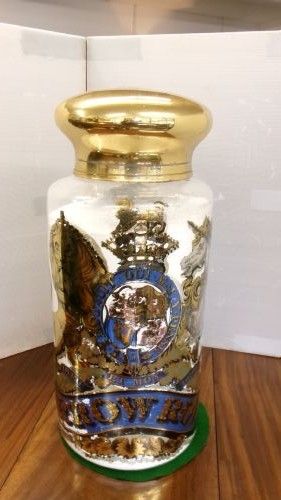
Labels on these jars often involved specialised techniques including reverse painting on glass, gold leaf lettering, and printed paper attachments. Stoppers and lids were ground by hand to fit individual necks.
Arrowroot storage jars remind us that nineteenth-century medicine cabinets doubled as kitchen larders.
What varies in quality
Quality rests primarily on the clarity and weight of the glass, alongside the presence of original stoppers and intact hand-applied labels. Heavy hand-blown carboys with deep optical distortion command attention for their sculptural presence.
The survival of original gold leaf lettering or delicate glass etching elevates a piece above standard utilitarian storage bottles. Complete matched pairs or sets demonstrate higher desirability than stray individual vessels.
The Clear Glass Chemist Jar Glossary
- Carboy
- A large globular glass bottle enclosed in protective housing or made heavy for floor display. These vessels held bulk liquids in dispensary windows.
- Tincture
- A medicine made by dissolving a drug in alcohol. Tincture bottles are smaller storage vessels typically fitted with ground glass stoppers.
- Pontil mark
- The rough scar left on the base of hand-blown glass where the holding rod was snapped away. Its presence confirms traditional manufacture before modern machine moulding.
- Ground glass stopper
- A tight-fitting glass plug shaped by hand to seal the neck of a jar or bottle. Matching numbers are sometimes etched into both stopper and base.
Clear Glass Chemist Jar: Frequently Asked Questions
What did pharmacies store in these jars?
Apothecaries used these vessels to hold dried herbs, powders, and liquid medicines ready for patient dispensing. Larger jars displayed key ingredients or chemical preparations on high shelves.
Specific labels indicate contents ranging from everyday arrowroot to specialised pharmaceutical compounds used in nineteenth-century treatments.
How do I date a glass chemist jar?
Dating relies on observing manufacturing traits such as pontil marks, glass thickness, and the style of the lettering on any surviving labels. Georgian and early Victorian pieces often display heavier hand-blown metal content and deeper surface ripples.
Later Edwardian and twentieth-century examples tend toward more uniform machine production and standardised stopper fittings.
How should I clean antique apothecary glass?
Gentle washing with warm water and mild soap protects fragile antique surfaces and aged internal residues. Avoid harsh scrubbing near painted or gold leaf labels.
Old paper labels require particular caution to prevent moisture damage during routine maintenance.