



Clear Glass Air Twist
A clear glass air twist brings the refined weight of eighteenth-century drinking vessels and the delicate motion of trapped bubbles straight to your hand.
Clear Glass Air Twist
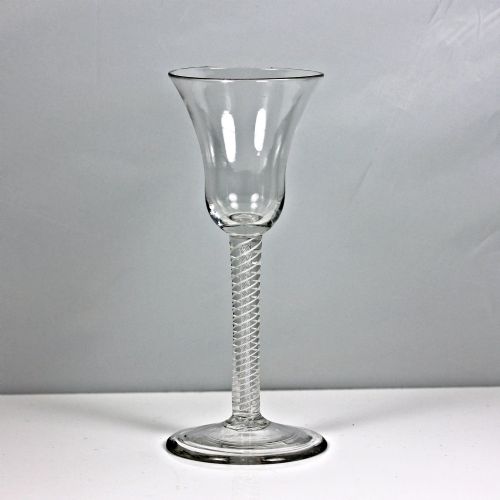
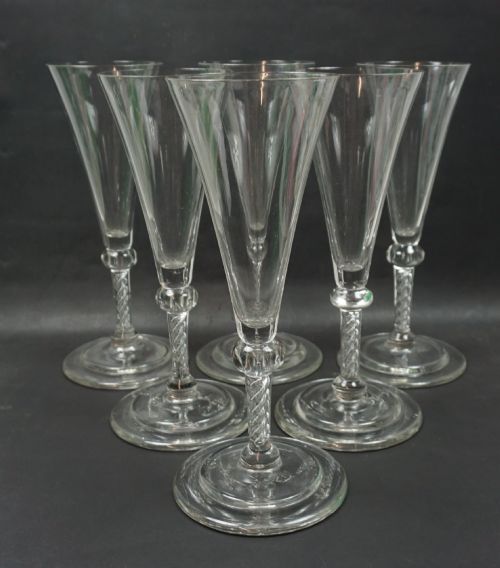
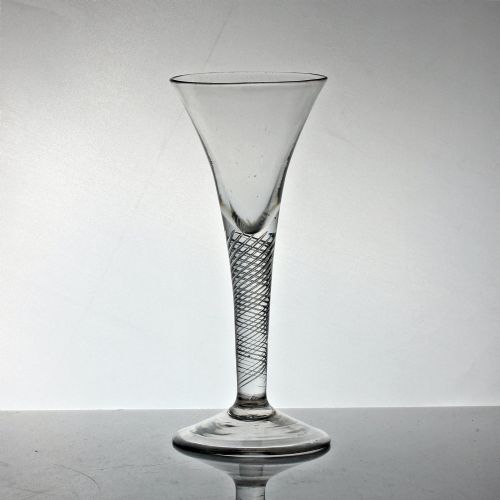
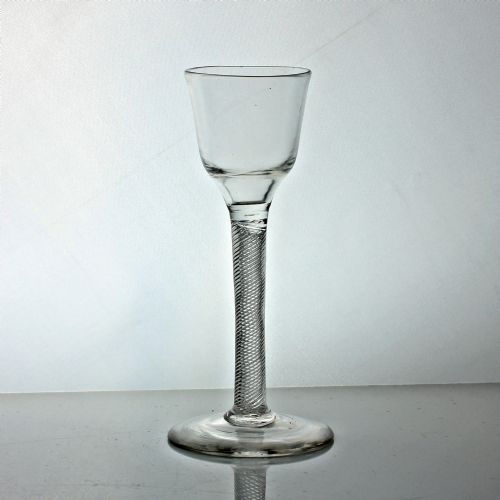
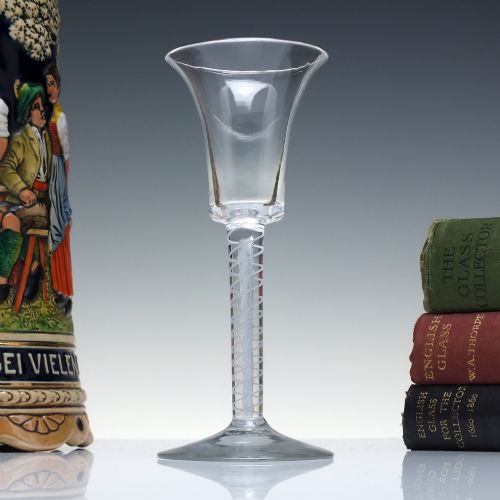
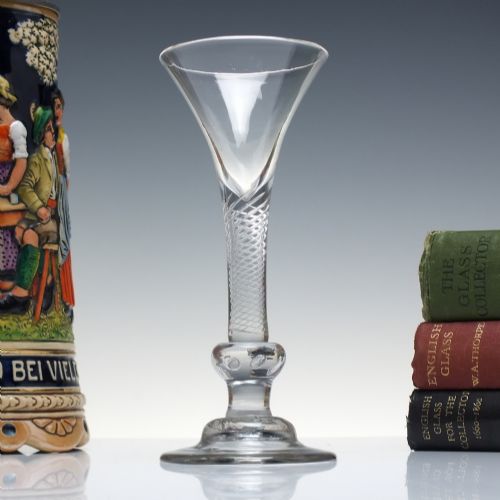
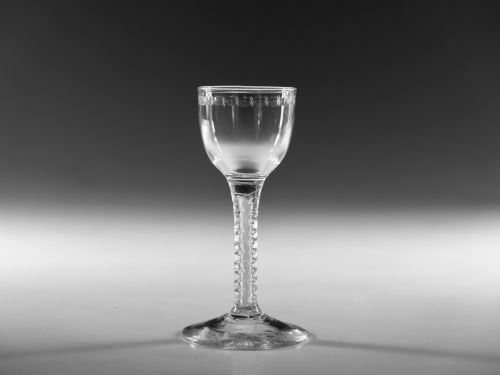
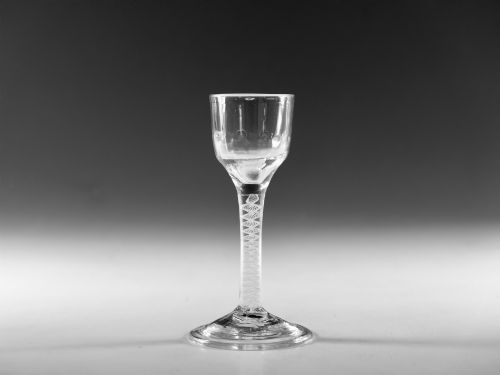
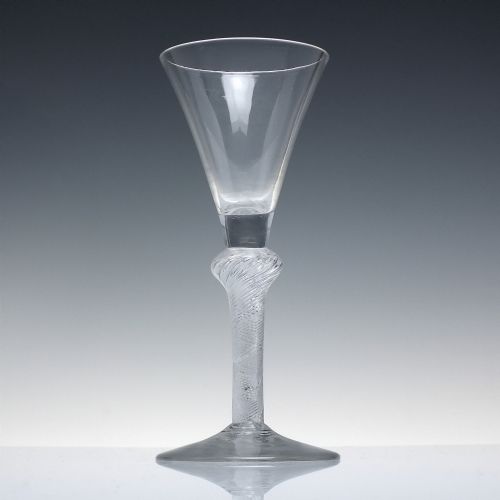
When you search for a clear glass air twist, you are looking at drinking vessels defined by elongated stems enclosing delicate spirals of air. The pieces on this page are predominantly English drinking vessels originating from the eighteenth century, alongside later revivals from nineteen thirty.
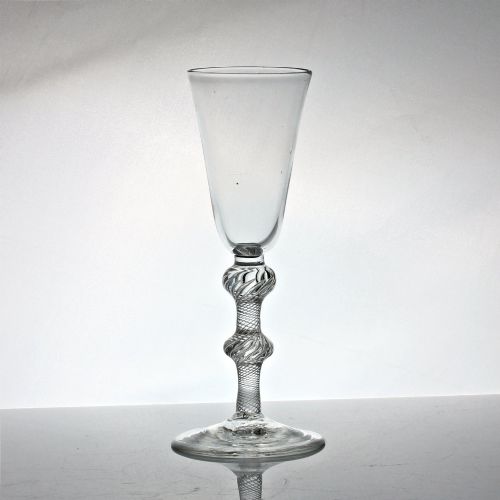
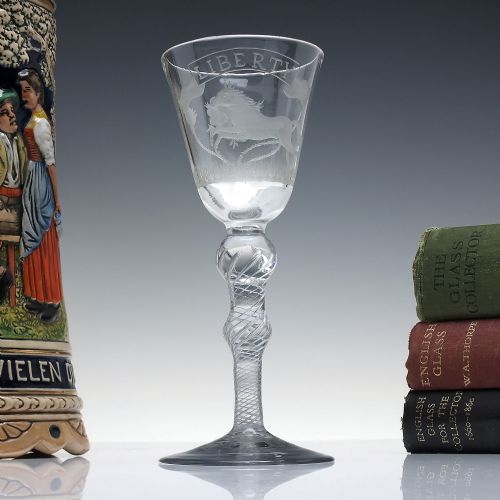
The selection encompasses various vessel forms designed for specific drinks, including wine glasses, ale glasses, cordials, and champagne flutes. Bowls take distinct shapes such as bell, pan top, ogee, trumpet, and flared bucket, sometimes resting upon folded feet or featuring knops.
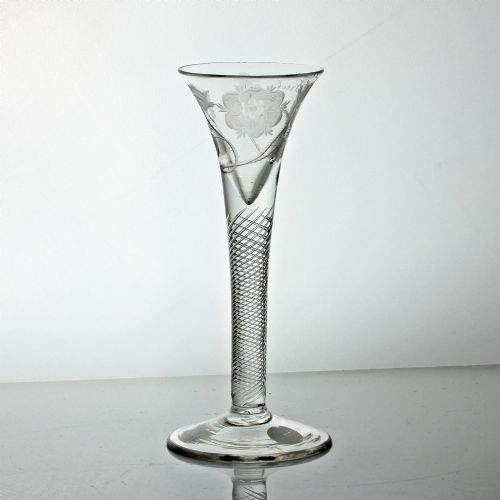
Certain examples carry historical engraving, including Jacobite emblems, grape and vine motifs, hunting scenes, and Hanoverian anti-Jacobite themes. You will also encounter related stem formations such as opaque twists, mixed twists, and mercury twists alongside the primary air twist designs.
Assessing Quality and Form
Quality rests upon the clarity of the metal and the precision of the internal air channels, where regular, unbroken spirals command greater appreciation. The crispness of engraved details, such as Jacobite symbols or hunting scenes, separates standard production from finer artisan work.
Proportion and form dictate desirability, evident in balanced bowls, well-formed knops, and intact folded feet that maintain structural harmony. Exceptional clarity in heavy lead glass elevates a piece, distinguishing robust cabinet examples from simpler utilitarian vessels.
Some eighteenth-century drinkers hid secret political loyalty inside a tiny twisted bubble of air.
The Clear Glass Air Twist Glossary
- Air twist
- A stem formation created by stretching bubbles trapped within the glass into continuous internal spirals. This technique produces delicate threads of air visible through the clear metal.
- Opaque twist
- A stem variation containing white enamel threads instead of air, twisted into single or double series patterns. These threads create a solid, milky appearance inside the glass.
- Knop
- A decorative swelling or protuberance on the stem of a drinking glass. Makers shaped these nodes to improve grip and add visual punctuation.
- Folded foot
- A glass base with the outer rim doubled back underneath itself to create a smoother, stronger edge. This feature appears frequently on eighteenth-century drinking vessels.
- Pan top bowl
- A straight-sided bowl with a slightly flared rim, resembling an open pan. This form provides a wide aperture for tasting.
Clear Glass Air Twist: Frequently Asked Questions
How do I identify an air twist?
Look closely inside the stem of the glass for fine, continuous spiral threads trapped within the clear material. These channels catch the light and create a sense of internal movement without disturbing the smooth exterior surface.
Compare the stem against solid glass or opaque twist examples to confirm the presence of air rather than enamel or solid inclusions. The spiral pattern should run uniformly down the length of the drawn stem.
What is a Jacobite engraved glass?
Jacobite glasses feature covert symbols such as roses, buds, and oak leaves that pledged secret allegiance to the exiled House of Stuart. These engravings often accompanied air twist stems during the eighteenth century.
Collectors examine these motifs carefully to distinguish period political glassware from later commemorative interpretations. The depth and hand-cut precision of the engraving offer clues to its origin.
How were these glasses used originally?
These vessels served aristocratic and gentry dining tables for consuming wine, ale, cordials, and champagne during formal toasts. Specific bowl shapes matched the intended drink, from narrow flute bowls for sparkling wine to wide funnel bowls for table wines.
Guests handled them carefully during social gatherings where political loyalties were toasted in secret. The tactile knops and balanced stems provided a secure grip during prolonged dining.
Can I use antique air twist glasses?
Many collectors prefer to display these fragile eighteenth-century vessels rather than use them for dining. Hand washing in tepid water is essential if you choose to use them for special occasions.
Avoid sudden temperature changes and dishwashers entirely to protect the aged lead glass and delicate stems. Store them securely on stable surfaces away from direct edges.