


Clear Cut Glass Vase
These clear cut glass vase pieces combine refractive brilliance with solid weight, offering a practical way to display blooms while catching the light.

Clear Cut Glass Vase
A clear cut glass vase brings together faceted surfaces and heavy material, designed to hold flowers or stand alone as a decorative object. When you search for this phrase, you encounter forms ranging from heavy nineteenth-century celery vessels and lidded urns to slender spill holders and geometric Art Deco vessels.
The selection on this page leans heavily into Victorian and twentieth-century examples, spanning plain crystal vessels to coloured overlays and cased glass. You find heavy Victorian cut glass, Edwardian spill vases, and continental pieces from makers working in Belgium and Bohemia.
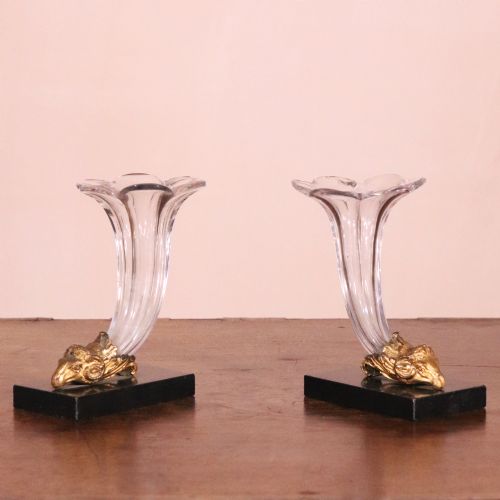
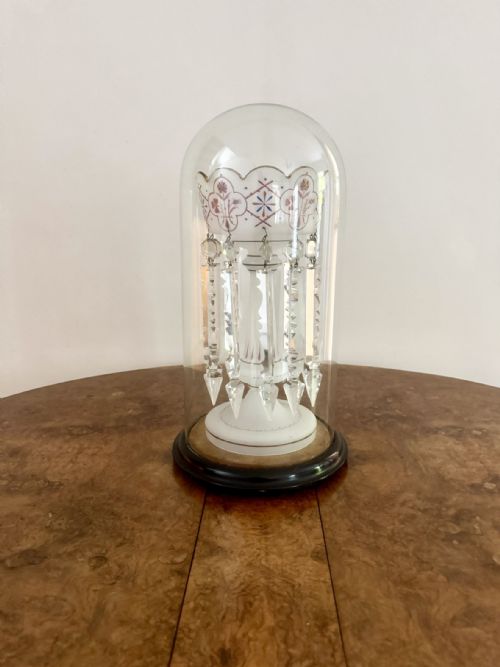
The objects take various shapes, from simple ovoid bodies to handled bowls, cornucopias, and mantel lustres. Many utilise silver plate mounts or gilt bronze fittings alongside the glass body.
How they were made
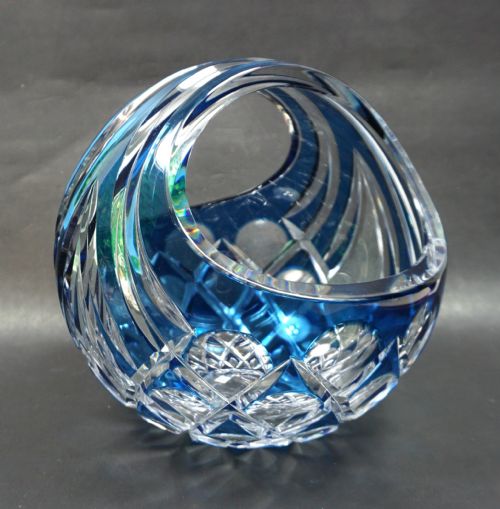
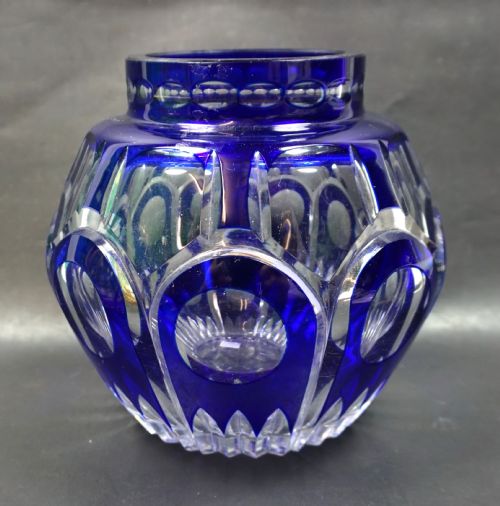
Makers shaped these vessels using lead crystal or clear glass, often casing or overlaying them with coloured layers before cutting through the surface to reveal the clear glass beneath. This subtraction method creates sharp facets and deep geometric patterns that catch light from multiple angles.
Engraving and wheel-cutting added detailed motifs, ranging from classical figures to foliage and panels, while some pieces received paste gilt decoration or enamel etching. Artisans occasionally combined the glass bodies with silver plate, gilt bronze, or sterling silver mounts.
Listings here feature glass, lead crystal, silver plate, and enamel across Victorian, Edwardian, Art Deco, and Regency periods.
What varies in quality
Quality rests in the crispness of the cutting and the weight of the material, where sharper facets and thicker lead crystal produce a more resonant ring and deeper brilliance. Finer examples display precise symmetry in their panels and clean, deep wheel-engraving without blurring at the edges.
The distinction between ordinary production and superior work also shows in the integration of metal mounts, such as silver plate or gilt bronze, which fit securely and exhibit refined chasing rather than casting flaws.
Joseph Simon for VSL·Val St. Lambert·Charles Graffart·Karl Palda·Keith Murray for Stevens & Williams·Hukin & Heath·Moser
The Clear Cut Glass Vase Glossary
- Lead crystal
- Glass containing lead oxide, which increases the material's weight, refractive index, and clarity. This formulation allows for deeper, sharper facet cutting.
- Cased glass
- Glass made by fusing one or more coloured glass layers over a clear or contrasting body. Artisans cut through the outer layer to expose the underlying colour.
- Mantel lustre
- A decorative vase hung with cut glass prisms designed to catch the light. These pieces sat on mantelpieces during the Victorian period.
- Intaglio
- A technique where designs are carved into the glass surface rather than left in relief. This produces a sunken, three-dimensional effect.
- Celery vase
- A tall vessel originally utilised on nineteenth-century dining tables to hold stalks of celery. They frequently feature heavy cut crystal stems and bodies.
Clear Cut Glass Vase: Frequently Asked Questions
How do I clean a cut glass vase?
Wash the vessel in warm water with a mild detergent, using a soft cloth or a bottle brush to reach interior surfaces.
Avoid extreme temperature changes to prevent thermal shock and cracking in heavy lead crystal.
What is cut to clear glass?
Cut to clear glass consists of a clear glass body covered by a thin layer of coloured glass on the exterior.
Craftsmen cut through this outer coloured layer in geometric patterns to expose the clear glass underneath.
How do I date an old vase?
Examine the weight, the style of the cutting, and any maker marks or metal mounts present on the piece.
Victorian pieces often show deep, heavy faceting, while Art Deco examples feature streamlined, geometric etchings.
Can I use these vases for fresh flowers?
These vessels hold water and fresh blooms securely, provided you handle the heavy glass with care during filling.
Clean the interior regularly to prevent mineral buildup in the deep cut facets.