





Clear Cut Glass Goblet
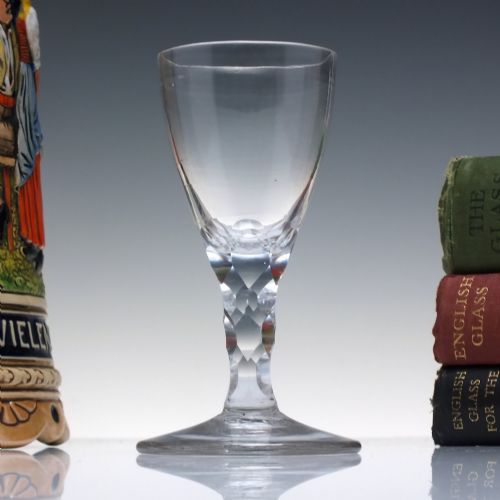
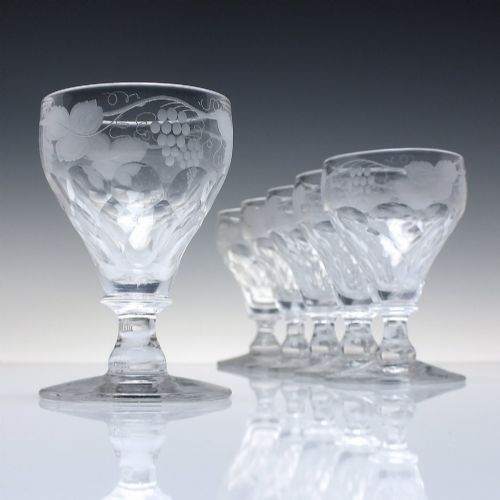
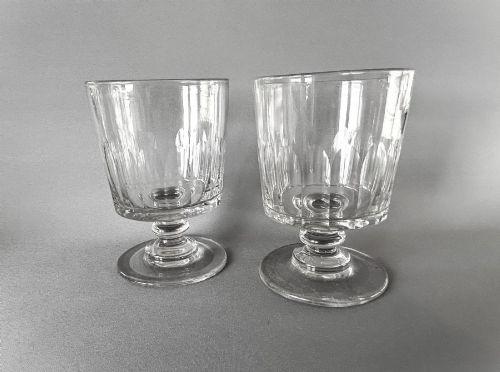
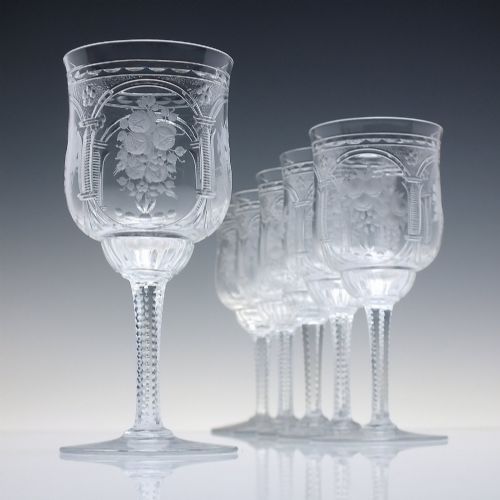
These heavy, refractive clear cut glass goblet examples span the Georgian and Victorian eras, offering both monumental rummers and delicate drinking vessels for the table.
Clear Cut Glass Goblet
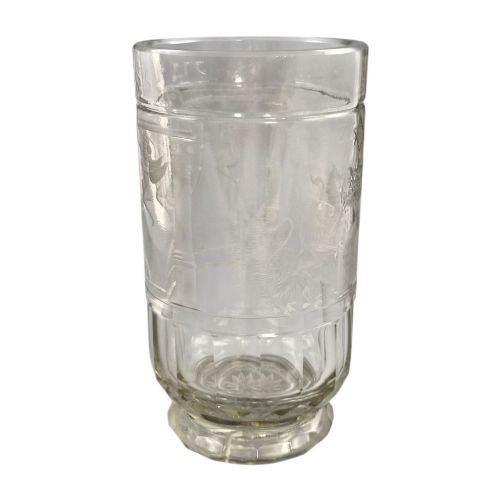
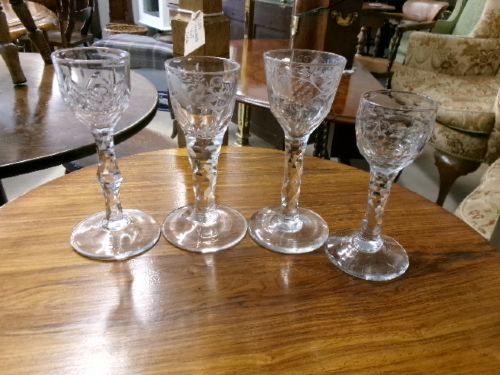
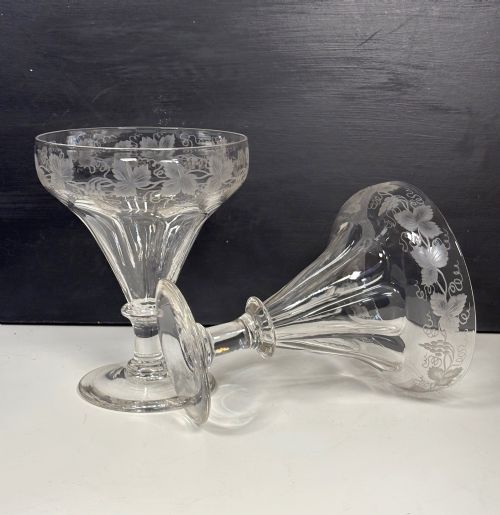
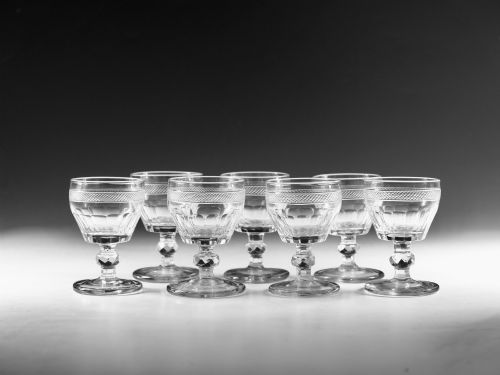
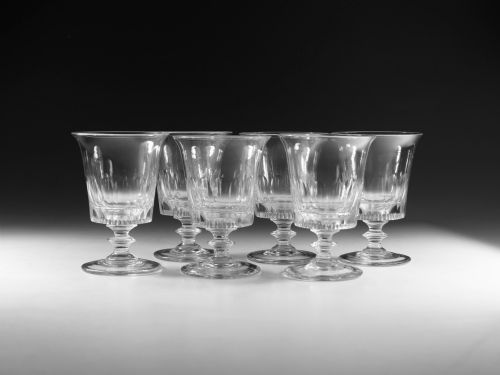
When searching for a clear cut glass goblet, buyers encounter drinking vessels spanning the eighteenth, nineteenth, and early twentieth centuries. These range from heavy Georgian rummers and facet-cut dram glasses to large Victorian commemorative beakers and Edwardian wine services.
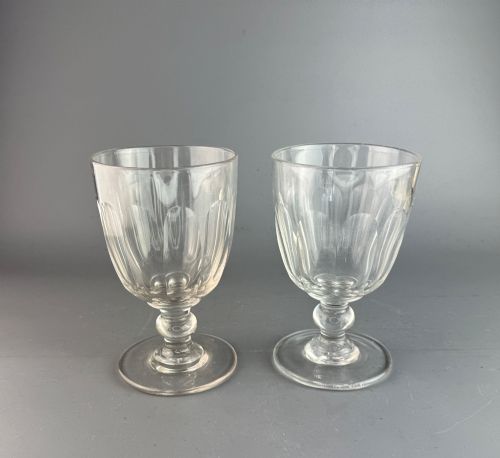
The most common forms on this page include robust rummers with square lemon squeezer feet, baluster-stemmed drinking glasses, and elaborately engraved wine glasses. Pieces originate from English, Irish, and continental European glasshouses, including Bohemian and French makers.
Forms serve various historical drinking functions, encompassing port glasses, cordials, and ceremonial beakers alongside standard wine glasses. Many appear in matched sets of six or eight, though pairs and single large presentation pieces also occur.
How they were made
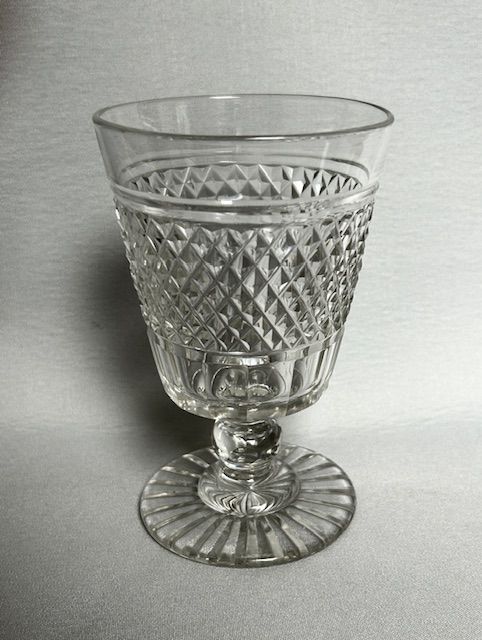
Workshops utilised lead crystal, heavy lead glass, and clear glass blown into moulds or free-blown before undergoing extensive wheel-cutting. Facet cutting, hobnail patterns, and intaglio engraving created complex geometric and floral surface decoration across the bowls and stems.
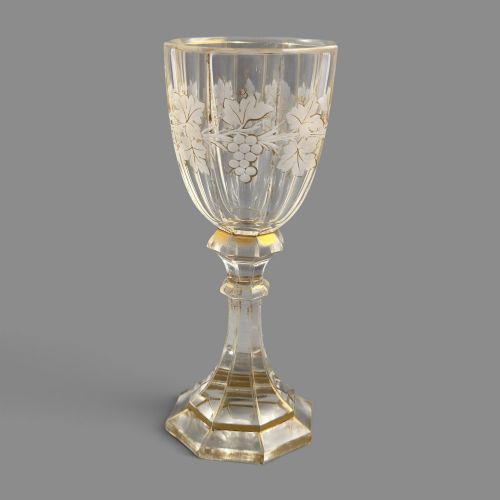
Selected examples incorporate additional decorative techniques such as gold leaf gilding, acid cutting, and cranberry glass casing. Makers finished the undersides with polished pontil marks or moulded square bases, depending on the period.
Clear Cut Glass Goblet Retail Price Guide 2026
Typical asking prices for clear cut glass goblet among the pieces listed under this phrase on Sellingantiques today, from the lower quarter to the upper quarter. They describe what is for sale here now, not the wider market.
Listings feature periods spanning from the eighteenth century through the Edwardian era, utilising lead crystal, clear glass, and gold leaf gilding.
What varies in quality
Weight, clarity, and depth of cutting separate everyday drinking vessels from top-tier exhibition pieces. Heavy lead crystal with brilliant light refraction and sharp, clean facets indicates superior material and skilled wheel-cutting.
The precision and detail of hand-engraving, whether depicting Jacobite symbols, floral motifs, or commemorative crests, dictate the artistic value. Intricate gilding and unusual structural forms, such as triple-cased Bohemian bodies or lemon squeezer bases, elevate individual pieces.
John Walsh Walsh·Baccarat·Moser·Webb Corbett·James Giles·Stevens and Williams
The Clear Cut Glass Goblet Glossary
- Rummer
- A large, sturdy drinking glass popular in the Georgian and Victorian periods, often utilised for ale, wine, or punch.
- Facet cut
- A decorative surface treatment comprising flat, polished planes ground into the glass body or stem to catch the light.
- Lemon squeezer foot
- A square, moulded glass base with sloping sides resembling a kitchen squeezer, typical of Georgian Irish and English rummers.
- Pontil mark
- The rough scar left on the underside of blown glassware where the holding iron was snapped off after manufacture.
- Baluster stem
- A thick, turned stem shape reminiscent of architectural balusters, found on heavier drinking glasses from the eighteenth and nineteenth centuries.
Clear Cut Glass Goblet: Frequently Asked Questions
Were these goblets used for wine?
Historical drinking vessels served various beverages depending on their capacity and form, ranging from port and dessert wine to ale and punch. Rummers specifically accommodated larger portions of beer or spirits during social gatherings.
Smaller cordials and dram glasses suited potent liquors, while specialised wine and hook glasses catered to dining table service. Many survived as matched sets intended for formal entertaining.
What is a lemon squeezer foot?
A lemon squeezer foot is a heavy, moulded square base with distinctive inward-sloping panels beneath the stem. This design appeared frequently on Georgian and Regency rummers, particularly those produced in Ireland and England.
The pressed square form added stability to large drinking vessels while providing an additional decorative element that reflected light.
How should I clean antique glass?
Antique glass requires gentle hand washing in warm water with mild detergent rather than machine washing. Extreme temperature shifts should be avoided to prevent thermal shock to the material.
Soft cloths prevent scratching on delicate surfaces, particularly on pieces featuring surface gilding or acid-cut decoration. Storing them upright on stable shelving protects rims and stems from chipping.