




Claw Foot Dining Chairs
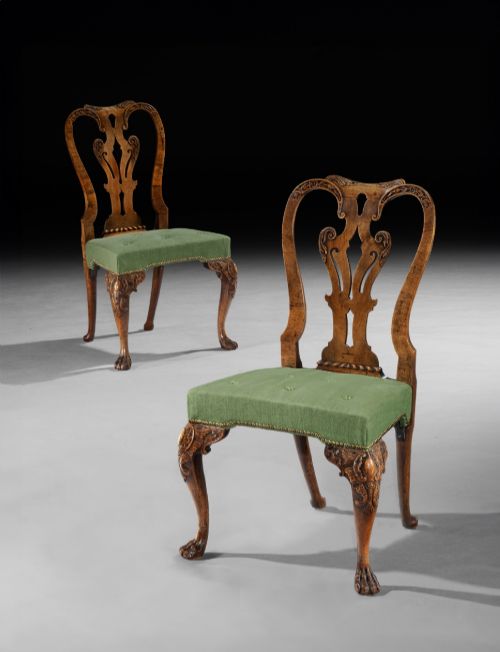
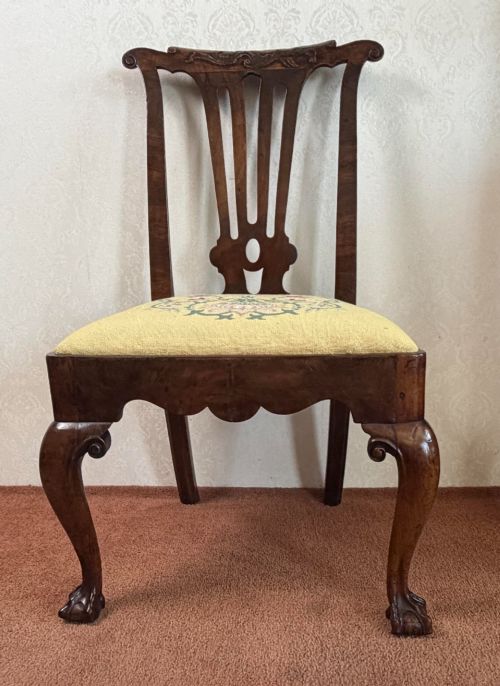
Claw foot dining chairs are formal seats defined by their distinctive carved animal feet, offering a robust presence around a dining table.
Claw Foot Dining Chairs
Claw foot dining chairs encompass substantial seating designed for the dining room, spanning multiple centuries and revival periods. When you examine these pieces, you encounter forms ranging from 18th century originals to later revival interpretations.
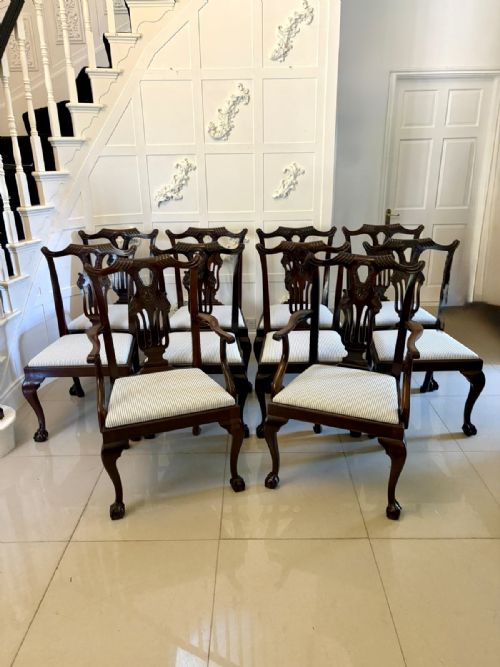
The selections here heavily feature mahogany and walnut timbers, often arranged as pairs or larger matched sets. Side chairs and carvers appear frequently, maintaining traditional proportions suitable for dining tables.
Originating through Georgian, Victorian and Edwardian eras, these chairs demonstrate a lineage of cabinet-making that stretches from early English and Irish workshops through to 20th century revivals.
How they were made
Cabinet-makers constructed these chairs primarily using solid mahogany and walnut, shaping the timber through carving and joinery. Artisans utilised dense hardwoods to support the intricate carving required for ball and claw or lion foot motifs.
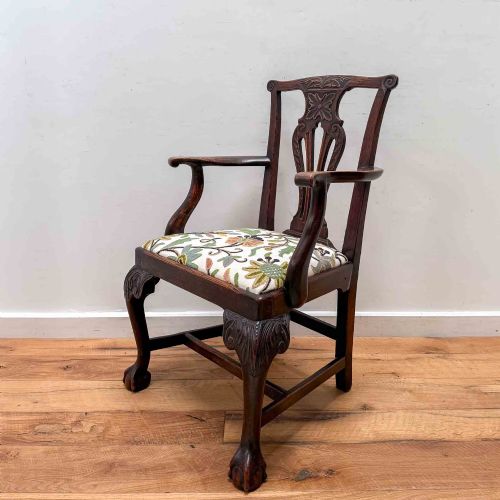
Upholstery techniques varied across the periods, incorporating drop-in seats, leather, fabric, velvet and crewel work textiles. Brass hardware occasionally supplemented the timber construction on specific Victorian iterations.
The inventory records dining chairs, side chairs and armchairs utilising leather, velvet, fabric and brass elements.
What varies in quality
The depth and crispness of the hand-carving on the knees and feet dictate the distinction between ordinary production and superior craftsmanship. Finer examples display undercut talons and realistic feather or scale detailing rather than softened, shallow carving.
The selection of timber grain and the integrity of the frame construction determine the long-term stability of the seating. Original period frames command greater attention than later revival pieces due to the seasoning of the old timber and historical joinery methods.
C Hindley & Sons
The Claw Foot Dining Chairs Glossary
- Carver
- An armchair, usually designed with arms to sit at the head of a dining table. These often accompanied sets of matching side chairs.
- Drop-in seat
- A removable upholstered frame that drops into a recess within the chair rails. This construction method allows for straightforward reupholstering without dismantling the frame.
- Chippendale style
- A classic design idiom inspired by 18th-century cabinet-maker Thomas Chippendale, characterised by carved ribbon-backs and claw and ball feet. Revival versions of this style appeared frequently during the 19th and early 20th centuries.
- Crewel work
- Embroidery executed in wool on a plain-weave foundation fabric. This textured textile often appears on antique chair seats.
- Georgian
- The period spanning the reigns of the four British monarchs named George, known for classical proportions and rich mahogany furniture. Pieces from this era form the baseline for many later revival designs.
Claw Foot Dining Chairs: Frequently Asked Questions
How do I identify a genuine period chair?
Examine the timber grain, tool marks and structural wear beneath the seat rail to understand the age of the piece. Older chairs exhibit traditional joinery methods and patination that modern reproductions cannot replicate.
Compare the carving style and proportions against documented examples from the same century to verify the authenticity of the design period.
Can I mix carvers and side chairs?
Combining armed carvers at the head of the table with side chairs along the flanks is a traditional arrangement. Ensure the timber tone and foot style share a common aesthetic to maintain visual harmony.
Sets often include a designated ratio of carvers to side chairs designed specifically for this purpose.
How should I care for antique leather upholstery?
Apply specialised leather balms periodically to maintain suppleness and prevent the hide from drying out over time. Keep the leather away from direct heat sources and strong sunlight to avoid cracking.
Dust the surface regularly with a soft, dry cloth to remove particulate matter that might abrade the finish.
What is the difference between Georgian and revival chairs?
Georgian chairs were manufactured during the 18th century, utilising timber stocks and construction techniques specific to that era. Revival chairs date from the 19th or 20th centuries and deliberately copy those earlier aesthetic movements.
Revival pieces often display machine assistance in their preparation, whereas genuine Georgian examples rely entirely on hand-tooling.