





Tufted Leather Side Chairs
Tufted leather side chairs bring grounded weight and deep-buttoned texture to a room, drawing the eye with their substantial wooden frames and tactile upholstery.
Tufted Leather Side Chairs
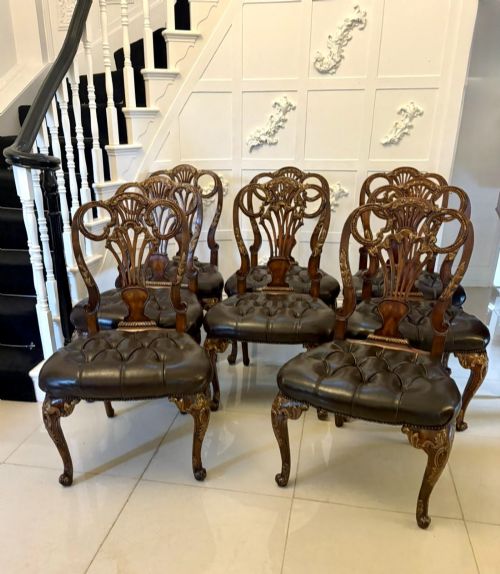
When you search for tufted leather side chairs, you are looking at substantial seating built to anchor a dining room, library, or study. These pieces combine robust timber frames with buttoned hides, offering both physical support and distinct period character.
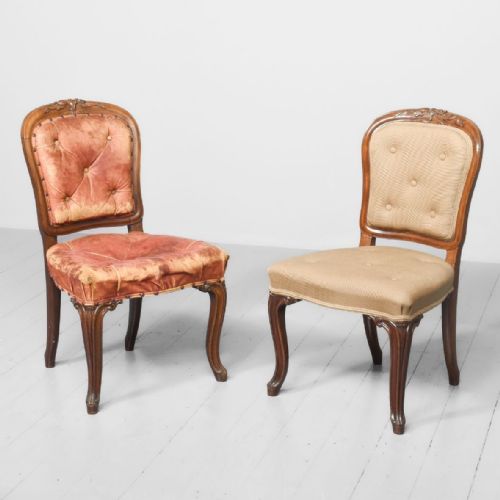
The versions most commonly met on this page span the nineteenth century through the Edwardian era, taking the form of dining chairs and compact side seats. Frameworks range from straightforward oak and mahogany to more decorative walnut, rosewood, and pollard oak.
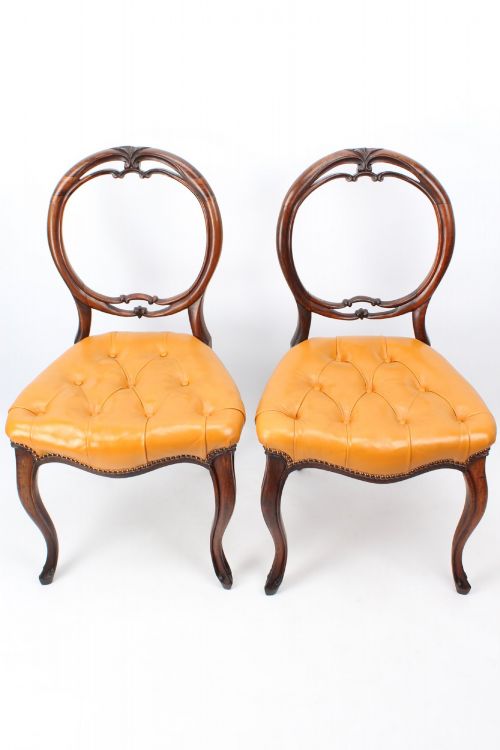
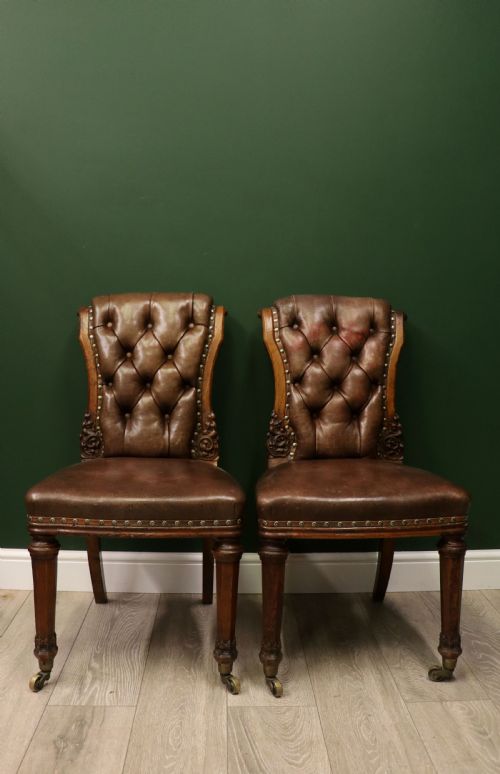
Design influences vary widely across the selection, encompassing traditional Victorian proportions, Gothic Revival details, and Regency styling. Makers utilised both plain timber and gilt highlights to finish the woodwork, pairing them with brown or green leather.
Materials and construction
Timbers such as mahogany, oak, walnut, and rosewood form the structural backbone of these chairs, shaped through carving, turning, and joinery. Makers selected dense hardwoods to ensure the frames could withstand daily use around a dining table or in a library.
Upholstery relies on leather secured with deep buttoning, a technique that pulls the hide tight to create a patterned, tufted surface. Details like brass accents, caning, and gold leaf complement the primary woods to complete the finish.
One child's chair in the selection manages to include buttoned leather, a rosewood carved frame, and turned woodwork all at once.
Assessing quality and craftsmanship
The distinction between standard examples and the top of the range lies in the ambition of the timber carving and the precision of the frame assembly. Finer chairs exhibit crisp hand-carved details, such as lion motifs or elaborate crests, executed in superior hardwoods like pollard oak or figured walnut.
Another factor is the integration of the leather upholstery with the wooden skeleton, where even buttoning and secure attachment dictate the piece's longevity. Superior workshops employed skilled joiners and upholsterers whose work maintains its structural integrity and visual balance over generations.
C Hindley & Sons
The Tufted Leather Side Chairs Glossary
- Bergère
- An enclosed armchair with upholstered sides and back, typically featuring an exposed wooden frame. This form provides a comfortable, enveloping seat.
- Balloon back
- A dining chair style characterised by an oval, rounded backrest resembling the shape of a balloon. It gained widespread popularity during the Victorian period.
- Pollard oak
- Oak timber taken from trees that have been pollarded, producing a highly figured and speckled grain pattern. It was prized for decorative furniture veneers.
- Gothic Revival
- An architectural and design movement that revived medieval Gothic forms, featuring pointed arches and heavy carved details. This style influenced nineteenth-century seating.
- Caning
- Woven rattan or plant material used for chair panels, offering a lighter texture alongside solid wood. It appears on seats and backs to add visual contrast.
Tufted Leather Side Chairs: Frequently Asked Questions
What defines a tufted leather side chair?
These pieces feature a timber frame paired with a leather backrest secured by deep buttons, designed to be used without arms alongside a table or desk.
They combine the durability of hardwoods like oak, mahogany, or walnut with the tactile quality of buttoned leather upholstery.
How were these chairs used historically?
Historically, such chairs served primarily around large dining tables or within formal libraries and studies where sturdy, comfortable seating was required for long periods.
Their substantial construction allowed them to withstand daily use by families and guests in prominent rooms of the house.
How do I care for antique leather upholstery?
Antique leather requires gentle cleaning and occasional conditioning to maintain its flexibility and prevent the surface from drying out over time.
Keep these chairs away from direct sunlight and strong heat sources to protect both the timber frame and the leather hide.
How can I tell Victorian chairs from Edwardian ones?
Victorian examples often display heavier proportions and deeper carving, drawing on traditional or Gothic Revival motifs established earlier in the nineteenth century.
Edwardian pieces tend to show lighter framing and refined details, reflecting the transition into the twentieth century while retaining classic forms.