





Claw Foot Commode
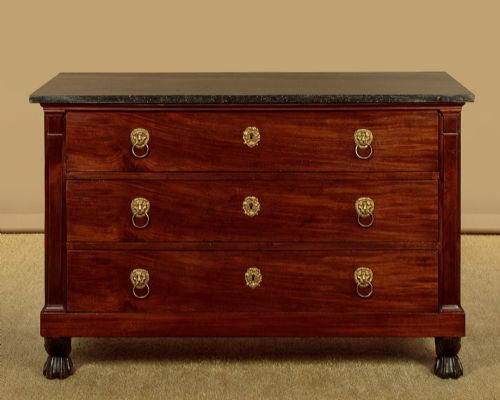
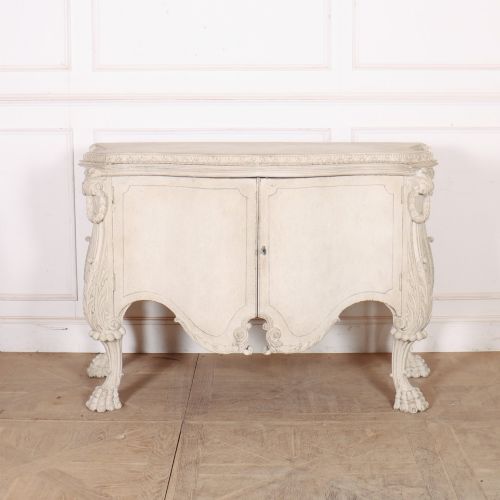
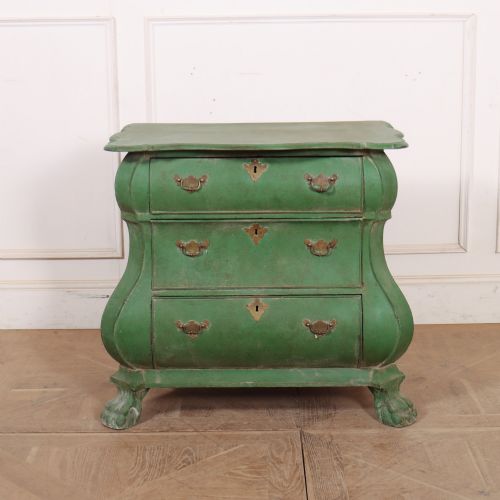
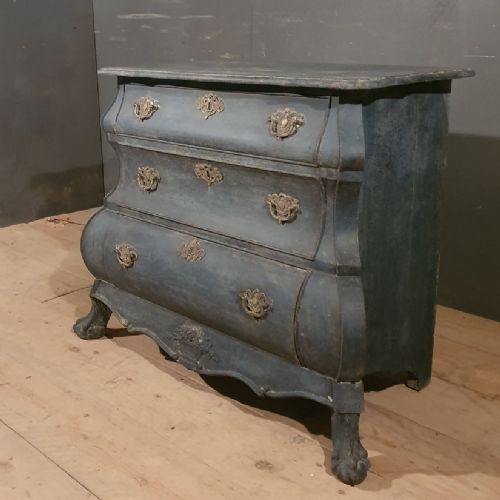
These claw foot commode examples offer substantial storage with distinct stylistic presence, combining architectural timber forms with prominent sculptural supports.
Claw Foot Commode
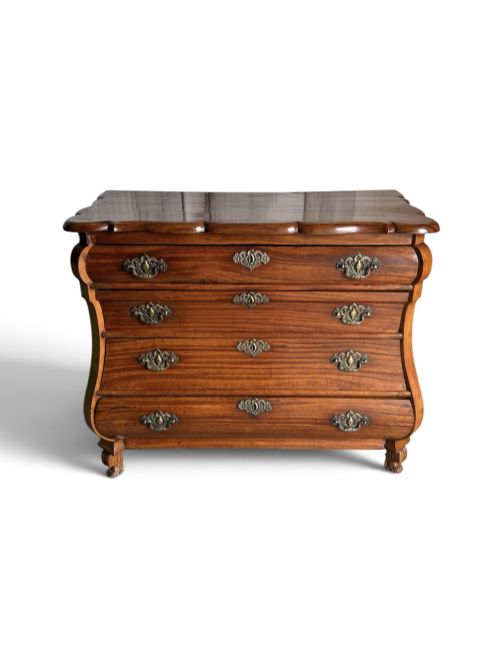
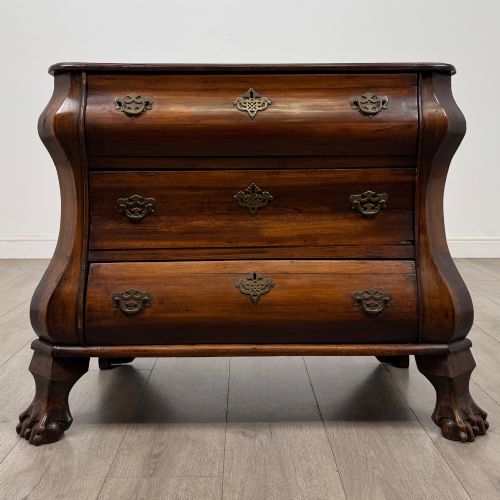
A claw foot commode is primarily a chest of drawers or side cabinet defined by its characteristic animalistic or ball and claw feet. These pieces range from substantial bombé silhouettes to restrained rectilinear chests, serving as practical storage units with pronounced decorative character.
The pieces listed on this page span the eighteenth and nineteenth centuries, including Edwardian and Victorian iterations. Buyers frequently encounter Dutch bombé forms alongside French Empire designs and Regency interpretations, reflecting varied continental and British stylistic influences.
Cabinet makers utilised diverse timber species including mahogany, satinwood, rosewood and walnut, alongside painted finishes and marquetry. These materials support varied forms ranging from large Chippendale style chests to small side cabinets and linen cupboards.
Materials and construction
Cabinet makers constructed these commodes using solid timbers and veneers such as mahogany, satinwood, rosewood and walnut applied to robust framing carcasses. Selected pieces incorporate marble tops, brass mounts and intricate marquetry work to enrich the primary timber surfaces.
Carved wooden paws, ball and claw supports and bracket feet form the structural bases of these pieces, requiring precise joinery to bear the weight of heavy timber drawers. Drawer fronts on bombé examples demand advanced shaping techniques to achieve the characteristic curved profile.
Materials recorded across these listings include solid mahogany, satinwood, rosewood, walnut, marble, brass, metal and painted wood.
Assessing craftsmanship and execution
The standard of carving on the feet and legs distinguishes the more ambitious pieces from simpler utility chests. Crisp detail in the execution of the claw or paw indicates greater workshop skill and time investment.
Timber selection and veneer matching dictate the visual cohesion of the facade. Gradations in quality emerge through the subtlety of grain alignment, the integration of marquetry panels, and the structural integrity of internal drawer construction.
The Claw Foot Commode Glossary
- Commode
- A low chest of drawers or cabinet originating in French furniture design. It functions primarily as a storage piece for domestic interiors.
- Bombe
- A swollen or bulging convex front and side profile associated with eighteenth century cabinet making. This shape requires specialised joinery and shaping techniques.
- Marquetry
- The art of applying decorative pieces of veneer to a structure to form intricate designs or pictures. It often utilises contrasting timber colours.
- Regency
- An English stylistic period dating from the early nineteenth century characterised by classical restraint and refined proportions. Pieces from this era often feature dark timbers like mahogany.
- Chippendale
- A furniture style drawing from mid eighteenth century design manuals featuring ornate carving and classical motifs. It frequently incorporates ball and claw foot supports.
Claw Foot Commode: Frequently Asked Questions
What is a claw foot commode used for?
These pieces function primarily as chests of drawers or side cabinets providing domestic storage in bedrooms, hallways or living spaces.
Their substantial surface areas also display decorative objects while the interior drawers accommodate clothing, linen or household items.
How do I identify an 18th century piece?
Eighteenth century examples often exhibit bombé silhouettes, rich timber choices such as satinwood and rosewood, and complex marquetry detailing.
Construction methods involve hand-cut joinery and solid timber framing distinct from later industrial manufacturing techniques.
What woods were used for these?
Cabinet makers utilised a range of dense hardwoods including mahogany, walnut, rosewood and satinwood for both solid construction and decorative veneer.
Selected examples also feature painted wood finishes or incorporate marble top surfaces alongside metal mounts.
Are these pieces Dutch or French?
The listings include both Dutch colonial and European regional designs, notably Dutch bombé forms and French Empire side cabinets.
Origin is indicated by distinct silhouette curves, regional marquetry styles, and specific proportions characteristic of continental workshops.