

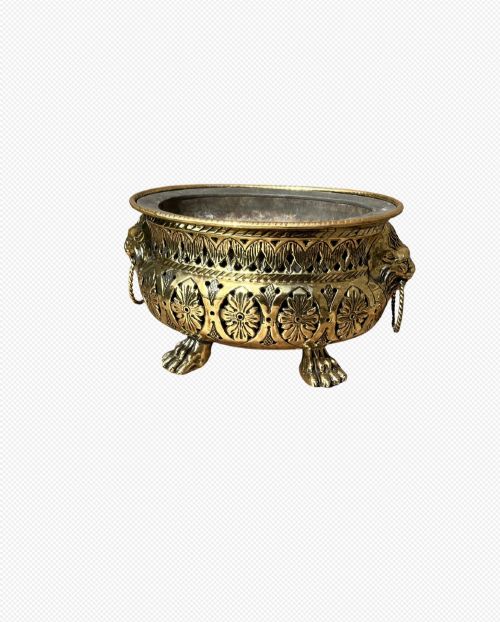
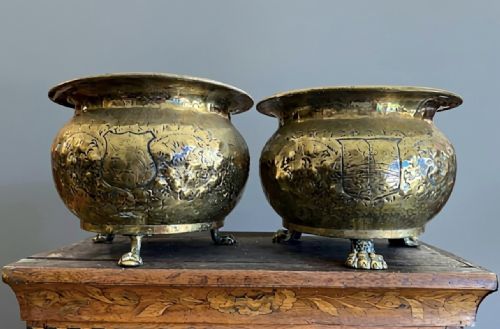


Claw Foot Cachepot
A claw foot cachepot brings distinctive metalwork and character to interior planting, offering a practical yet decorative vessel for the home.
Claw Foot Cachepot
When you search for a claw foot cachepot, you are looking at ornamental plant holders designed to conceal ordinary flowerpots while elevating interiors with period style. These items appear across various forms such as jardinières, cylindrical planters, and footed vessels.
The pieces you are most likely to meet on this page span the nineteenth and early twentieth centuries, drawing on styles ranging from Victorian and Edwardian to French Empire and Gothic Revival. They serve as robust containers that blend botanical display with traditional metal craftsmanship.
How they were made
Makers utilised heavy brass and copper sheets, shaping them through beating, spinning, and soldering to create durable bodies. Surface decoration often involved repoussé work, where designs were hammered from the reverse to create raised motifs on the exterior.
Many examples feature intricate detailing such as pierced galleries, animal masks, and cast feet that lift the vessel from surfaces. These elements were assembled by hand, joining the main cylinder to handles and supports with traditional fixings.
Claw Foot Cachepot Retail Price Guide 2026
Typical asking prices for claw foot cachepot among the pieces listed under this phrase on Sellingantiques today, from the lower quarter to the upper quarter. They describe what is for sale here now, not the wider market.
Several of these botanical vessels stand upon cast animal feet, ready to prowl across your sideboard.
What varies in quality
The distinction between ordinary and superior pieces lies in the crispness of the surface ornamentation and the weight of the metal. Finer examples display deep, hand-chased repoussé work and sharply cast feet rather than shallow, pressed patterns.
Attention to detail in handles, piercings, and structural joins separates utilitarian vessels from truly accomplished decorative items. The integrity of the original metal surface, free from clumsy restoration, further defines the better examples.
The Claw Foot Cachepot Glossary
- Cachepot
- An ornamental container designed to hold a flowerpot and catch drainage water. This French term translates literally as hide-pot.
- Jardiniere
- A large ornamental pot or stand for plants or flowers. These items often feature decorative handles and feet suited for tabletop display.
- Repousse
- A metalworking technique where the metal is hammered from the reverse side to form a raised design in relief. Artisans then refine the details from the front using chisels.
- Pierced
- Metalwork that has been perforated or cut through to create openwork patterns and friezes. This technique adds lightness to heavy brass and copper vessels.
Claw Foot Cachepot: Frequently Asked Questions
What is a cachepot?
A cachepot is a decorative outer pot used to hold a potted plant and conceal standard plastic or clay flowerpots. They keep interior surfaces dry while adding visual interest to a room.
Unlike traditional planters with drainage holes in the base, cachepots are solid vessels designed to catch excess water.
How do I clean brass?
Cleaning historic brass requires a gentle approach to preserve the natural patina built up over decades or centuries. Use a soft cloth and mild soapy water, avoiding harsh chemical cleaners that strip the aged surface.
Many collectors prefer to leave old metal untouched, as the dark tones and marks of age contribute significantly to the character of the piece.
Where should I place these?
These metal vessels sit well on tabletops, sideboards, and windowsills where they can catch the light and frame indoor foliage. Their sturdy construction makes them suitable for holding ferns, flowering plants, or trailing ivy.
Ensure the interior is lined with a suitable waterproof tray if moisture is a concern for polished wooden furniture.
How old are these items?
The pieces listed here date predominantly from the nineteenth and early twentieth centuries, encompassing the Victorian and Edwardian eras. Stylistic clues such as Gothic revival motifs or French chateau influences help place them within specific decades.
Maker marks are rarely present, so dating relies heavily on manufacturing techniques, materials, and design conventions of the period.