
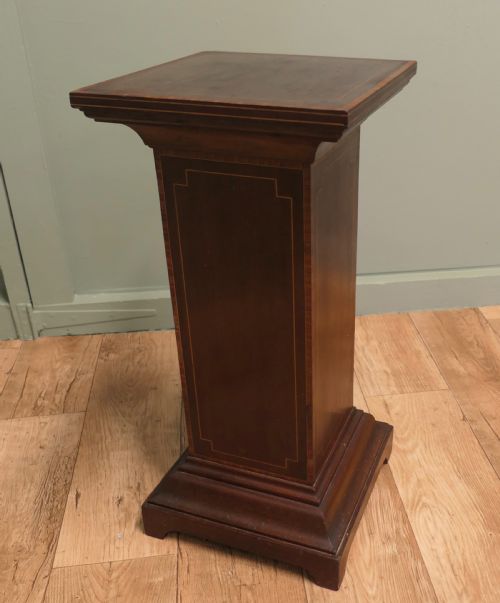
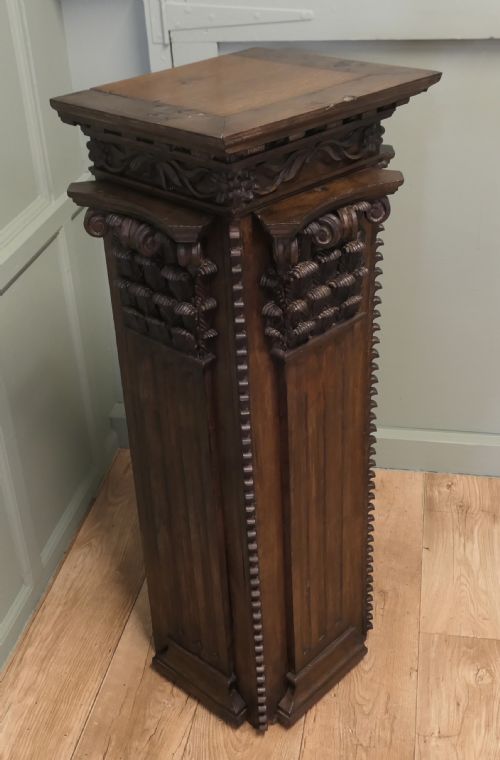
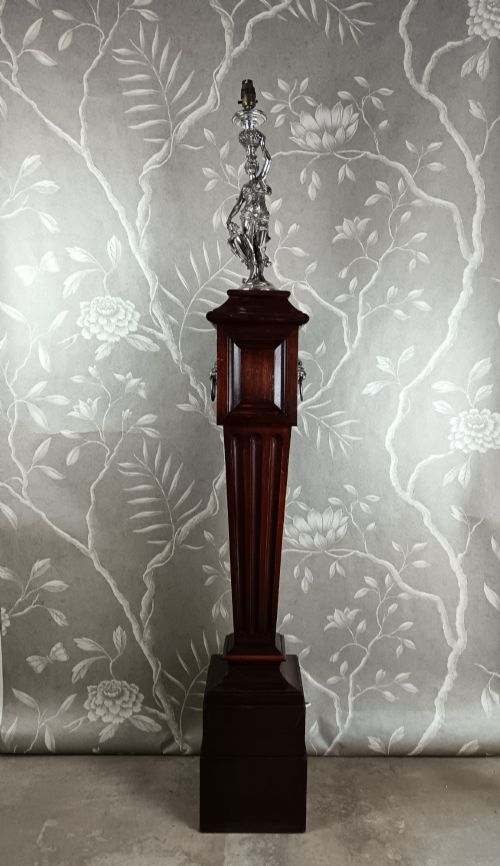


Classical Wooden Pedestal
A classical wooden pedestal lifts a bust, vase or lamp, bringing architectural dignity and height to a room.
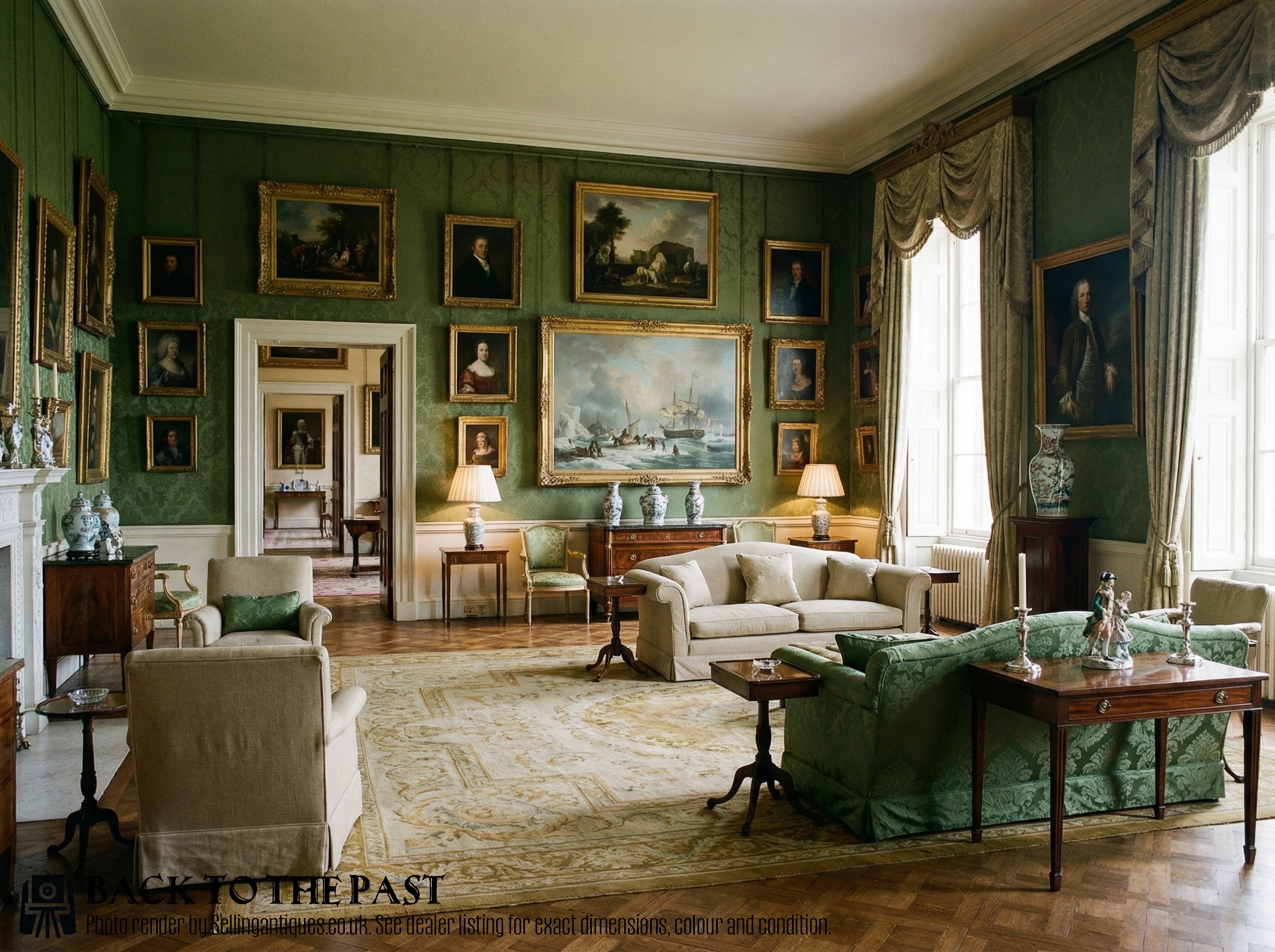
Classical Wooden Pedestal
A classical wooden pedestal serves to elevate decorative objects, sculptures and lighting, drawing the eye upwards within a room. When searching for a classical wooden pedestal, buyers encounter items ranging from simple turned columns to grand architectural display stands.
The selections span multiple eras, with nineteenth-century mahogany and Victorian satinwood pieces appearing frequently alongside Regency and early twentieth-century examples. Forms include straightforward columns, torchere stands, and fitted pedestal cabinets with internal storage.
Origins vary from British workshops to continental European makers, encompassing styles from Georgian proportion to French Renaissance Revival and Neoclassical design. Many pieces function as single display columns, while matched pairs provide symmetry for flanking doorways or fireplaces.
Materials and construction methods
Makers relied primarily on dense timbers such as mahogany, satinwood, walnut and oak, often selecting figured veneers like flame mahogany for decorative impact. Secondary woods like pine appear beneath paint, gesso or gold leaf layers.
Turning on a lathe created the classic fluted columns and spiral pillars, whilst joiners constructed hexagonal and square cabinets with precise mitred joints. Surface finishes combined French polishing, grain painting, parcel gilding and brass mounts.
Listings feature woods including mahogany, satinwood, walnut, birch and pine, spanning the Georgian, Regency and Victorian periods.
Judging the quality of pedestals
Quality rests upon the choice of timber and the precision of the carving, where deep, crisp hand-carving on capitals and plinths distinguishes superior workshop output from simpler machine-turned items. The structural integrity of the central column and the stability of the base plate dictate how securely heavy marble busts or bronze figures rest above the floor.
The sophistication of the surface finish separates standard utility pieces from fine decorative furniture, whether through the warm depth of a hand-polished mahogany grain or the careful application of gold leaf over gesso. Well-executed details, such as inlaid stringing, brass galleries and finely fitted cabinet doors, indicate the original maker's investment of time and skill.
John Scofield·WMF
The Classical Wooden Pedestal Glossary
- Torchere
- A tall stand designed specifically to support a lamp, candleholder or small sculpture. These slender supports often feature circular tops and decorative columns.
- Plinth
- The heavy base or lower block upon which a column or pedestal stands. It provides essential weight and stability to prevent tipping.
- Gesso
- A plaster-like mixture applied to wood surfaces as a smooth base for gilding or painting. Artisans built up layers before applying gold leaf.
- Column
- A vertical structural element with a cylindrical shaft, capital and base. In pedestal form, it supports display objects rather than a ceiling.
- Satinwood
- A durable, yellowish timber prized for its smooth grain and lustrous appearance. Cabinetmakers utilised it extensively during the Georgian and Victorian periods.
Classical Wooden Pedestal: Frequently Asked Questions
What holds a classical wooden pedestal steady on an uneven floor?
Most pedestals rely on a wide, weighted base or stepped plinth designed to lower the centre of gravity and prevent tipping when supporting heavy items.
Historically, makers ensured the footprint matched the height and load capacity of the column above it.
How do I distinguish a Regency pedestal from a Victorian one?
Regency pieces often display restrained neoclassical lines, dark flame mahogany timbers and minimal brass enrichment reflecting early nineteenth-century taste.
Victorian examples frequently introduce richer carving, painted finishes, faux marble effects or lighter satinwood veneers.
Can a pedestal support heavy marble sculptures safely?
Solid wood columns and sturdy pedestal cabinets with internal bracing handle substantial weight if the top surface remains level and balanced.
Checking the stability of the base joint ensures the stand can bear heavy bronze or stone pieces without wobbling.
Where should I place a torchere stand in a room?
Torchere stands suit empty corners, dark hallways or flanking points beside sideboards and large pieces of furniture.
Their slender profile allows them to add vertical interest and lighting without occupying excessive floor space.